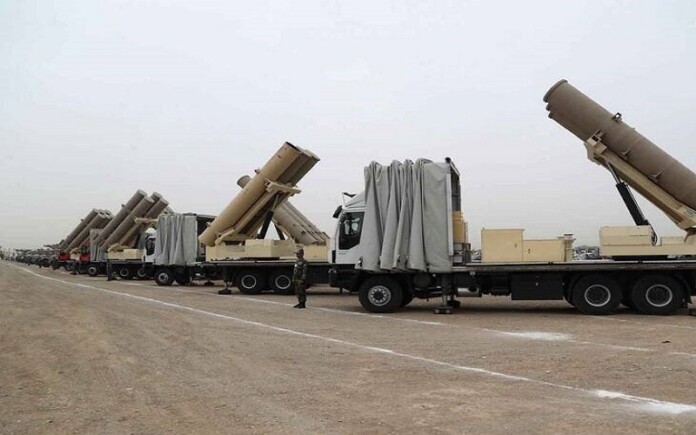
Recent reports from two prominent American media outlets suggest that Iran’s regime has sent ballistic missiles to Russia for use in its ongoing conflict with Ukraine, despite warnings from Western nations. The Iranian regime’s representation at the United Nations, however, has denied these claims.
On Friday, September 6, both Bloomberg and The Wall Street Journal reported on this development. Bloomberg, citing informed sources, stated that the United States had briefed its allies about the missile transfer. Just three days prior, the news agency had indicated that Ukraine’s allies anticipated the delivery of Iranian ballistic missiles to Russia within days.
The Wall Street Journal, quoting an American official, corroborated this information, adding that the shipment included over 200 short-range ballistic missiles. A European official cited in the report suggested that this delivery “is not the end,” implying ongoing weapons transfers from Tehran to Moscow.
In response to these actions, both the United States and the European Union are reportedly planning to impose sanctions on Iran’s regime. The Wall Street Journal noted that the new EU sanctions might target Iran Air, the country’s national airline, along with individuals and entities involved in the missile transfer.
US National Security Council spokesperson, Sean Savett, expressed concern over these reports, stating that any transfer of ballistic missiles signifies intensification of Iran’s support for Russia’s war of aggression against Ukraine. A U.S. official told Reuters that Washington is closely monitoring the situation.
“We have been warning of the deepening security partnership between Russia and Iran since the outset of Russia’s full-scale invasion of Ukraine and are alarmed by these reports. We and our partners have made clear both at the G7 and at the NATO summits this summer that together we are prepared to deliver significant consequences,” Savett said.
Despite these reports, Iran’s representation at the United Nations has denied sending missiles to Russia. They maintain that Iran’s regime’s position on the Ukraine conflict “hasn’t changed” and that they consider providing military aid to either side an “inhumane act.”
The Iranian regime’s representative office added that Iran “not only does not take such action but also invites other countries to stop sending weapons to the parties involved in the conflict.”
It’s worth noting that cooperation between Moscow and Tehran has intensified since the onset of Russia’s war against Ukraine, with Iran’s regime reportedly supplying numerous drones and other military equipment to Russia.
The possibility of Iran sending ballistic missiles to Russia was first reported by Reuters on August 9, which detailed that Russian military personnel had traveled to Iran for training on “Fath-360” ballistic missiles. European sources suggested that hundreds of these missiles were expected to be delivered to Russia soon.
In March, the G7 issued a strong joint statement warning that the international community’s response will include “new and significant measures against Iran” if the country moves ahead with sending ballistic missiles to Russia to use in its war effort against Ukraine.
While Iran’s regime has consistently denied supplying weapons to Russia for use against Ukrainian civilians, Western and Ukrainian authorities have presented substantial evidence of Iranian-made weapons, including drones, being used by Russian forces in Ukraine.
Last December, the IRGC deployed ballistic missiles and missile support systems to a training area inside Iran to display to a visiting Russian delegations—all signs that Russia intended to purchase the systems from Iran.