


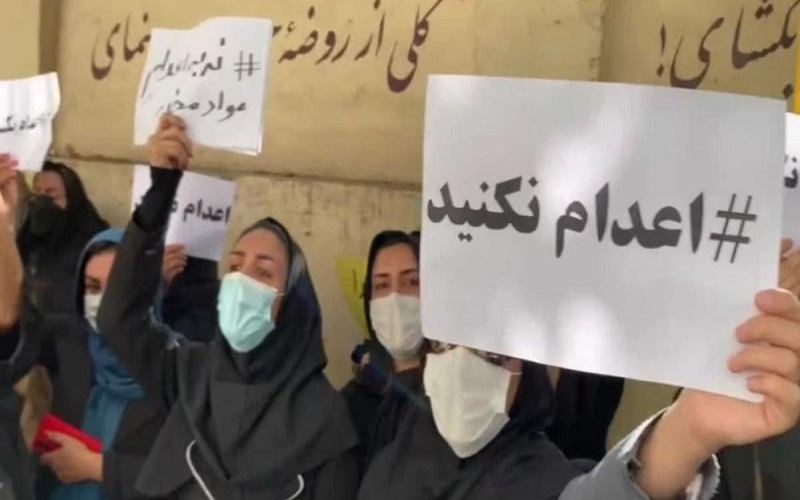

As the world prepares to mark the International Day Against Executions on October 10, alarming reports from human rights organizations shed light on the Iranian regime’s increasing use of the death penalty as a tool of repression. Between Monday, September 30, and Sunday, October 6, 2024, at least 43 people were executed in Iranian regime prisons, amounting to an average of six executions per day or one every four hours.
This harrowing pattern reflects a deliberate escalation by the Iranian regime, with citizens being hanged across various prisons in cities such as Isfahan, Ahar, Ahvaz, Ilam, Bam, Birjand, Tabriz, Torbat Heydarieh, Khomein, Zanjan, Saravan, Semnan, Shiraz, Karaj, and Mashhad.
A Grim Week: Record-Breaking Execution Numbers
October 2 was the deadliest day of the past week, with at least 19 prisoners executed in a single day. October 1 followed closely behind, with 12 executions. Among the 43 people who lost their lives during this brutal week were 40 men and 3 women. Two individuals were subjected to public executions in Khomein on September 30, executed before a gathered crowd after being charged with “participating in Moharebeh” (enmity against God) and the murder of a police officer.
This wave of executions is part of a broader, ongoing pattern. In the 30 days from August 22 to September 21, at least 52 prisoners were hanged across Iran. During this time, the regime also handed down 14 new death sentences and confirmed the execution orders for four others.
A Chilling Trend of State Violence
Since the beginning of 2024, Iran has executed more than 514 individuals, including 18 women. These numbers are not mere statistics; they are indicative of a calculated strategy by the regime to maintain control through fear and intimidation. The Iranian judiciary continues to weaponize the death penalty, silencing dissent and quelling any potential unrest.
The surge in executions has drawn global condemnation, with human rights organizations and international bodies calling for an end to the regime’s killing spree. Amnesty International, in its latest annual report, highlighted that nearly 75% of the world’s recorded executions in 2023 took place in Iran, pointing to a deliberate campaign to use capital punishment as a tool of state terror.
Resistance From Within: A Hunger Strike Campaign for Change
In response to the regime’s escalating violence, political prisoners in Iran have launched a courageous campaign to draw attention to these atrocities. Beginning in February 2024, inmates in Qezel Hesar prison initiated the “No to Execution Tuesdays” campaign, staging hunger strikes every Tuesday to protest the regime’s killing machine. This movement has since spread to 22 prisons across Iran, including the notorious Evin, Central Karaj, Fashafouyeh, Khorramabad, and Tabriz prisons.
The hunger strike campaign has brought together prisoners from diverse backgrounds, united in their fight against the death penalty. Their protest seeks not only to halt the wave of executions but also to rally international support and highlight the regime’s widespread use of state-sanctioned violence.
The Global Call to Action
As we approach the International Day Against Executions, the situation in Iran remains dire. The regime’s intensified crackdown, particularly following the 2022 protests, demonstrates its commitment to using executions as a means to suppress dissent and maintain its grip on power. Amnesty International and other rights groups continue to raise the alarm, urging global powers to take a stand against this blatant disregard for human life.
Now, more than ever, it is crucial for the international community to amplify the voices of those suffering under the Iranian regime. The fight against the death penalty in Iran is not just a matter of human rights; it is a battle for the dignity and freedom of an oppressed population.