
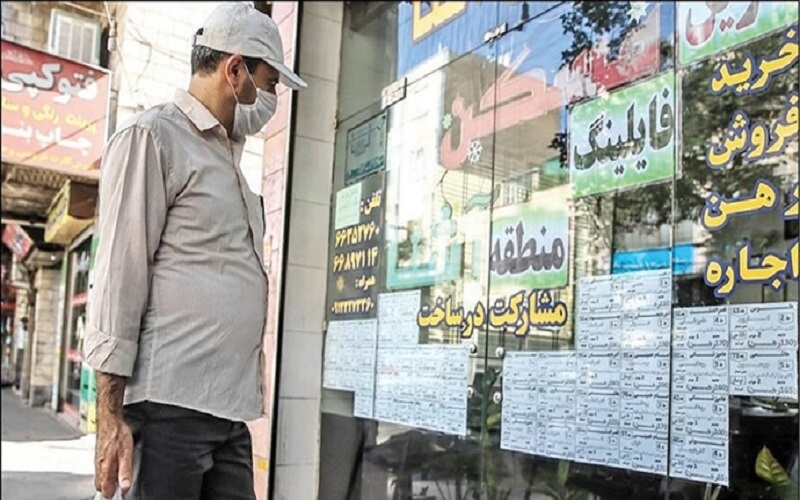

The Universal Declaration of Human Rights asserts that access to housing is a fundamental right, just like education, healthcare, security, and dignity. However, for years, this basic right has been systematically eroded in Iran under the rule of a corrupt regime, leaving millions of Iranians grappling with a housing crisis that reflects the broader socio-economic failures of the government.
Housing: A Luxury Beyond Reach
Housing in Iran has become a luxury rather than a necessity. A recent report by the state-run Bahar News sheds light on the shocking state of housing affordability in Tehran. According to the regime’s official statistics:
- The average price per square meter of housing in Tehran has reached 88,500,000 tomans.
- To purchase a modest 100-square-meter home, an Iranian family now needs a staggering 8.85 billion tomans.
These figures highlight the growing gap between housing prices and the financial capacity of ordinary citizens. Over the past year:
- Housing prices in Tehran have risen by 16%.
- Inflation across the country has surged to 32.5%, as reported by Iran’s Statistics Center.
- Housing inflation has soared to nearly 40%, putting unparalleled financial strain on households.
A Domino Effect Across Sectors
The housing crisis in Iran does not exist in isolation. Changes in housing prices ripple across all sectors of the economy. Increases in housing costs, much like fluctuations in fuel prices or the cost of basic necessities like bread, trigger a chain reaction, driving up costs in other critical areas:
- Education: Inflation at 38%.
- Food: Inflation at 30%.
- Clothing: Inflation at 28%.
- Healthcare: Inflation at 27%.
- Communication: Inflation at 24%.
This integrated crisis spans basic needs such as shelter, food, and utilities, as well as essential services like education and healthcare, revealing the fragility of Iran’s economic infrastructure.
The Root of the Crisis: Political Failures
The interconnected crises of housing, food, energy, and public services stem from a deeper political malaise. Under the current regime, widespread corruption, economic mismanagement, and an unaccountable power structure have created conditions where even fundamental human rights are out of reach for the majority.
Conclusion
The housing crisis in Iran serves as a stark indicator of systemic failures. It not only reflects the economic struggles of ordinary citizens but also underscores the regime’s inability—or unwillingness—to address their needs. As long as the political structures enabling corruption and mismanagement remain intact, the interconnected crises affecting housing, food, education, and other essentials will continue to escalate, leaving millions of Iranians without hope for a stable future.