


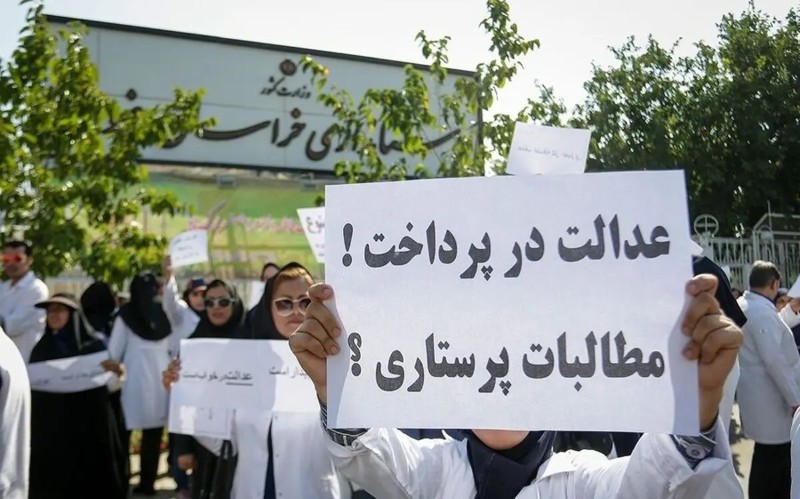

Growing crisis in Iran’s healthcare sector as nurses reject low wages, overwork, and inequality
Iran’s healthcare system faces a deepening crisis as thousands of trained nurses refuse to return to work or seek employment abroad, citing unbearable working conditions and wages that barely cover basic living costs.
Mohammad Sharifi-Moghaddam, secretary-general of the Iranian Nurses’ House, said on October 18 that “around 60,000 to 70,000 nurses are unemployed but unwilling to return to their jobs.” Speaking to Ham-Mihan newspaper, he explained that “a salary under 20 million tomans for a woman with two children barely covers daycare costs, and she also has to bear the emotional cost of being away from her children. In such a situation, staying home costs less.”
Sharifi-Moghaddam criticized regime health officials for their detachment from the realities of ordinary staff, saying they cannot understand the hardship of low wages since “their own salaries amount to hundreds of millions.”
He previously noted that difficult working conditions, psychological stress, and wage disparities have driven many nurses away from hospitals. Some have turned to jobs in the insurance or medical equipment sectors, while others have taken up work unrelated to their field, such as nail salons or driving for ride-hailing services.
Mansoureh Khavari, head of nursing at Mahdieh Hospital, also confirmed on October 18 that nurses’ earnings do not reflect the intensity and hardship of their work. She said this has discouraged nursing graduates from entering the workforce. “If working conditions, overtime, and pay matched the difficulty of the job, the situation would change, and more graduates would be willing to join the profession,” she added.
According to Khavari, the number of applicants for nursing recruitment exams has dropped so sharply that it now falls below the quotas allocated for medical universities.
In another report by Ham-Mihan, Karim Abedini, a nurse in a Tehran chemotherapy ward, said that in some hospital departments, “two nurses and one assistant must care for thirty patients.”
Health system standards recommend at least three nurses per thousand citizens or two per hospital bed. However, Iran’s current nurse-to-bed ratio averages only 1.1, and in some provinces, it drops as low as 0.8.
The shortage is compounded by a steady outflow of skilled workers. Abbas Ebadi, deputy for nursing affairs at the Ministry of Health, stated in early September that 570 nurses emigrated from Iran in 2025 alone. He admitted the country needs at least 100,000 additional nurses to meet demand.
Sharifi-Moghaddam has challenged these official figures, saying that “many nurses leave the country without filing for formal migration permits,” suggesting the real number is far higher.
The mounting exodus and widespread disillusionment among nurses reflect a broader collapse in morale within Iran’s public sector — where years of inflation, poor management, and widening inequality have pushed essential workers to the brink of exhaustion and despair.