



Fresh fuel price increases spark nationwide outrage amid deepening economic hardship and a surge in executions.
Public anger is rising sharply across Iran after the regime announced the implementation of a new three-tier gasoline pricing system, with the third rate scheduled to take effect on December 6 at 50,000 rials. With the U.S. dollar trading at around 1.1 million rials, many Iranians view this move as yet another blow to households already facing severe economic pressure.
The announcement immediately revived memories of November 2019, when a sudden threefold gasoline price increase triggered a nationwide uprising. The regime responded with bullets and a brutal crackdown, killing more than 1,500 people. The new hike has reignited fears of further unrest, as citizens brace for rising living costs and fresh rounds of repression.
Growing Public Outrage
Following the announcement, protests and widespread dissatisfaction quickly emerged. Reports described confusion and unrest at gas stations across the country, with citizens expressing anger over both the sudden decision and the broader economic consequences.
The Telegram monitoring channel shoureshgarane reported: “According to reports received from various parts of the country, the situation at gas stations has become completely chaotic, and people are confused and protesting.”
The regime’s President Masoud Pezeshkian had previously promised to keep gasoline prices stable and to end internet filtering. Yet prices have now increased while filtering remains firmly in place. At the same time, the regime has intensified its execution campaign. Between October 23 and November 2 alone, at least 304 prisoners were executed in various prisons. Since March 21, 2025, the number of executions has surpassed 1,470.
No Gasoline Quotas for Newly Registered Vehicles
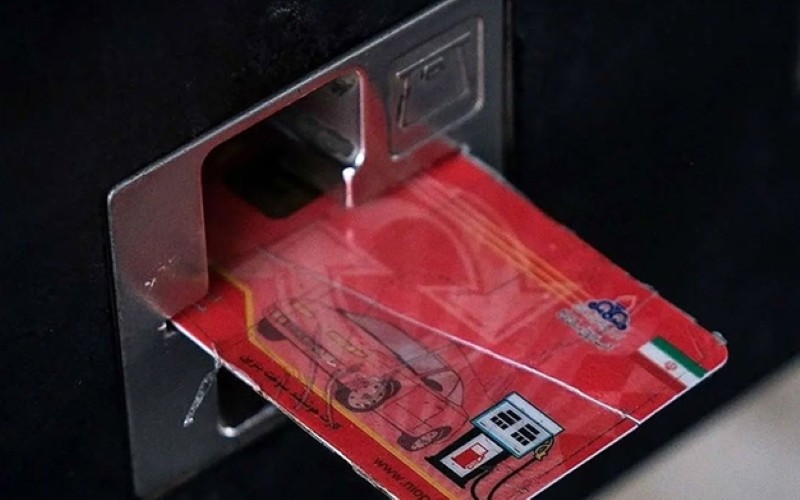
Government spokesperson Fatemeh Mohajerani announced on November 26 that newly manufactured and newly registered vehicles currently have no gasoline quota assigned to their fuel cards. She repeated the regime’s long-standing claim that increasing gasoline prices is intended to “organize fuel consumption and control smuggling,” asserting that revenue from the third-tier fuel rate will be used for essential goods, medicine, and electronic ration vouchers.
These explanations have done little to calm public outrage. Many citizens remain unconvinced, viewing the measure as another attempt to extract revenue without addressing the country’s economic crisis.
Widespread Criticism of a “Deceptive” Plan
Backlash against the price hike has not been limited to the public. Members of parliament and even some state-aligned media outlets have condemned the decision.
Mehdi Ebrahimi, editor-in-chief of the regime-run outlet Rokna, wrote: “They increased the gasoline price deceptively, and Masoud Pezeshkian’s experts taught the president how to bypass the people instead of providing them welfare.”
He added: “From now on, anyone who sells their car and buys another one will have both fuel cards deleted simultaneously. This part is deceptive, meaning that in the near future a large portion of vehicles will be without fuel cards.”
Javad Nikbin, a member of the parliament’s Budget and Planning Commission, criticized regime officials for boasting about “cheap” gasoline prices. “When a car that costs six to ten thousand dollars globally is sold in the country for thirty to fifty thousand dollars, people are essentially paying the mortgage price of the car,” he said.
Nikbin warned that the price hike will not curb smuggling or reduce imports. Instead, he argued, it will expand smuggling networks, intensify inflationary pressures, and place an even heavier financial burden on Iran’s already struggling population.
The new gasoline pricing system has rapidly become a flashpoint, exposing deep public frustration with economic decline, government mismanagement, and intensifying repression. As the December 6 implementation date approaches, the regime faces mounting anger in a society already stretched to its limits.