A senior IRGC commander’s remarks amid the nationwide uprising amount to an open admission of systematic killings, collapsing the regime’s narrative of “terrorism” and revealing a deep crisis of legitimacy.
Amid the turbulence of Iran’s nationwide uprising in 2026, as the ruling system desperately struggles to hold its ground against an enraged population, the language of repression itself has become a vehicle for truth. Statements by Brigadier General Hassan Hassanzadeh, commander of the IRGC’s Greater Tehran forces, go far beyond a routine security briefing. They stand as documented evidence of a crisis of legitimacy and an implicit confession to systematic state violence.
Hassanzadeh’s admission that “a significant number of innocent people who were merely commuting were martyred” is nothing less than an acknowledgment of indiscriminate and uncontrolled live fire against civilians. In attempting to absolve his forces, he instead confirms what the People’s Mojahedin Organization of Iran (PMOI/MEK) and independent human rights organizations have long asserted: the Islamic Revolutionary Guard Corps turned public streets into killing fields for citizens who—by the regime’s own definition—were “innocent” and engaged in everyday life.
This single sentence demolishes the regime’s propaganda campaign that branded the uprising as “terrorism.” If the victims were ordinary passersby, then the perpetrator can only be the state’s repression apparatus, which violated the most basic right—the right to life—using military-grade ammunition against its own people. This admission aligns with staggering figures reported from across the country: more than 3,000 killed in 195 cities, a nationwide pattern that reflects not crowd control, but deliberate physical elimination of dissent.
The second dimension of Hassanzadeh’s remarks is equally revealing. His reference to “attacks by angry people on IRGC and Basij forces” exposes the depth of fear now embedded within the ruling structure. This is an acknowledgment that public anger has crossed a critical threshold. Iranian society has moved beyond symbolic protest into a phase of active legitimate self-defense. Targeting repression centers is not anarchic violence; it is the predictable response of a society subjected for decades to state terrorism.
In effect, Hassanzadeh confirms that the 2026 uprising is not the product of foreign interference, but the eruption of long-accumulated rage born of humiliation, brutality, and exclusion. His admission that IRGC and Basij units are vulnerable under popular pressure signals the collapse of the regime’s manufactured aura of invincibility—a force whose survival depended solely on fear.
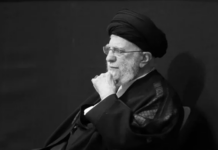
The regime’s supreme leader Ali Khamenei, now confronts a reality that no longer fits within his calculations: a generation that has moved beyond fear. When repression reaches its most naked form—shooting unarmed civilians in the streets—fear loses its controlling function and instead becomes the fuel of revolution. The commander of the IRGC in Tehran has, perhaps unwittingly, produced an irrefutable record of organized crime—one that places its architects and executors squarely before the unavoidable justice of tomorrow.
This unintended confession marks a decisive victory for the Iranian Resistance over the regime’s propaganda machine. Attacks on the symbols and institutions of power reflect the political maturity of a generation that understands a fundamental truth: freedom is not won through pleas or reforms, but by dismantling the machinery of repression itself.