


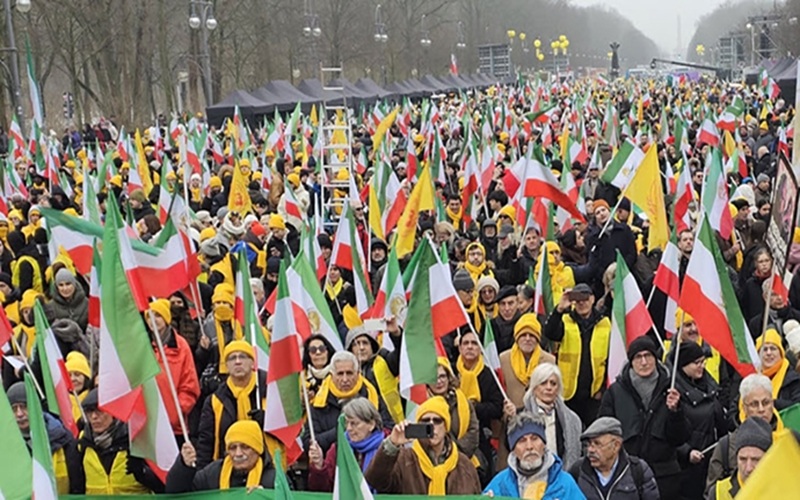

As war, repression, and political deadlock deepen the country’s crisis, a pluralistic and secular transition plan offers a pathway toward freedom, independence, and democratic governance.
Iran today stands at one of the most critical political and historical moments in its modern history. Decades of authoritarian rule, compounded by economic hardship, social unrest, and regional tensions, have pushed the country into a deep and multifaceted crisis. In such circumstances, the question of a viable national solution for Iran’s future has become more urgent than ever.
What Iran needs today is a comprehensive national framework—one that guarantees freedom and independence while embracing political pluralism and secular governance. Any credible path forward must address not only the immediate political crisis but also the structural roots of authoritarianism that have shaped the country’s trajectory for decades.
Equally important, such a solution must be grounded in principles that have already been tested through years of political struggle. Since the 1980s, numerous movements and political actors have challenged the system of absolute clerical authority that dominates the state. The durability of these struggles has demonstrated the importance of clear democratic commitments and long-term political vision.
Today, amid an ongoing war whose consequences remain uncertain, the need for a comprehensive political, geographic, and strategic roadmap is even more pressing. Without a coherent alternative, crises risk compounding one another, leaving the country trapped between internal repression and external conflict.
A Framework for Political Transition
One proposal that has been advanced in this context is the concept of a provisional transitional government announced by the National Council of Resistance of Iran (NCRI). Supporters describe this framework as a mechanism designed to guide the country through a transitional period toward democratic governance.
According to its proponents, the concept was originally formulated more than four decades ago and is built on several core principles: the rejection of political totalitarianism, opposition to religious monopoly over power, and the preservation of national independence from foreign influence.
Advocates argue that promoting such a framework—particularly during the current national crisis—should be seen as a civic and patriotic responsibility. In their view, public discussion and dissemination of democratic alternatives, both inside Iran and among the diaspora, are essential steps toward building the foundations of a post-authoritarian political order.
Breaking with Authoritarian Foundations
For decades, the governing structure in Iran has been characterized by centralized power, systematic repression, and the exclusion of dissenting voices. Under such conditions, any credible proposal for the country’s future must clearly reject the foundations of authoritarian rule.
A political framework that fails to establish a firm boundary between itself and religious authoritarianism risks reproducing the very cycles of domination that have defined much of Iran’s modern history. Without safeguards against the concentration of power, the promise of political transformation could easily give way to another form of authoritarian governance.
This is why proposals grounded in the separation of religion and state, protection of civil rights, and recognition of political pluralism carry particular significance. They seek to establish institutional guarantees that prevent the reemergence of unchecked authority.
Recognizing Iran’s Social Diversity
Iran is a deeply diverse society—ethnically, culturally, religiously, and politically. Historical experience demonstrates that no sustainable national political system can emerge without acknowledging and integrating this diversity into a democratic framework.
A political model that embraces pluralism and transforms social diversity into a foundation for democratic participation addresses one of the most fundamental needs of Iranian society. For decades, however, ideological governance and the suppression of independent civil institutions have prevented such pluralism from taking root.
Restoring a political environment where diverse voices can participate openly would therefore represent a major step toward rebuilding public trust and national cohesion.
Regional Stability and Strategic Responsibility
Iran’s geopolitical position adds another dimension to the country’s political transformation. Located in one of the world’s most volatile regions, developments inside Iran inevitably carry implications beyond its borders.
For this reason, a sustainable political solution must not only respond to domestic demands for freedom and democratic governance but also contribute to regional stability. In this context, a transitional framework—such as a provisional government—could provide a structured mechanism for transferring power from an authoritarian system to democratic institutions while minimizing instability.
The Question of National Independence
Another central issue in Iran’s political future is national independence. Modern Iranian history has repeatedly shown how foreign interference or dependency can weaken national sovereignty and undermine public confidence.
Any durable political solution must therefore be rooted in the independent will of the Iranian people. A framework that emphasizes national autonomy while encouraging broad civic participation has the potential to strengthen public legitimacy and mobilize diverse social forces around a shared vision for the country’s future.
Building a National Consensus
Ultimately, the realization of any national solution depends on public awareness and active civic participation. In the current circumstances, the role of intellectuals, writers, civil society actors, and political activists becomes particularly significant.
Through dialogue, education, and public engagement, these actors can contribute to the formation of a national consensus around democratic alternatives. Promoting discussion about transitional frameworks—including the concept of a provisional government—can help build the political momentum necessary for meaningful change.
Iran now stands on the threshold of historic transformation. The country’s future will depend largely on society’s ability to organize around a democratic, inclusive, and nationally rooted solution. Every effort to articulate and strengthen such a vision represents a step toward freedom, popular sovereignty, and the long-term reconstruction of Iran.