


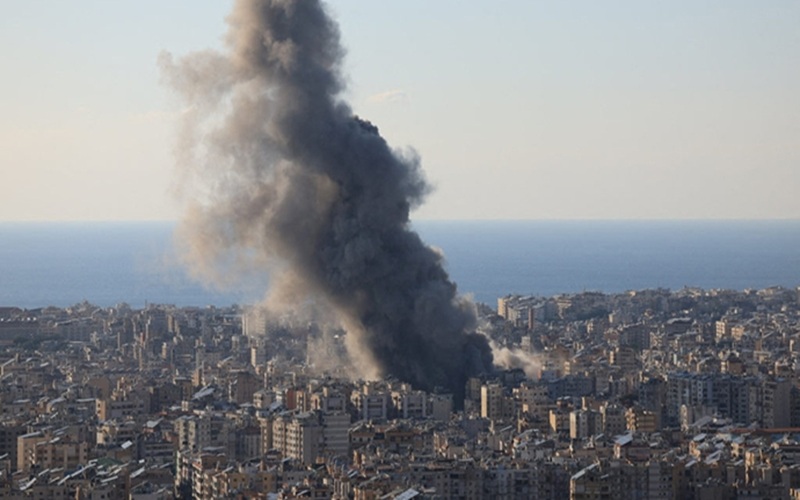

Analysts say Tehran’s aggressive rhetoric—including threats to close the Strait of Hormuz—may be driven less by military strategy than by anxiety over growing public anger inside Iran.
As Tehran issues fresh threats to close the Strait of Hormuz and expand regional confrontations, global attention has increasingly focused on the geopolitical consequences of such actions. Yet some analysts argue that the roots of the Iranian regime’s belligerent posture lie not primarily in military calculations but in a deep fear of a potential social explosion within the country.
From this perspective, escalating external tensions can serve as a political instrument for a government facing widespread domestic dissatisfaction. By amplifying regional crises and emphasizing external threats, the regime may attempt to shift attention away from internal instability and justify heightened security measures at home.
This interpretation has also been raised by prominent political figures. Newt Gingrich, in a recent analysis, noted that the early stages of the joint U.S. and Israeli operations against Iran’s ruling clerical establishment have revealed difficult lessons. According to Gingrich, the possibility that Tehran could disrupt the Strait of Hormuz underscores how vulnerable global energy markets remain, as such a move would dramatically raise oil and natural gas prices worldwide.
He also suggested that the strength and cohesion of the Islamic Revolutionary Guard Corps may have been underestimated by many observers. In his assessment, one factor keeping the IRGC unified is the awareness that, if the regime collapses, its members could face significant backlash from the Iranian population. That prospect, he argued, may reinforce internal loyalty within the force during periods of crisis.
In this analysis, the fear of an organized uprising—particularly in the event of a leadership crisis such after the death of Ali Khamenei—appears to weigh more heavily on the regime than the immediate consequences of foreign military pressure.
Recent statements from Iranian security institutions seem to reflect similar concerns. The intelligence branch of the Islamic Revolutionary Guard Corps issued a warning on Friday, March 9, threatening a response “even harsher than the events of January 8” against any form of street unrest. Shortly before that, Ahmad-Reza Radan, the head of Iran’s national police force, openly declared that anyone taking to the streets at the “enemy’s request” would not be treated as a protester but as an adversary. Security forces, he warned, were fully prepared to respond accordingly.
Embedded within these threats is a revealing admission. When a government defines protesting citizens not as demonstrators but as enemies, it effectively redraws the boundaries of conflict. In such a framework, the battlefield is not located at national borders but in the streets of Iran’s cities—and the perceived adversary is not a foreign army, but the country’s own dissatisfied population.
Some experts note that this dynamic echoes elements of Iran regime’s experience during the Iran–Iraq War in the 1980s. During that period, the persistence of a wartime atmosphere helped justify expanded security measures, intensified repression, and strict limits on internal dissent.
Against this backdrop, a central question now emerges: are Tehran’s threats to close the Strait of Hormuz and its missile escalations merely part of a geopolitical confrontation, or do they also function as a political shield designed to contain rising domestic unrest in an increasingly volatile society?