



As EU officials deliberate behind closed doors, Iranians in Brussels voice an alternative vision—rejecting war, dictatorship, and appeasement
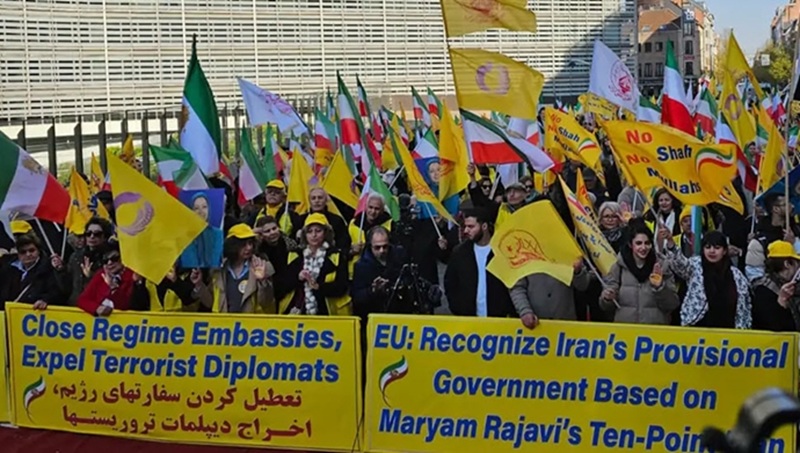
On the morning of March 19, as European leaders convened behind closed doors in Brussels to discuss the escalating crisis in Iran and broader global tensions, a different voice of Iran emerged just outside the summit venue.
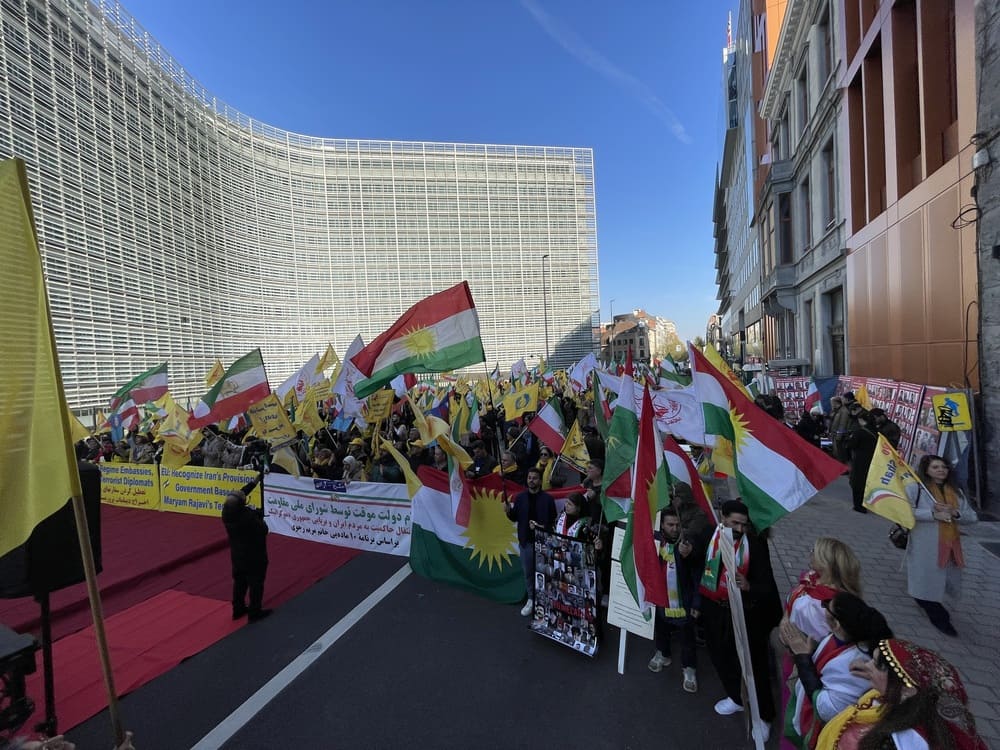
In the streets surrounding the meeting, the sound of the patriotic anthem “Ey Iran” echoed among waving flags and determined chants. A traditional Nowruz Haft-Seen display stood beside a large board featuring images of those killed during the January 2026 uprising—symbolizing a powerful fusion of cultural identity, resistance, and hope for a free future.

The gathering brought together supporters of the National Council of Resistance of Iran, along with Iranians from diverse backgrounds and representatives of various expatriate communities. Their message to European policymakers was direct and unambiguous:
The true voice of Iran does not lie in war and repression—but in peace, freedom, and the sovereignty of its people.
Rajavi’s Message: Rejecting Both War and Dictatorship
At the height of the rally, a message from Maryam Rajavi was broadcast online to participants. Addressing the charged atmosphere in Iran, she emphasized:
“Your voices reflect the desire for peace and freedom of a people who have never wanted the rule of the clerical regime, nor its bombs and missiles.”
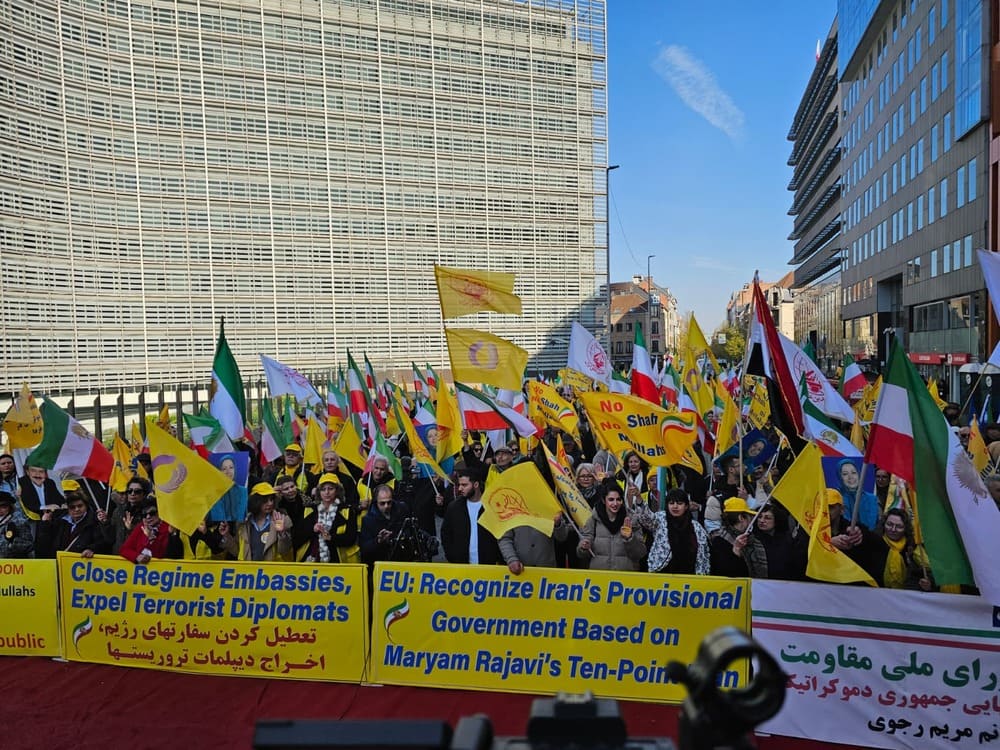
Rajavi framed the current political landscape as a false binary between two forms of dictatorship. She warned that while Mojtaba Khamenei, the son of Ali Khamenei, the killed supreme leader of the regime seeks to preserve a decaying theocracy, Reza Pahlavi the son of the former monarchy is attempting to revive a defunct autocracy. In contrast, she stressed, the Iranian people demand peace and freedom.
A Call to End Appeasement
In her remarks, Rajavi attributed the regime’s ongoing repression, regional aggression, and nuclear ambitions to decades of Western appeasement. She argued that this policy has emboldened the ruling system—leading to intensified crackdowns, executions, and destabilizing activities across the region.
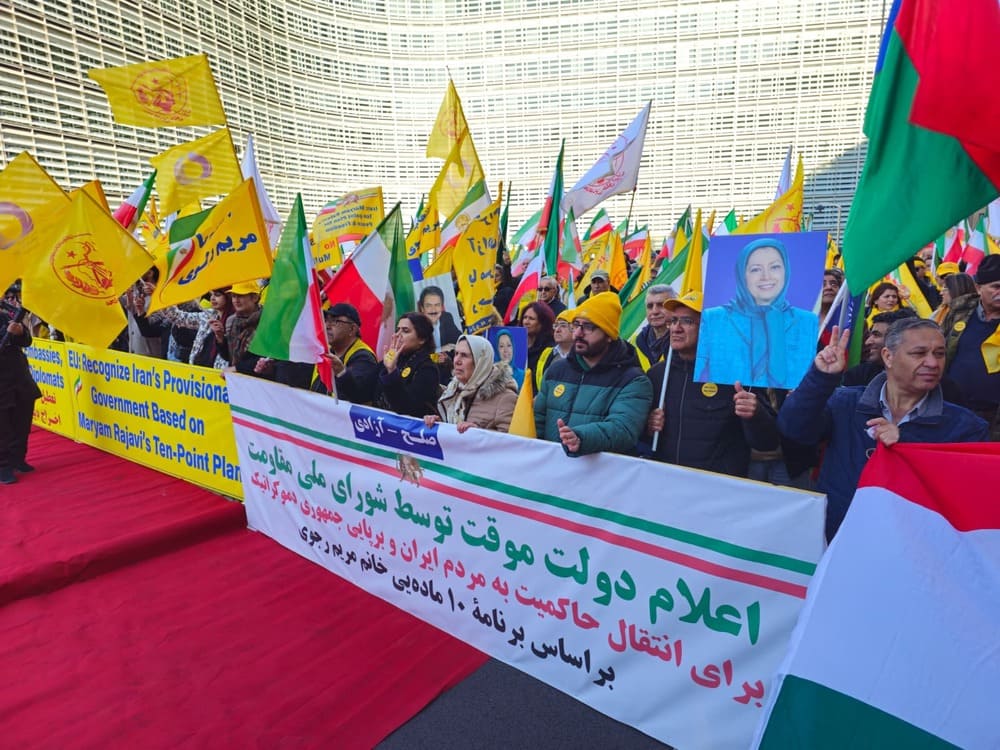
Calling on European leaders gathered at the summit, she urged a decisive policy shift: closure of the regime’s embassies, expulsion of its operatives, and recognition of a transitional government representing the will of the Iranian people.
Rising Fear Inside Iran
Rajavi also pointed to increasing repression inside Iran, arguing that the regime is deeply fearful of organized dissent. She referenced escalating threats by officials, including warnings of renewed mass crackdowns reminiscent of past atrocities, and explicit orders to use lethal force against protesters.
According to her message, the regime views the Iranian people and organized resistance networks as the primary force capable of bringing about its overthrow.
A Message to Europe
The Brussels rally took place at a moment when European policymakers are reassessing their approach to Iran amid heightened tensions. The demonstrators’ message was clear:
The solution to Iran’s crisis lies neither in foreign war nor in continued appeasement—but in empowering the Iranian people to determine their own future.
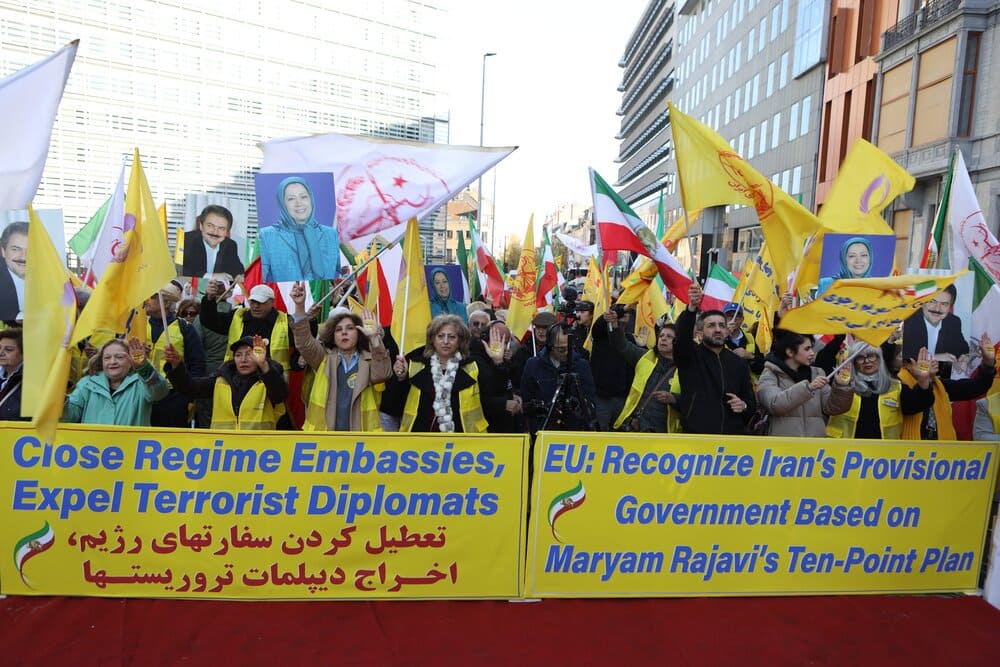
As debates continue within EU institutions, the voices heard outside the conference venue served as a reminder that beyond diplomatic calculations, a population striving for freedom is demanding to be recognized.