Regime intensifies crackdown on dissent with new wave of executions targeting protesters from the 2022 and 2026 uprisings
Iran’s wave of executions and political repression intensified once again as the regime executed another protester arrested during the January 2026 nationwide unrest, only one day after four young defendants in the “Ekbatan Township case” were sentenced to death.
On Monday, May 25, the judiciary-affiliated Mizan News Agency announced the execution of Abbas Akbari, one of the detainees arrested during the January 2026 protests in Isfahan Province.
In its report, Mizan identified the young protester as “Abbas Akbari Feyzabadi” and described him as “one of the armed leaders” of protests in the city of Nain, while omitting details about his age and profession.
According to the state-run outlet, Akbari allegedly played a “major role in attacks against the governor’s office, security centers, and service facilities.”
The judiciary accused him of “enmity against God” (moharebeh), deliberate destruction of public property with the intent to oppose the regime, disrupting public order and security, and conspiracy against national security. Authorities also claimed he had opened fire in the streets with a handgun.
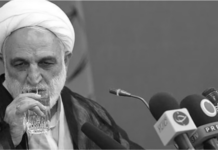
Human rights organizations, however, have repeatedly warned that Iran regime’s judiciary uses broad national security charges and forced confessions to justify harsh sentences against protesters.
Rising Executions Amid Political Crisis
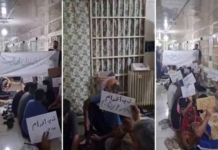
Iran has witnessed a sharp escalation in executions, arrests, and heavy prison sentences in recent months. Human rights groups say the regime is using executions as a tool of intimidation amid deepening political unrest, security crises, and growing public anger.
On Monday, human rights organizations reported that, based on statistics collected, “at least 15 detainees arrested during the January 2026 protests have so far been executed in various prisons across Iran.”
The latest execution came just one day after reports emerged that Judge Abolqasem Salavati, head of Branch 15 of Tehran’s Revolutionary Court, had issued death sentences against four defendants connected to the so-called “Ekbatan Township case” tied to the 2022 nationwide protests.
Regime media reported on Sunday, May 24, that death sentences had been issued for Mohammad Hosseini, Milad Armoon, Mehdi Imani, and Navid Najjaran.
The ruling shocked observers because less than a week earlier another court had reportedly cleared the same defendants of charges punishable by death. However, the regime’s judiciary later clarified that the previous ruling had been issued by a criminal court, while the Revolutionary Court case remained open and was nearing a verdict.
In an official statement published Saturday, the judiciary claimed it was responding to “criticisms” regarding the case of Arman Aliverdi, a member of the Basij militia who was killed during the 2022 protests in Ekbatan Township.
The judiciary alleged that critics had objected to why “the killers of Arman Aliverdi were not executed” and why the earlier ruling had resulted only in prison terms and financial compensation. The statement did not specify who these critics were or where such objections had been raised.
Torture Allegations and Forced Confessions
The defendants in the Ekbatan case had previously been sentenced to death over allegations linked to Aliverdi’s killing, but those verdicts were overturned by Iran’s Supreme Court.
Investigations following the 2022 protests indicated that several defendants in the case were held in prolonged solitary confinement in facilities controlled by the Islamic Revolutionary Guard Corps intelligence unit, criminal police, and in one instance the intelligence protection unit of the Iranian Air Force.
Reports from rights groups and legal sources stated that detainees were subjected to severe physical and psychological torture aimed at extracting confessions against themselves and others.
The newly issued death sentences can still be appealed before Iran’s Supreme Court, according to reports published in Iranian media.
Human rights advocates warn that the regime’s increasing reliance on executions reflects mounting fears within the ruling establishment as social unrest and political dissatisfaction continue to spread across Iran.