


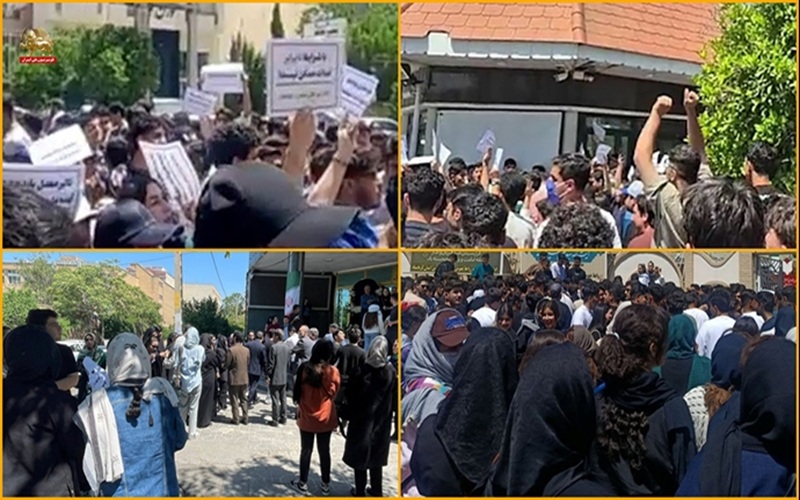

Demonstrations spread across more than 20 cities as students challenge discriminatory education policies and reject attempts to silence dissent under the guise of national security.
A New Generation Takes a Stand Against Educational Injustice
Iran’s discriminatory and authoritarian education policies have once again ignited widespread public anger—this time led by the country’s students and teenagers. On June 6, 2026, cities across Iran witnessed one of the largest and most coordinated waves of student protests in recent years.
The demonstrations were sparked by growing opposition to the regime’s controversial educational policies, particularly the mandatory impact of high school grades on university entrance examinations. What began as a protest against educational regulations quickly evolved into a nationwide movement challenging broader issues of inequality, corruption, and government mismanagement.
By taking to the streets, students sent a clear message that Iran’s younger generation refuses to remain passive while its future is shaped by policies they view as unjust and destructive.
Regime Exploits Security Climate to Suppress Dissent
The significance of these protests extends beyond educational grievances. They have emerged amid an atmosphere of heightened repression, as the Iranian regime continues to exploit regional tensions and security concerns to justify crackdowns on domestic dissent.
Unable to address deepening economic and social crises, the ruling establishment has increasingly relied on security forces, plainclothes agents, and special units to discourage public gatherings and silence criticism. Authorities routinely invoke national security concerns and wartime conditions to suppress labor, social, and educational protests.
Despite these efforts, the student demonstrations demonstrated that many young Iranians are no longer intimidated by such tactics. Their presence in the streets challenged the regime’s attempt to militarize public spaces and impose silence through fear.
Protests Spread Across More Than Twenty Cities
According to reports from across the country, demonstrations took place in at least 23 cities, including Tehran, Karaj, Khorramabad, Shiraz, Ahvaz, Rasht, Mashhad, Kermanshah, Sari, Arak, Qom, Tabriz, Isfahan, Dorud, Bojnord, Birjand, Hamedan, Qazvin, Kerman, Borujerd, and Yazd.
In Mashhad, tensions escalated when students gathered outside local education offices. Reports indicate that security forces directed protesters into a confined area and subsequently restricted their movement, resulting in several detentions. Despite pressure and intimidation, participants reportedly vowed to continue their campaign until their demands are addressed.
In Shiraz, students gathered outside the provincial Department of Education, directing criticism at senior regime officials and institutions they hold responsible for the current education system. Protesters demanded concrete action rather than what they described as years of empty promises.
Elsewhere, including in Markazi Province and South Khorasan, students emphasized the unfair nature of government directives and argued that educational justice cannot be achieved through policies imposed from above without public consultation or accountability.
Protest Slogans Reflect Growing Political Awareness
The slogans heard during the demonstrations reflected not only frustration with educational policies but also a broader awareness of social and political issues facing the country.
Among the chants reported during the protests were:
- “Students may die, but they will not accept humiliation.”
- “We heard many promises, but we saw no justice.”
- “Student, raise your voice and demand your rights.”
- “Do not be afraid, we are all together.”
These messages underscored a growing sense of solidarity among students and highlighted their rejection of what they view as systemic inequality within Iran’s educational system.
Educational Inequality Becomes a National Issue
The nationwide scale of the demonstrations illustrates how educational policies—particularly those related to university admissions and academic evaluation—have become a major unresolved issue for many Iranian families.
For years, critics have argued that the existing system disproportionately benefits privileged groups while limiting opportunities for students from less advantaged backgrounds. The latest protests indicate that dissatisfaction has reached a level where students themselves are increasingly willing to organize and publicly challenge government decisions.
The spread of demonstrations across diverse regions of the country also suggests that concerns over educational justice are no longer isolated complaints but part of a broader national demand for reform.
Calls for Continued Solidarity
As the protests continued, Iranian opposition leader Maryam Rajavi called on students, teachers, and university communities across the country to support the demonstrators. She emphasized the importance of solidarity and argued that only through sustained and expanding collective action can protesters achieve their demands.
The June 6 demonstrations revealed not only growing frustration with educational policies but also the emergence of a generation increasingly willing to challenge repression and demand accountability. Whether the regime responds with reform or further crackdowns, the nationwide student protests have once again highlighted the deep social tensions that continue to shape Iran’s political landscape.