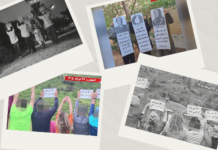
Activists mark the anniversary of June 20 and honor fallen resistance members while promoting the nationwide “No to Executions Tuesdays” campaign in multiple provinces.
Resistance Activists Hold Commemorative Events Across Iran
Reports from various cities across Iran indicate that resistance activists have carried out a series of public awareness and commemorative activities in support of political prisoners, the campaign against executions, and the remembrance of fallen members of the Iranian Resistance.
The activities included memorial displays, flower tributes, poster installations, and public photo campaigns as part of the nationwide “No to Executions Tuesdays” initiative, while also marking the anniversary of June 20, 1981, a date regarded by opposition groups as a symbol of resistance against the clerical dictatorship.
Honoring Fallen Resistance Members
In Kermanshah, activists placed a large floral arrangement featuring photographs of ten fallen resistance members. The display included a joint image of Vahid Bani-Amarian and Pouya Ghobadi alongside a slogan honoring those who lost their lives in the struggle against the Iranian regime.
A memorial table was also set up in the city, displaying photographs of the ten individuals together with flowers and commemorative messages.
In Qazvin, activists installed a floral tribute dedicated to Mohammad Taqavi, described by supporters as a fallen resistance member. The memorial included a large color portrait of Taqavi.
Meanwhile, in Sonqor, a memorial display was organized in remembrance of Vahid Bani-Amarian and Pouya Ghobadi, honoring their role in the resistance movement.
“No to Execution Tuesdays” Campaign Gains Visibility
The anti-execution campaign continued to expand its presence across several Iranian cities through posters, banners, and public displays opposing the death penalty and expressing support for political prisoners.
In Shiraz, activists installed posters carrying messages condemning executions and calling for solidarity with political prisoners. Several slogans emphasized continued resistance, opposition to government policies, and demands for an end to executions.
In Sabzevar, campaign materials urged citizens to become the voice of political prisoners held by the Islamic Republic and to support efforts against capital punishment.
In Yazd, activists organized public photo displays featuring campaign slogans warning Iranian authorities that they would be held accountable for executions carried out against prisoners.
Similar activities were reported in Behbahan, where campaign messages denounced the ruling system, while activists in Kashan and Hamadan displayed posters rejecting both monarchical and clerical forms of dictatorship, emphasizing support for democratic change.
Marking June 20 and Rejecting Dictatorship
The anniversary of June 20, 1981 was also commemorated in several cities as a symbolic day of resistance and political opposition.
In Ahvaz, posters marking the anniversary of the establishment of the National Liberation Army of Iran were reportedly displayed by political prisoners held in Sheiban Prison.
In Karaj, similar materials honoring June 20 as the beginning of organized resistance were attributed to political prisoners in Evin Prison.
Activists in Ramsar and Babol installed posters and organized photo campaigns emphasizing June 20 as a day representing a clear rejection of all forms of dictatorship.
In Rasht, a public display highlighted messages of resilience and defiance, reflecting themes commonly associated with the broader resistance movement.
Continuing Opposition to Executions
The latest activities reflect the continued efforts of opposition activists to draw attention to the growing use of executions in Iran and to mobilize support for political prisoners. The “No to Executions Tuesdays” campaign has emerged as one of the most visible initiatives challenging the Iranian authorities’ use of capital punishment, while commemorative events honoring fallen resistance members continue to serve as a focal point for opposition networks across the country.
As political tensions remain high, activists appear determined to maintain public visibility for both anti-execution advocacy and broader calls for democratic change.