


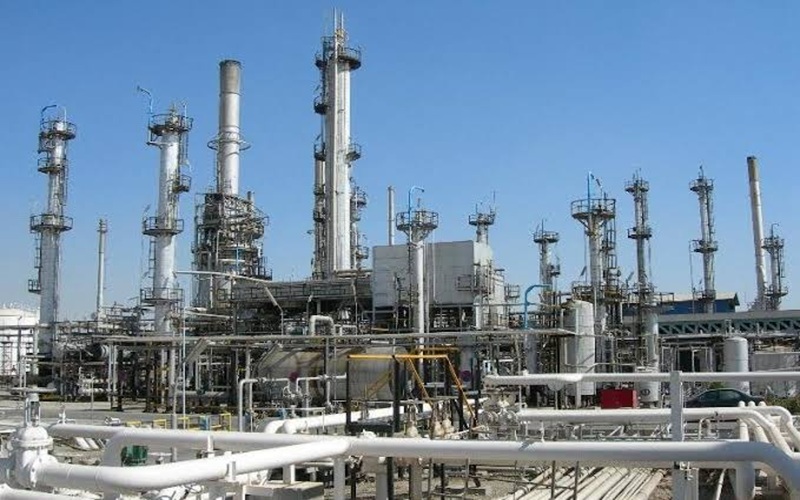

A dramatic reduction in Iran’s official crude oil prices signals mounting financial pressure as the regime prioritizes short-term cash flow over the long-term value of the country’s most important national asset.
The Iranian regime has sharply reduced the official selling price of its crude oil for Asian buyers, a move that analysts view as a sign of mounting economic pressure and the regime’s increasing urgency to generate hard currency despite international sanctions and growing domestic instability.
The decision, announced by the state-controlled National Iranian Oil Company (NIOC) on July 22, represents one of the steepest monthly pricing adjustments in recent years and reflects Tehran’s willingness to sacrifice oil revenues to maintain exports.
A Dramatic Price Reversal
According to NIOC, Iran’s official selling price for its light crude destined for Asian markets in August has been set $4.35 per barrel below the Oman/Dubai benchmark.
The change marks a dramatic reversal from July, when the same grade of crude was priced $7.15 above the regional benchmark.
The shift represents a $11.50-per-barrel reduction in just one month, an unusually large adjustment that immediately attracted the attention of international energy analysts.
Heavy Iranian crude experienced an even steeper reduction, with pricing reportedly lowered by approximately $11.80 per barrel, further underscoring the scale of the discounting.
International Financial Media Take Notice
The pricing decision was widely reported by international financial media.
MarketScreener noted that Iran had set the official selling price of its light crude for Asian customers at $4.35 below the Oman/Dubai average, compared with a $7.15 premium only a month earlier.
Meanwhile, Crypto Briefing highlighted the magnitude of the change, describing it as a remarkable shift in Iran’s pricing strategy. The publication remarked that the move was comparable to “going from the penthouse to the basement,” emphasizing how dramatically the country’s oil pricing had deteriorated.
While the comparison was intended as commentary, it reflects broader market perceptions that Tehran has been forced into unusually aggressive discounting.
Financial Pressure Behind the Discounts
The sharp reduction in official selling prices suggests that the regime is facing increasing difficulty maintaining oil exports under existing economic constraints.
Rather than maximizing revenue per barrel, Tehran appears to be prioritizing sales volume and immediate cash flow. Such pricing strategies are typically employed when exporters face reduced bargaining power or intensified competition for buyers.
The magnitude of the discounts indicates that the regime is prepared to accept substantially lower returns in order to keep oil exports flowing.
National Wealth Sold at a Discount
Oil remains Iran’s most valuable national resource and its primary source of foreign currency earnings.
Selling crude at steep discounts inevitably reduces potential government revenue at a time when the country faces chronic inflation, a weakening currency, growing poverty, and persistent budget deficits.
Critics argue that instead of using oil income to modernize infrastructure, improve public services, strengthen healthcare, or address worsening living conditions, the regime continues to direct significant financial resources toward its security apparatus and institutions responsible for maintaining political control.
This has fueled growing public criticism over the management of national wealth, particularly as millions of Iranians struggle with declining purchasing power and rising living costs.
Economic Crisis Limits Tehran’s Options
The pricing decision reflects the increasingly limited economic options available to the Iranian regime.
Years of sanctions, structural economic mismanagement, declining investment, and persistent fiscal pressures have reduced Tehran’s flexibility in international energy markets. As a result, maintaining export volumes appears to have become more important than securing higher prices.
The latest oil price cuts therefore represent more than a commercial adjustment—they serve as another indication of the financial pressures confronting the regime as it attempts to secure desperately needed revenue while navigating a worsening domestic economic crisis.
For many observers, the decision illustrates a broader pattern in which short-term financial survival increasingly takes precedence over protecting the long-term value of Iran’s national resources.