


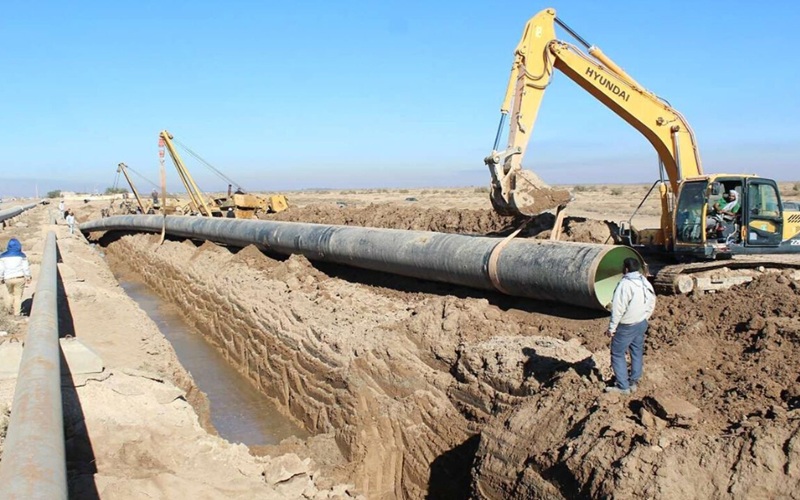

From villages receiving drinking water for only two hours a day to muddy tap water in Ahvaz and repeated blackouts in Tehran, Iran’s infrastructure crisis is increasingly becoming a crisis of survival.
For millions of people across Iran, access to clean drinking water and reliable electricity—basic services that should be guaranteed in any functioning society—is becoming increasingly uncertain.
During the scorching summer of 2026, water shortages and power outages have spread across large parts of the country. Villages are being rationed to only a few hours of drinking water a day, residents of major cities are receiving polluted or muddy water from their taps, and businesses are repeatedly forced to close because of electricity cuts.
Even official and state-linked media can no longer conceal the scale of the crisis.
On August 15, the state-run IRNA news agency reported that 12 provinces, with a combined population of approximately 40 million people, are experiencing water stress.
The crisis is not confined to remote rural areas. It is reaching major urban centers, including Tehran, Ahvaz and Mashhad, while government officials openly acknowledge that critical water resources are being depleted.
Two hours of drinking water a day
One of the clearest examples comes from Kamar-e Olya village in Islamabad-e Gharb County, where residents reportedly have access to drinking water for only two hours a day.
For families living through extreme summer heat, such restrictions are not a minor inconvenience. Water is required for drinking, cooking, washing and basic sanitation. When supply is limited to two hours, households must attempt to store enough water to survive the remaining 22 hours.
The situation is even more troubling because the government itself acknowledges that the problem extends across much of the country.
According to IRNA, the deputy governor of Razavi Khorasan Province said that per-capita water consumption in Mashhad is approximately 120 liters per person per day, below the national average of 180 liters. Yet he acknowledged that water projects cannot be implemented without adequate financial resources.
The admission exposes one of the central failures behind the crisis: infrastructure projects require investment, while the government has failed to provide the resources necessary to maintain and expand essential water systems.
From Tehran blackouts to muddy water in Ahvaz
The crisis is occurring simultaneously across water and electricity networks.
Residents of Tehran have reported repeated power and water outages, with the two problems often directly connected. In many neighborhoods, when electricity is cut, water pressure also collapses because pumping and distribution systems depend on electricity.
A resident of Tehran’s Kianshahr neighborhood described the situation in a video:
“It’s nine o’clock at night, in the heart of Tehran, in Kianshahr. Both the electricity and the water are cut off. When the electricity goes, the water quickly disappears too.”
For residents, the combination of heat, darkness and lack of water has turned ordinary daily life into a struggle.
In Ahvaz, the situation is even more alarming. Residents have documented tap water so muddy and contaminated-looking that they say it cannot safely be used for bathing, let alone drinking.
One resident, visibly frustrated, asked:
“Look at this water. What are we supposed to do with it? What can I use it for?”
Another resident described the water as resembling sewage sludge and questioned how residents could possibly bathe with it:
“If you pour this water over your head, you could get a thousand illnesses and infections.”
Such accounts illustrate the difference between simply having water coming through a pipe and having safe, usable water.
The crisis is also destroying livelihoods
Water shortages are being accompanied by an electricity crisis that is increasingly paralyzing economic activity.
On August 18, Tehran shopkeepers and market traders protested repeated electricity cuts that were disrupting business during working hours.
One Tehran merchant described the impact of scheduled outages:
“The electricity goes off from 5 to 7. What kind of production is possible when they cut the market’s electricity from 5 to 7? We talk about it and they call us rioters and troublemakers.”
For businesses already struggling with high rents, inflation and declining purchasing power, repeated power cuts create an additional financial burden.
A shop that cannot operate because of electricity shortages still has to pay rent, wages, taxes and other expenses. Small businesses therefore face the impossible choice of remaining open without being able to function or closing while continuing to absorb their fixed costs.
The electricity crisis is consequently not merely an infrastructure problem. It is contributing directly to the contraction of economic activity and the destruction of household incomes.
Iran’s underground water reserves are being depleted
The crisis is not limited to temporary summer shortages.
A government official at the Yazd Regional Water Company recently acknowledged the deteriorating condition of the province’s groundwater resources.
According to the official, Yazd is in a critical situation regarding its underground water reserves, with extraction exceeding the amount of water that can sustainably be allocated.
The warning is significant because groundwater depletion is not something that can be solved simply by waiting for the next rainy season. Once underground aquifers are severely depleted, their recovery can take years or decades, depending on geological and climatic conditions.
The official acknowledged that when groundwater resources are declining, continued expansion of consumption without considering the actual capacity of those resources cannot be sustained.
In other words, the authorities are recognizing that the existing pattern of water consumption and extraction is fundamentally unsustainable.
Even access to clean water reflects inequality
The crisis has also exposed striking disparities within the country’s institutions.
A soldier serving in a government military barracks described becoming seriously ill after drinking contaminated tap water. According to his account, medical examinations concluded that he had been poisoned by the water supplied at the barracks and that he should thereafter drink bottled water instead.
But, as he pointed out, buying bottled water is itself a financial burden for a conscript.
He also described a stark difference between the conditions in his barracks and those reported by soldiers serving in facilities controlled by the Islamic Revolutionary Guard Corps, saying that they were told bottled water was provided there.
Whether every such individual account can be independently verified or not, the allegation reflects a broader and deeply troubling perception: that even amid a nationwide infrastructure crisis, access to basic necessities can depend on an institution’s political and security status.
A crisis of priorities
The government has repeatedly attributed water and electricity shortages to drought, climate change, excessive consumption and insufficient rainfall. These factors are real and cannot be ignored.
But they do not fully explain the depth of the crisis.
Water scarcity becomes a national catastrophe when decades of poor planning, corruption, underinvestment, unsustainable groundwater extraction, outdated infrastructure and weak management converge.
The same applies to electricity. Iran possesses enormous energy resources, yet its population routinely faces power cuts and its businesses are forced to suspend operations.
The question is therefore not simply whether Iran has enough natural resources. It is whether the government has used those resources effectively and invested sufficiently in the infrastructure required to deliver basic services.
The evidence increasingly suggests a profound failure of priorities.
While ordinary households struggle to secure drinking water and electricity, vast public resources continue to be absorbed by the regime’s security and military apparatus and by projects that do not address the immediate needs of the population.
Telling people to “endure” is no solution
Against this backdrop, regime officials have repeatedly urged the population to tolerate worsening conditions.
Such appeals are increasingly disconnected from the reality experienced by ordinary Iranians.
A family that has water for only two hours a day cannot simply “endure” indefinitely. A resident receiving muddy tap water cannot solve the problem through personal sacrifice. A shopkeeper whose electricity is repeatedly cut cannot pay rent with political slogans.
The gap between official rhetoric and people’s lived experience is therefore becoming increasingly difficult to conceal.
Iran’s water and electricity crises are symptoms of a much broader governance failure. They reveal what happens when essential infrastructure is neglected, resources are misallocated, environmental limits are ignored and accountability is absent.
How much longer can people endure?
The question confronting Iran is no longer whether the water and electricity crises exist. Even government-linked institutions are acknowledging their severity.
The more urgent question is how long the population can be expected to live with deteriorating access to basic necessities while being told that the situation is normal or that they must simply endure it.
From Kamar-e Olya, where residents reportedly receive drinking water for only two hours a day, to Ahvaz, where people struggle with muddy tap water, to Tehran’s markets, where businesses are crippled by repeated blackouts, the same reality is emerging across the country.
Iran’s water and electricity crises are not isolated emergencies. They are interconnected manifestations of an infrastructure and governance system that has failed to protect the most basic interests of the population.
When clean water becomes a luxury, electricity becomes unreliable and businesses cannot operate normally, the crisis has moved far beyond inconvenience.
It has become a crisis of survival—and another powerful indicator of the growing gap between the regime’s priorities and the needs of the Iranian people.