


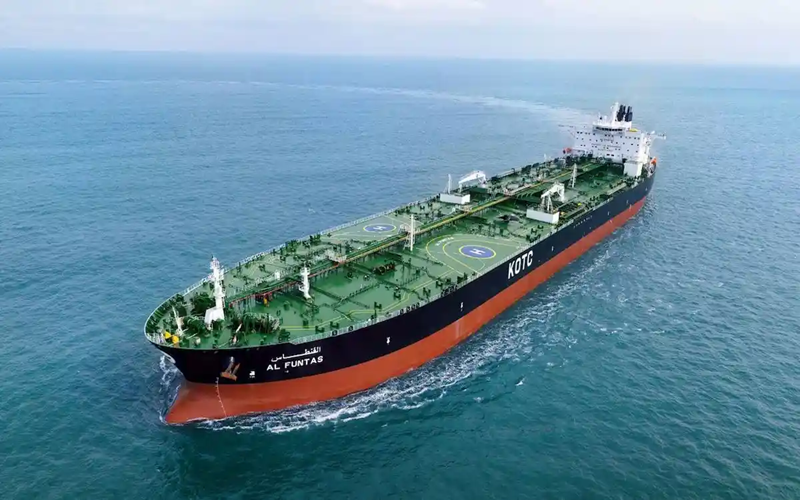

Washington’s economic campaign tightens as tanker-tracking data show no new Iranian crude loaded at ports during September
Iran’s oil lifeline has come under unprecedented pressure, with preliminary tanker-tracking data showing that no new Iranian crude oil was loaded onto tankers during September.
U.S. Treasury Secretary Scott Bessent said on October 1 that Iran had loaded “ZERO crude oil onto tankers in September,” describing the development as evidence that the Trump administration’s campaign was cutting off what he called the regime’s most vital source of revenue. Data from oil-tracking companies Kpler and Vortexa also showed zero Iranian crude loadings during the month.
The development marks a sharp deterioration from August, when tanker-tracking estimates put Iranian crude loadings at roughly 220,000 to 255,000 barrels per day. The September figure therefore represents not merely a decline but the effective halt of new crude shipments from Iranian ports during the month.
U.S. economic pressure targets the regime’s revenue lifelines
The collapse in new oil loadings comes amid Washington’s intensified campaign to sever the financial and commercial networks sustaining Iran’s regime.
The Trump administration launched Operation Economic Outcast in August, describing it as a comprehensive campaign to cut the regime’s remaining economic lifelines, including oil-smuggling networks, sanctions-evasion mechanisms and financial channels.
Since then, the U.S. Treasury has expanded measures targeting Iranian aviation, financial networks, digital-asset infrastructure, military procurement and other sectors. On September 29, Treasury imposed new sanctions on networks involved in procuring weapons and components for Iran’s Ministry of Defense. On October 1, it expanded the campaign to major industrial sectors, including automotive, rail, manufacturing and steel.
The pressure is particularly consequential because oil exports have remained one of the regime’s principal sources of foreign currency.
Existing oil stocks provide only temporary relief
The absence of new loadings does not mean that all Iranian oil deliveries have immediately stopped.
Iran has continued supplying some Chinese customers from crude previously loaded and held in floating storage in Asian waters. Kpler estimated that approximately 15 million barrels of Iranian oil were held outside the area affected by the blockade toward the end of September. But those stocks cannot be replenished indefinitely if new cargoes cannot leave Iranian ports.
This distinction is critical. The regime may continue generating some revenue from oil already stored at sea, but a sustained halt in fresh loadings would progressively deplete that buffer and constrain its ability to earn foreign currency through oil sales.
The pressure is also affecting production decisions. Recent reporting citing Kpler indicates that the halt in exports has forced Iran to reduce oil production toward levels needed for domestic consumption.
A growing squeeze on the regime’s financial capacity
A prolonged interruption of oil exports would compound the regime’s existing economic vulnerabilities: declining access to foreign currency, pressure on the national currency, difficulties financing imports, and mounting costs associated with sustaining its military and security apparatus.
Washington’s campaign is also designed to prevent Tehran from replacing lost oil revenues through alternative channels. Treasury has warned companies, financial institutions and intermediaries involved in sanctions evasion that they risk losing access to the U.S. financial system.
For the regime, the central question is therefore no longer simply how much oil it can sell, but how long it can maintain the networks needed to move, finance and monetize that oil.
The burden risks falling on the Iranian people
The regime has repeatedly sought to shift the consequences of economic pressure onto the population while protecting the interests of its ruling elite and security institutions.
A prolonged loss of oil revenue could intensify shortages of foreign currency and further weaken the regime’s ability to finance imports and stabilize the economy. At the same time, the regime’s entrenched system of corruption and control over major economic sectors means that ordinary Iranians are likely to bear a disproportionate share of the consequences.
The zero-loading figure is therefore more than an oil-market statistic. If sustained, it could strike directly at one of the regime’s principal financial arteries at a time when Tehran is already facing severe economic and political pressures.
For the Iranian regime, the depletion of its remaining oil stocks would turn the current disruption into a much deeper revenue crisis—one that could increasingly constrain its capacity to fund repression, military activities and its broader network of regional operations.