


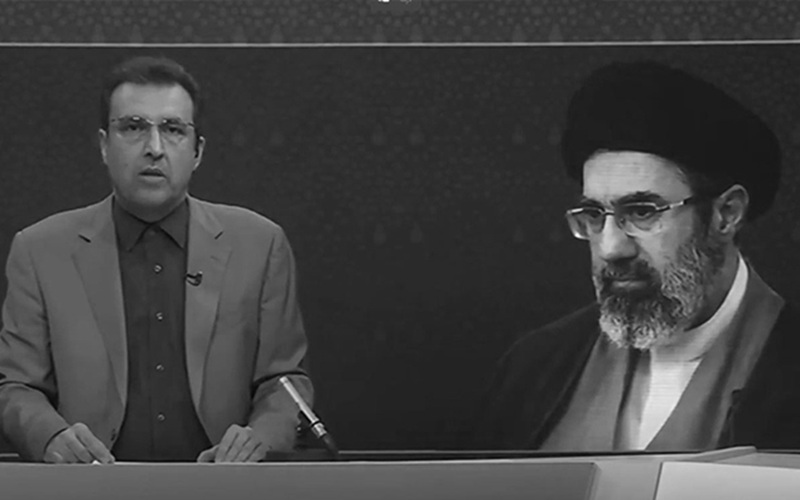

Conflicting reports over Mohammad Bagher Ghalibaf’s role in negotiations with Washington, a reported letter from US Vice President JD Vance to Mohsen Rezaei, and changes within the Supreme National Security Council expose intensifying factional infighting at the top of Iran’s regime.
Iran’s regime is witnessing an increasingly bitter power struggle over control of negotiations with Washington, foreign policy, and the country’s security apparatus. Conflicting reports about the roles of Parliament Speaker Mohammad Bagher Ghalibaf and former Revolutionary Guards commander Mohsen Rezaei point to a widening struggle between rival factions at the highest levels of the regime.
The dispute has intensified following reports that US Vice President JD Vance sent a letter to Rezaei, the reported dissolution of a media committee associated with Ghalibaf, and changes in the composition of the Supreme National Security Council (SNSC).
Although the precise extent of these developments remains unclear, their convergence highlights the instability within a leadership struggling to consolidate power under Mojtaba Khamenei.
Mohsen Rezaei emerges as a rival center of authority
Reports circulating in state-affiliated media suggest that responsibility for negotiations with the United States may be shifting from Ghalibaf to Rezaei, who serves as secretary of the Supreme National Security Council.
The government spokesperson, Esmail Baghaei, has indicated that Ghalibaf continues to head the negotiating delegation. However, the state-affiliated Nobonyad newspaper, associated with the hardline Paydari faction, has reported that the negotiations file has returned to the SNSC.
Other reports describe the formation of a six-member council tasked with determining the regime’s foreign policy under wartime conditions. The proposed body reportedly includes senior government officials and military commanders, with Rezaei potentially playing a leading role.
Reports have also emerged that the media committee previously operating under Ghalibaf has been dissolved, further suggesting an effort to reduce his influence over the political and media management of negotiations.
The conflicting accounts reflect the competing narratives promoted by different factions, each seeking to shape perceptions of who controls the regime’s foreign policy.
Reported Vance letter raises questions over Ghalibaf’s negotiating role
The controversy gained momentum following reports that US Vice President JD Vance had sent a letter to Rezaei. The Wall Street Journal disclosed the reported correspondence, while a subsequent Washington Post analysis suggested that Washington viewed Rezaei as a potential figure capable of continuing negotiations.
The contents of the letter have not been made public. Nevertheless, its reported recipient has become a central element in speculation over a possible shift in the regime’s negotiating arrangements.
The state-affiliated Fararu website also drew attention to the development, writing that a confidential letter from Washington, combined with an unprecedented meeting in Tehran, had strengthened speculation about Ghalibaf’s sudden removal from the negotiations process and the transfer of authority to Rezaei.
Another significant development was Ghalibaf’s absence from a meeting in Tehran involving Pakistan, Saudi Arabia, and Turkey, described in some reports as part of the Mecca Pact framework. The gathering was hosted at Rezaei’s invitation, and his prominent role, alongside Ghalibaf’s absence, added to questions about the balance of power between the two figures.
Taken together, these developments suggest that the dispute is no longer confined to differences over negotiating tactics. It concerns who has the authority to determine the regime’s strategic direction and represent it in dealings with Washington.
Security Council reshuffle exposes deeper factional tensions
The struggle extends beyond the negotiations themselves. Rezaei has publicly emphasized that, under wartime conditions, diplomatic policy is determined through the Supreme National Security Council and its secretariat. He has also pointed out that President Masoud Pezeshkian formally heads the council.
These statements reinforce the argument that the SNSC, rather than Ghalibaf’s negotiating apparatus, is supposed to hold the decisive authority over foreign policy.
Another reported development involves the removal of Mohammad Bagher Zolghadr from the SNSC and his replacement by Rezaei. Some accounts interpret the reshuffle as part of Mojtaba Khamenei’s efforts to consolidate control over the regime’s power structure and bring key institutions under closer supervision.
The significance of these changes lies in the struggle to control the institutions that determine security policy, military strategy, and diplomatic decisions. The competing factions are not simply debating how to negotiate with Washington; they are fighting over access to the centers of power.
Whether Ghalibaf has actually been removed from the negotiations remains unresolved. The regime’s own media outlets continue to publish contradictory accounts, and no definitive official clarification has settled the matter.
What is increasingly difficult to conceal, however, is the escalation of factional conflict at the highest levels.
Leadership crisis intensifies infighting within Iran’s regime
The current power struggle cannot be separated from the crisis that followed the killing of Ali Khamenei and the subsequent imposition of his son, Mojtaba, as the new supreme leader.
His succession took place amid tensions among competing factions, while the new leadership inherited an establishment weakened by military setbacks and the loss or serious degradation of important instruments of regional deterrence.
This weakened position has aggravated internal rivalries. Competing power centers are seeking to secure greater influence over the regime’s political, military, and diplomatic decisions at a time when its strategic options have narrowed.
Against this backdrop, the regime increasingly relies on two principal instruments of leverage: its missile capabilities and the threat of disrupting shipping through the Strait of Hormuz. Both are intended to strengthen its position in confronting external pressure and extracting concessions.
Yet these instruments also reflect the regime’s constrained circumstances. Its diminished regional deterrence and mounting internal divisions have made the struggle over who controls its remaining sources of power even more consequential.
The confrontation between Ghalibaf and Rezaei, the reported reshuffling of the SNSC, and the conflicting accounts of negotiations with Washington are therefore more than isolated political developments. They expose a leadership struggling to manage competing factions while confronting a weakened strategic position.
The intensifying infighting suggests that Mojtaba Khamenei’s succession has not resolved the regime’s internal power struggle. Instead, the battle to control the remaining centers of authority is becoming an increasingly visible feature of a deeply weakened establishment.