


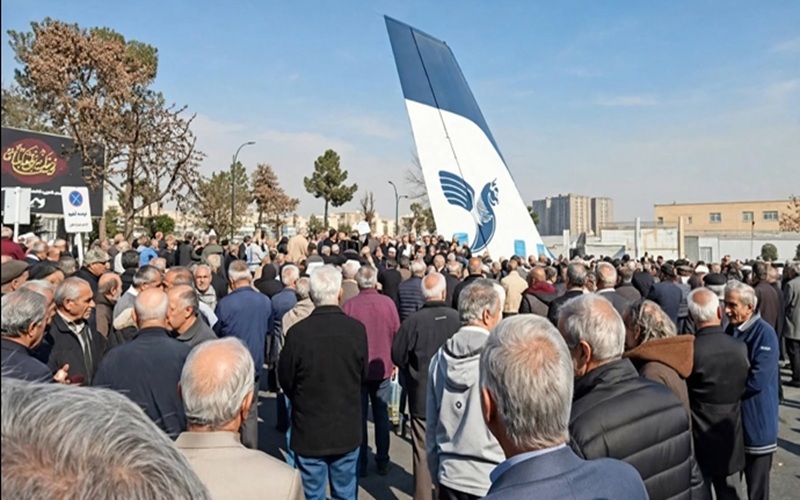

As deprivation erodes dignity, weakens social solidarity, and threatens public security, the central question is no longer merely how poverty affects Iranian society, but who is responsible for creating and perpetuating the conditions behind it.
Economic hardship in Iran has reached far beyond empty wallets and declining purchasing power. For millions of people, securing medicine, finding affordable housing, and providing basic necessities have become daily struggles. Natural disasters such as prolonged rainfall and flooding can destroy what little families have managed to preserve, leaving them with few resources to recover. But beneath these visible hardships lies a deeper crisis: the gradual erosion of human dignity, social trust, and the moral foundations of society.
This is why poverty in Iran must be examined as more than an economic problem. Its consequences are increasingly social and political. And understanding those consequences requires looking beyond the symptoms to the structures that sustain them.
When poverty begins to erode social solidarity
A revealing discussion appeared in the November 14, 2026, edition of Setareh Sobh. Citing sociologist Amanollah Gharai-Moghaddam, the newspaper examined how prolonged poverty affects people’s psychological and moral well-being.
The sociologist explained that persistent deprivation produces humiliation and hopelessness, while the constant struggle to secure food and other necessities consumes people’s mental energy. When survival becomes the overriding concern, the capacity to consider longer-term consequences and maintain ordinary social and ethical sensitivities can gradually weaken.
This observation points to a consequence of poverty that economic statistics alone cannot capture. Poverty does not simply reduce living standards. It can undermine the relationships that hold a society together.
When people are forced into a permanent struggle for survival, solidarity becomes harder to sustain. Desperation can intensify competition over scarce resources, deepen mistrust, and leave vulnerable individuals increasingly isolated. The resulting damage extends beyond individual households to the social fabric as a whole.
Yet recognizing these consequences is only the beginning. The more important question is why such conditions have become so widespread and persistent.
The missing question: Who is responsible?
Discussions in Iran’s official media frequently describe the symptoms of economic and social distress: poverty, theft, insecurity, widening inequality, and the psychological consequences of deprivation. These are real problems, but treating them as disconnected social phenomena obscures the relationship between them and the policies and structures governing the country.
Even when inequality is acknowledged, the discussion often focuses on the growing distance between ordinary citizens and wealthy individuals. But this framing leaves a fundamental question unanswered: where does the concentration of wealth and economic power originate, and who controls the institutions through which public resources are distributed?
Iran’s economic crisis cannot be understood without examining the political economy of the ruling system. The concentration of power, lack of public accountability, corruption, and the prioritization of regime interests over public welfare are central to any serious examination of the country’s economic deterioration.
The issue is therefore not simply that some people have become richer while others have become poorer. It is that the structures responsible for managing national resources and protecting public interests have failed to provide the conditions for economic security and social justice.
An analysis that stops at the distance between rich and poor risks turning attention away from the institutions and decisions that shape that distance.
Insecurity is also a consequence, not an isolated problem
The same displacement of responsibility can be seen in discussions about public security.
Setareh Sobh also highlighted concerns about changing patterns of theft and the growing vulnerability of citizens. Its discussion connected economic hardship with rising insecurity, including the particular exposure of elderly people living alone.
Such concerns deserve attention. But examining theft and insecurity without addressing the conditions in which they develop produces an incomplete picture.
When households cannot meet basic needs, when housing and medicine become increasingly unaffordable, and when economic uncertainty dominates everyday life, the consequences extend into every aspect of society. Poverty does not automatically turn people toward crime, nor does economic hardship eliminate individual moral responsibility. But persistent deprivation can intensify social pressures and make vulnerable communities less secure.
The question, therefore, cannot be reduced to how citizens should protect themselves from one another. It must also address why so many people are being deprived of the economic security necessary for a dignified life.
For decades, Iranians have experienced the consequences of policies over which they have little control and for which those in power face little meaningful accountability. Shifting the discussion toward conflicts between individuals does not resolve the underlying crisis.
A system without a credible prospect for improvement
Perhaps the most revealing part of the Setareh Sobh discussion was its acknowledgment that there is no visible prospect of resolving the country’s economic problems.
This pessimism is significant because the crisis is not confined to one sector that could be repaired through an isolated policy adjustment. Economic hardship, environmental destruction, housing insecurity, public safety, and social disintegration are interconnected. They reinforce one another, making solutions increasingly difficult when the underlying causes remain untouched.
The repeated publication of reports about these problems does not, by itself, constitute progress. Nor does acknowledging the consequences amount to addressing their causes. Without transparency, accountability, and fundamental changes in the priorities governing national resources, the cycle of crisis continues.
The distinction between describing a problem and confronting its source is particularly important in a country where public debate remains constrained and the ruling establishment has little incentive to question the structures on which its power depends.
The future depends on confronting the roots of the crisis
Iran’s economic and social deterioration is ultimately a question of political responsibility. The struggle for food, medicine, housing, and security cannot be separated from the broader question of how the country is governed and whose interests its institutions serve.
The central challenge is not simply to manage poverty or contain its social consequences. It is to create conditions in which people can live without the constant fear of losing their livelihoods, dignity, and basic security.
That requires more than temporary relief measures or another round of official promises. It requires accountability, the protection of public resources, and a political order that places the interests and rights of citizens above the preservation of those in power.
The absence of a credible prospect for improvement under the existing system does not mean that Iran has no future. The country’s future depends on the ability of its people to recognize their shared interests, build solidarity across social divisions, and pursue a fundamental political transformation.
Poverty may push people into competition and isolation. But the recognition that their hardships have interconnected causes can also become a basis for solidarity. The way out of Iran’s overlapping crises begins with confronting their roots rather than endlessly documenting their consequences.