


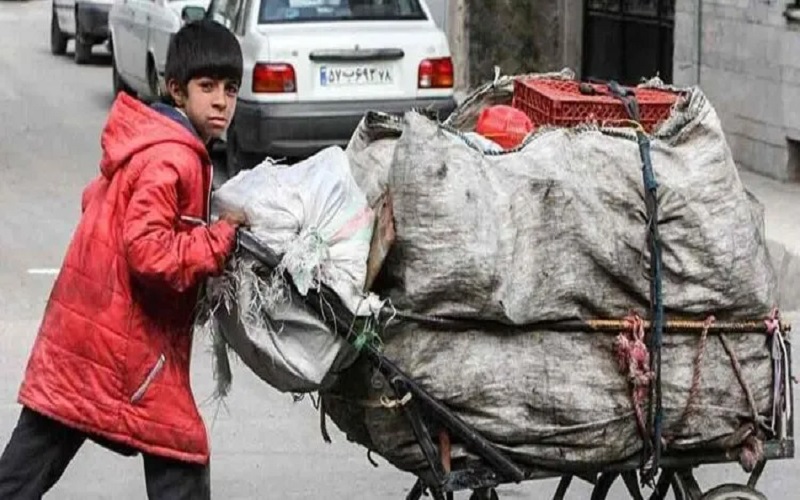

Iran is grappling with a severe economic crisis marked by soaring inflation, a declining currency, and relentless poverty. As international sanctions intensify and government resources are diverted to support regional conflicts, including the ongoing Gaza crisis, the Iranian populace faces increasing hardship. With an unpredictable currency market and daily fluctuations in the value of the rial against the dollar, Iranians find themselves recalculating their expenses in anticipation of continued devaluation.
Rising Poverty and the Vanishing Middle Class
As economic instability grows, the Parliament Research Center reports that over a third of Iranians, approximately 30 million people, now live in extreme poverty, struggling to meet basic needs. Daily life has transformed dramatically for the average Iranian; luxuries such as travel, dining out, and entertainment have been abandoned as nonessential. For many, the sole priority is securing a roof over their heads, while food and other necessities take a distant second. Meat, chicken, and even fruits have become rare purchases, with rent dominating household budgets.
A Currency in Freefall
For years, Iranians have lamented that they “earn in rials and spend in dollars,” as the volatile exchange rate drastically affects purchasing power. Since Masoud Pezeshkian’s government took office, while promising economic improvement with no sign of realization, the dollar has reached record highs, with the exchange rate recently hitting 66,500 tomans. Regional tensions further strain the currency, especially following the Israeli strike on Iran’s consulate in Damascus in April 2024. With the rial losing over 10% of its value following these tensions, economic hardship deepens as the region faces a potential escalation into broader conflict.
Unchecked Inflation and an Unpredictable Market
The ripple effect of the dollar’s rapid increase has made essential goods prohibitively expensive. Food prices have surged in recent months, independent of the country’s already-high inflation rate. Market vendors now adjust prices daily, and consumers have grown accustomed to this relentless rise. Merchants report that setting stable prices has become impossible, and many consumers say they would accept gradual, predictable increases rather than the current erratic changes.
Soaring Cost of Living in Iran’s Capital
The Statistics Center of Iran reported a staggering increase in living costs, particularly in urban areas. The annual cost of living in Tehran has reached 330 million tomans, pushing many middle-income households to the brink of poverty. Rent hikes, a rising dollar, and inflation have forced thousands to abandon urban life, relocating to the outskirts. These shifts have created new living arrangements as people cope with housing costs by renting shared spaces, rooms at inflated prices, or even resorting to sleeping in buses or on rooftops. Social media occasionally exposes such desperate conditions, although state media routinely denies their existence.
Worsening Food Insecurity and Malnutrition
According to a recent report by the state-run Entekhab website, food insecurity is now rampant, with eight provinces facing critical shortages. In Sistan and Baluchistan, around 70% of the population is food insecure, and child malnutrition rates have soared. Khuzestan and Sistan and Baluchistan suffer particularly, with 58% and 50% of children, respectively, facing malnutrition-related health issues. Per capita meat consumption has plummeted to just five kilograms, far below the global average of 30 kilograms. Yet, while domestic demand for dairy drops, Iran continues to export dairy products, reflecting the paradox of scarcity amidst rising prices.
A Basic Salary that Fails to Meet Basic Needs
The disparity between the minimum wage and the cost of living is striking. In September 2024, the monthly cost of an essential livelihood basket surpassed 36 million tomans, while the base salary of formal workers remains a meager 7 million tomans. This disparity leaves most families unable to cover fundamental expenses and forces many to rely on loans or government assistance to meet everyday needs.
Mounting National Debt and Fiscal Crisis
The regime’s economic policies have compounded the crisis. Iran’s economy minister recently disclosed a budget deficit of 850 trillion tomans, with government debt to banks reaching 1,600 trillion tomans. The country’s liquidity has now surpassed 9 trillion tomans, a level that signals deeper economic distress. This unsustainable fiscal landscape puts additional pressure on Iran’s economy, leaving little room for improvement in living standards and heightening the likelihood of further economic deterioration.
Conclusion
The Iranian economy is in dire straits, with a volatile currency, rampant inflation, and an overwhelming cost of living that has driven millions into poverty. As sanctions continue to tighten and government resources are drained by foreign involvements, Iran’s population faces a bleak economic future. The government’s pledges to alleviate economic pressures have yet to materialize, leaving the population with a rapidly eroding quality of life and an uncertain tomorrow.