


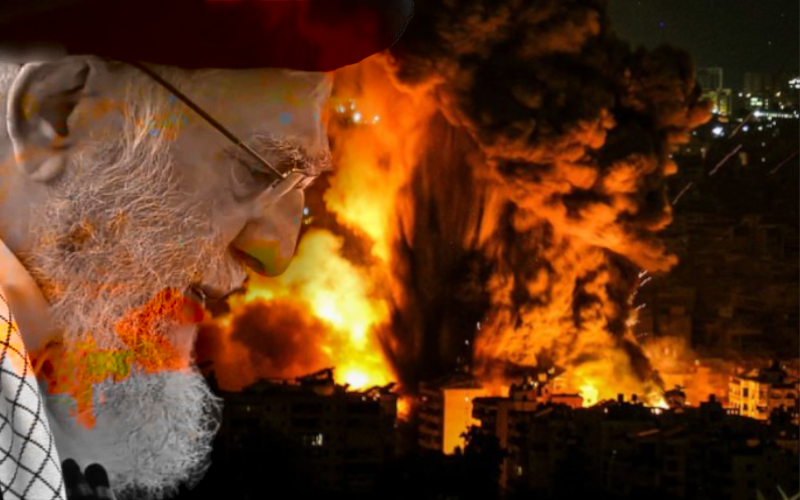

The term “proxy forces” is all too familiar to the people of Iran. For many years, the Iranian regime has employed these forces to target its opponents, both inside and outside the country. Domestically, the Iranian people have endured the oppressive presence of the Basij, a paramilitary group that operates with impunity. Beyond Iran’s borders, the regime’s influence has spread through various militias, including Hezbollah in Lebanon, regime-backed forces in Iraq, Hamas in Palestine, and the Houthis in Yemen. These groups, loyal to Tehran, extend Iran’s reach across the Middle East, enforcing its ideological and political goals.
Domestic Repression: A Regime’s Grip on Power
At home, the Iranian regime’s strategy of oppression is deeply institutionalized. The Basij and other security forces act with impunity, using violence and intimidation to suppress dissent. The regime has a long history of silencing opposition, from serial murders and acid attacks on women to the brutal repression of protest movements. It has even targeted foreign nationals inside Iran, using them as hostages in political bargaining. Such repressive tactics have become a tool for regime survival, codified in Iran’s legal framework under pretexts like “Enjoining good and forbidding wrong.”
The Iranian leadership has also used religious and nationalist rhetoric to justify its actions. In the early 1980s, as domestic unrest grew, the regime ignited the Iran-Iraq war, a conflict that conveniently diverted attention away from internal discontent. This war, which lasted until 1988, became a means for the regime to assert its legitimacy by portraying itself as the defender of the nation. Despite losing the war and accepting the terms of the UN Resolution 598, the Iranian regime did not abandon its militaristic strategy. Instead, it pivoted towards building a network of proxy forces across the region.
The Expansion of Proxy Forces: Iran’s Regional Strategy
In the aftermath of the Iran-Iraq war, the regime faced a new challenge: how to contain the growing desire among Iranians for political reform and democracy. This discontent was evident in the widespread boycott of the most recent presidential election, as Iranians expressed their dissatisfaction with the regime’s authoritarian rule. In response, Iran deepened its reliance on proxy forces abroad as a way to project strength and distract from its internal vulnerabilities.
Proxy warfare became a strategic tool for the regime. By funding and arming groups like Hezbollah, Hamas, and various militias in Iraq and Yemen, Iran extended its influence throughout the region. These groups act on Tehran’s behalf, destabilizing neighboring countries and furthering Iran’s geopolitical goals. Ironically, the regime sometimes publicly condemns the actions of its own proxies in a bid to obscure its involvement, thereby maintaining plausible deniability.
However, this strategy has its limits. The regime’s proxy network has increasingly become a double-edged sword, as its militias—once seen as assets—have grown harder to control. This was particularly evident in the aftermath of the devastating Gaza war, which began on October 7, 2023. Iran’s support for Hamas and the ensuing conflict had severe repercussions across the region. As the war dragged on, the regime’s supreme leader, Ali Khamenei, attempted to rally his forces by delivering a highly publicized Friday sermon in Tehran, addressing his proxy forces in Arabic in an effort to boost their morale.
The Growing Costs of Proxy Warfare
Iran’s reliance on its proxy forces has come at a steep cost. Once viewed as key to the regime’s regional dominance, these militias have become a burden. Iran’s so-called “Resistance Axis” is weakening, not just due to the destruction of Hamas in Gaza or the elimination of Hezbollah’s leadership, but also because key regional allies are pulling away. Syria’s Assad regime has shown increasing indifference to Tehran’s demands, while Iraq has issued formal warnings against Iranian interference. Even Iran’s affiliated militias in Iraq and Yemen, once staunch supporters, have taken actions that suggest a weakening allegiance.
This erosion of Iran’s proxy network signals a deeper problem for the regime. The very groups that were supposed to protect its interests are now becoming liabilities, much like Iran’s disastrous revolutionary ambitions of the 1980s. The regime is paying a heavy price for its aggressive foreign policy, both financially and politically. As its proxies become less effective, Iran faces growing isolation and internal pressure.
A Regime on the Verge of Collapse?
Iran’s leadership has always relied on duplicity to maintain control, declaring one thing while doing the opposite. Over the years, the regime has boasted of its military might and promised to retaliate against Israeli attacks at “the right time and place.” Yet, these responses have been continually delayed, leading to skepticism even among the regime’s supporters. The recent flare-up with Israel appeared more like a desperate attempt to placate its ideological base than a serious military strategy. Iran’s real military capabilities, long shrouded in secrecy, have been increasingly exposed. Despite its rhetoric, the regime has been reluctant to engage in direct confrontation, preferring instead to hide behind its proxies.
More importantly, the regime’s propaganda machine—designed to boost morale—cannot conceal the growing fear of collapse. The Iranian people are well aware of these tactics. After the regime flaunted the attendance of “millions” at General Qassem Soleimani’s funeral, student protests quickly followed, demanding justice for the more than 1,500 people killed during the November 2019 protests. The regime’s attempt to use external conflicts as a distraction no longer resonates with a population that is disillusioned by decades of economic hardship, corruption, and political repression.
Conclusion: A System on the Brink
Iran’s leadership finds itself in a precarious position. Its once-powerful proxy network is faltering, while domestic unrest grows. Missiles, drones, foreign wars, and staged Friday prayers, along with claims of widespread public support, cannot save this crumbling regime. All signs point to one outcome: a regime on the verge of collapse, and a people more determined than ever to overthrow it. The question is not if, but when, this regime will fall.