


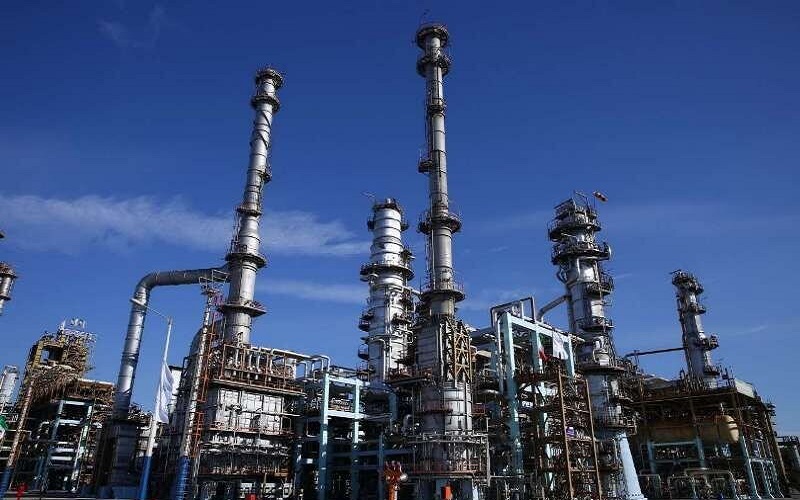

Iran boasts the world’s second-largest natural gas reserves and fourth-largest oil reserves. However, the Iranian oil and gas industry faces significant challenges that threaten its future potential.
Investment Struggles: A Fading Dream of Increased Production
The Iranian Chamber of Commerce paints a bleak picture of the investment landscape. Arash Najafi, head of the Energy Commission, emphasizes the critical role of foreign investment, currently hindered by international sanctions and Iran’s inclusion on the Financial Action Task Force (FATF) blacklist. This restricts foreign banks from participating, making direct investment a non-starter.
The government’s ambitious plan to raise daily oil production to 4 million barrels hinges on a mere $3 billion investment – a stark contrast to the over $18 billion invested annually during the 2000s. This funding gap has resulted in stagnant or declining production, further exacerbated by aging oil fields.
The last major foreign investment, a 2009 deal with China’s CNPC for the South Azadegan field, remains unfinished. This exemplifies the challenges Iran faces in attracting and retaining foreign partners.
A Looming Decline: The Urgency for Investment
According to the regime’s Ministry of Oil and the US Energy Information Administration (EIA), 80% of Iran’s oil fields are nearing depletion, with production falling by 8-12% annually. To maintain current output levels, experts estimate an annual investment exceeding $20 billion is needed.
The current approach of drilling more wells offers a temporary reprieve but neglects long-term development. The 2024 investment allocation of $3 billion pales in comparison to the global oil and gas investment projected at $570 billion this year. This disparity highlights Iran’s dwindling share of the global investment pie, currently at a meager 0.5%.
Wasting a National Treasure: The Alarming Rise of Gas Flaring
Iran’s gas story is equally concerning. While the regime’s Oil Minister claims progress in reducing gas flaring, the reality paints a different picture. World Bank and BP data reveal a staggering 21 billion cubic meters of gas lost through flaring in 2023, a 19% increase compared to the previous year. This equates to 40% of Türkiye’s total gas consumption in 2023.
The primary culprit is the lack of gas collection equipment in oil fields. This wasteful practice not only squanders a valuable resource but also contributes significantly to greenhouse gas emissions. BP data shows a 19% increase in Iran’s gas flaring emissions, reaching 43 million tons in 2023. This surpasses the total greenhouse gas emissions of Azerbaijan in 2023.
Furthermore, Iran ranks second globally in gas flaring, with total greenhouse gas emissions reaching a record high of 937 million tons in 2023, placing it sixth in the world. These statistics contradict the claims of reduced flaring by the Iranian government.
Leakage Woes: A Network in Desperate Need of Upgrading
Iran’s gas woes extend beyond flaring. The International Energy Agency reports a 12% increase in methane emissions (gas leakage) in 2023, reaching 8.5 billion cubic meters. This is attributed to Iran’s outdated gas transmission and distribution network.
The combined gas losses from production, transmission, and distribution in 2023 amounted to approximately 30 billion cubic meters, exceeding Iran’s total domestic gas consumption for the same year. This highlights the urgent need to modernize the infrastructure to prevent further losses.
Consequences of Inaction: A Gas Deficit and Declining Exports
The lack of investment and rampant gas losses have severe consequences. Iran faces a growing gas deficit, particularly during winters. This led to a 25% drop in gas exports in 2023, reaching only 14.3 billion cubic meters.
Former regime Oil Minister Bijan Zangeneh estimated that just $5 billion is needed to eliminate gas flaring. This underscores the stark cost-benefit analysis. Wasting 21 billion cubic meters of gas through flaring is not only environmentally damaging but also financially irresponsible, exceeding the cost of eliminating the practice entirely.