Public celebrations after security forces retreat in western Iran signal a decisive break with dictatorship and a growing national resolve to end clerical rule.
On Tuesday, January 6, 2026, the city of Abdanan, in Iran’s western Ilam province, witnessed a moment its residents are unlikely to forget. After hours of sustained street protests, regime security forces withdrew and fled, leaving behind a city briefly reclaimed by its people. What followed was not merely celebration—it was a collective declaration of defiance.
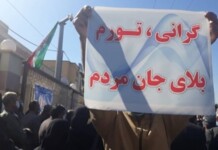
From the early hours of the day, large groups of citizens gathered across central areas of Abdanan. Protest slogans echoed through the streets, most prominently the chant “Death to the dictator,” a clear and unequivocal rejection of authoritarian rule in all its forms. What began as a protest rapidly evolved into a powerful display of unity, courage, and popular sovereignty.
January 6—Abdanan, western Iran
Huge crowd gathered at dusk to hold anti-regime protests despite extensive security measures.
Protesters chant, "This is the year of blood, Seyyed Ali [Khamenei] will be overthrown!"#IranProtests #IranRevolution pic.twitter.com/FURrRsJvyS— People's Mojahedin Organization of Iran (PMOI/MEK) (@Mojahedineng) January 6, 2026
As the crowd grew, the balance of control shifted. Field reports confirm that security forces retreated from multiple neighborhoods, creating a rare and symbolic vacuum in the regime’s apparatus of repression. In a familiar tactic, authorities attempted to contain the situation by imposing widespread power cuts. The blackout failed. Rather than dispersing, the crowds grew angrier and more determined.
With the withdrawal of the security forces, Abdanan took on a new atmosphere. The streets belonged to the people. Joy, tears, chants, and applause blended into scenes many described as moments of lived freedom. Women, young people, families, and elderly residents stood side by side. For hours, the city appeared without uniformed enforcers or clerical symbols of power—a striking image in the Iranian regime.
These events did not occur in isolation. Abdanan’s uprising is part of a broader nationwide revolt unfolding across Iran. In recent days, numerous cities have witnessed protests driven by political repression, economic collapse, and decades of unfulfilled promises. The simultaneity of these actions points to a shared national consciousness and a common political language: rejection of dictatorship.
As night fell, reports indicated that residents remained on the streets, prepared to confront any attempt by the Islamic Revolutionary Guard Corps (IRGC) to reassert control. The sustained presence reflected a deep mistrust toward temporary retreats and empty assurances. The people of Abdanan understood that power concedes nothing permanently unless forced.
January 6—Abdanan, western Iran
The people of Abdanan celebrating after they took control of the city from the regime's security forces.#IranProtests pic.twitter.com/AipkASqo71— People's Mojahedin Organization of Iran (PMOI/MEK) (@Mojahedineng) January 6, 2026
What unfolded simultaneously in Abdanan and nearby Malekshahi sent a clear message to the rest of the country: cities can be reclaimed. Fear is no longer an effective instrument of rule. These moments have already entered Iran’s collective memory as proof that resistance is not only possible, but contagious.
The people of Abdanan have paid a heavy price over the years—through repression, intimidation, economic deprivation, and political exclusion. Yet their presence in the streets signaled that society has moved beyond hesitation. The uprising in this city will be remembered as a point of pride and resolve for future generations.
January 6—Abdanan, western Iran
The people occupied the police station after the regime's security forces failed to suppress the demonstrations and were forced to back down.#IranProtests pic.twitter.com/BD10wl58aJ— People's Mojahedin Organization of Iran (PMOI/MEK) (@Mojahedineng) January 6, 2026
What happened was not simply a protest. It was evidence of the erosion of the regime’s coercive foundations and the total loss of political credibility. Four decades of experience have demonstrated that this system is not reformable. The scenes of popular control in Abdanan confirmed a central truth of Iran’s uprising: the decisive force is the united people in the streets.
The path forward is costly, but unmistakably clear. The people of Iran are no longer choosing between reform and repression—they are choosing freedom over dictatorship. Abdanan stood up, and in doing so, showed the country what the end of fear looks like.