


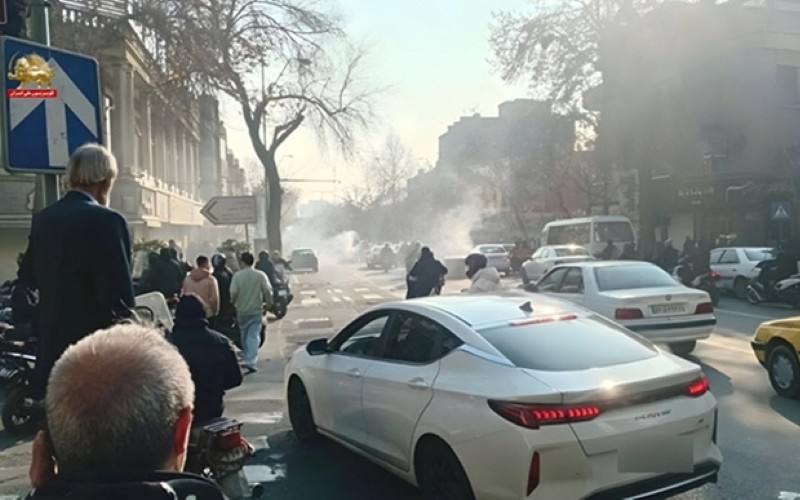

Why Iran’s current uprising is neither spontaneous nor leaderless—and why it cannot be stolen
A Revolution Decades in the Making
What is unfolding today in Iran is not a momentary protest wave or an emotional reaction to a single crisis. It is a democratic uprising shaped by sacrifice, historical memory, and organized resistance. For observers unfamiliar with Iran, it is essential to understand that this movement is not accidental—it is the culmination of more than a century of struggle for freedom, justice, and popular sovereignty.
From the Constitutional Revolution of the early 20th century to the present day, one truth has remained consistent in Iran’s modern history: no dictatorship—monarchical or religious—has been able to permanently suppress the conscious will of the Iranian people.
Both the former absolute monarchy and the current clerical regime attempted to portray themselves as inevitable products of history. Iran’s experience proves otherwise. Dictatorships come and go. What endures is the people’s determination to reclaim their rights.
Beyond the Myth of a “Leaderless Revolt”
A common misconception outside Iran is that the current uprising lacks leadership or structure. In reality, this movement is neither chaotic nor directionless. It is organized, politically conscious, and sustained by networks operating inside the country.
History shows that revolutions fail when they suffer from one of two weaknesses:
- Lack of political awareness
- Lack of organization
Iran’s current uprising suffers from neither.
Political consciousness has spread across social classes, generations, and regions. At the same time, organized resistance networks have emerged, connecting public demands with collective action on the ground.
The Role of Organized Resistance
In 2013, Iranian resistance leader Massoud Rajavi articulated a strategic framework that explained how organized resistance could operate inside Iran under severe repression. He described the formation of small, decentralized resistance units—later known as “Resistance Units”—capable of operating even without conventional military resources.
These units were designed to sustain momentum, spread awareness, and prevent the uprising from dissipating. Over time, they evolved into a significant force on the ground—one that today visibly unsettles the Iranian regime.
The regime’s fear is not accidental. It is a response to a movement that is organized, persistent, and deeply rooted in society.
Resistance Is Not Imported—It Is Iranian
Iran’s culture of resistance is not borrowed from abroad. It is indigenous and deeply embedded in the country’s historical identity.
From the legendary blacksmith Kaveh, who rose against tyranny in Persian mythology, to constitutional revolutionaries like Sattar Khan and Bagher Khan, and to modern political prisoners who have faced torture, imprisonment, and execution, a clear line runs through Iranian history: resistance in defense of human dignity and freedom.
This culture teaches a hard truth: freedom is never granted voluntarily by those in power. It is earned—at a cost—but with honor.
Can This Revolution Be Stolen?
Skeptics often warn that revolutions can be hijacked. History provides a precise answer: revolutions are stolen only when organized leadership and an aware populace are removed from the political arena.
When people remain organized, informed, and present, no force—whether a military dictator, a religious autocracy, or even foreign powers—can divert or confiscate their struggle.
Global examples support this conclusion. In South Africa, apartheid was dismantled not only through protest but through sustained leadership and popular engagement. In Eastern Europe, dictatorships collapsed when civil society and organized movements advanced together.
Iran’s uprising follows the same historical logic.
A Clear Vision for a Democratic Future
This movement is not a rejection of the past without learning from it, nor a repetition of historical mistakes. It is a conscious response to decades of repression, corruption, and humiliation imposed on Iranian society.
A new generation has entered the political stage—one that has moved beyond fear. This generation knows not only what it rejects, but what it demands:
- Freedom
- Equality
- Separation of religion and state
- Popular sovereignty
These principles are articulated in Maryam Rajavi’s Ten-Point Plan, which outlines a clear vision for a future democratic republic in Iran—one based on free and fair elections, freedom of expression, independent media, political pluralism, and the rule of law.
An Uprising With Roots, Ownership, and a Horizon
What is certain is this: Iran’s democratic revolution is not rootless, leaderless, or without a future. It is an organized uprising emerging from a long tradition of resistance, advancing toward a democratic republic shaped by the will of its people.
Dictators may come and go. But once a people awaken, history shows they do not return to submission.
Iran is no exception.