From historical betrayals to today’s uprising, how Iranians are confronting dictatorship—and learning from a century of stolen revolutions
History is not just a record of what has happened. For nations living under dictatorship, it is a warning system. Iran’s past shows, again and again, how popular uprisings were diverted, suppressed, or stolen—and why today’s movement must not be.
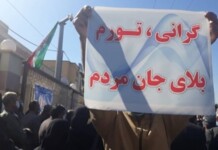
On January 3, 2026, Iran regime’s supreme leader Ali Khamenei once again repeated a familiar phrase: the need to “separate protesters from rioters.” This statement is not new, and it is not harmless. In Iran’s political reality, such language is a clear signal for repression, mass arrests, and killings. It has been used repeatedly to temporarily suppress uprisings, but each time it has only stored more anger for the next explosion.
This cycle cannot continue forever. Recent uprisings have shown a clear pattern: every new wave of protest is more radical, more widespread, and more determined than the one before it. Dictatorship is like a pressure cooker. At some point, it explodes. This is not a prediction—it is a historical rule.
Whether the current uprising reaches that decisive moment, or whether it comes in the next wave, will be decided only by the Iranian people themselves.
How the Regime Tries to Derail the Uprising
At this stage, the regime is no longer relying solely on its official security forces. It has deployed other, more deceptive tools:
- Sending intelligence-linked thugs into the streets
- Promoting monarchist slogans to confuse and divide protesters
- Launching large-scale cyber manipulation and fake social media campaigns
- Producing fabricated videos that falsely portray the uprising as monarchists
The goal is clear: to weaken social unity, distort the identity of the uprising, and push the movement away from its real demands.
This strategy is not new. Dictatorships and counter-revolutionary forces have used similar tactics at critical moments in Iran’s history—and sometimes they succeeded. That is precisely why remembering history matters today.
Lesson One: The Constitutional Revolution
During the Constitutional Revolution, revolutionary figures such as Sheikh Mohammad Khiabani, Colonel Pessian, and Mirza Kuchik Khan were pushing Iran toward genuine reform. At the same time, British generals—working alongside Russian White forces—helped engineer a coup with Reza Khan and Zia ol Din Tabatabaee. This intervention effectively ended the Constitutional Revolution and blocked the path to real democracy.
Lesson Two: Installing the Son of a Dictator
In 1941, after removing Reza Shah, Britain placed his son, Mohammad Reza Shah, on the throne. Iran had been politically emptied by years of repression. With no strong democratic forces left, a new phase of dependent dictatorship was imposed on the country.
Lesson Three: The Coup Against Iran’s Only National Government
In the early 1950s, Dr. Mohammad Mossadegh formed the only truly national government in Iran’s modern history. Exploiting internal divisions and Cold War tensions, colonial powers carried out the 1953 coup, overthrowing Mossadegh and restoring the Shah. Once again, a popular movement was crushed from outside and within.
Lesson Four: The “White Revolution”
In the 1960s, as democratic movements spread globally, the Shah introduced limited and controlled reforms under the name of the “White Revolution.” These superficial changes successfully redirected revolutionary energy and delayed real transformation.
Lesson Five: The Anti-Monarchy Revolution
When the monarchy finally collapsed, the political vacuum created by years of repression was exploited. At the Guadeloupe Conference, Western powers agreed on Ruhollah Khomeini as the alternative. NATO General Huyser was sent to Tehran to manage the Shah’s exit and facilitate a so-called “peaceful transition.” The result was not popular sovereignty, but another form of dictatorship.
Lesson Six: The Price the People Have Paid
Since then, the Iranian people have paid an enormous price for freedom. More than 100,000 lives have been lost in the struggle for a democratic, just, and forward-looking society. Today’s uprising stands on the shoulders of that sacrifice.
The Defining Question
The central question now is simple but historic: Can Iran finally achieve a victorious transition?
The answer will be given not by foreign powers, not by propaganda, and not by recycled political symbols—but by the Iranian people themselves and their organized, conscious, and radical resistance. A resistance shaped by deep historical awareness, and by hard-earned knowledge of colonial interference, monarchist betrayal, and clerical crimes.
For the first time in generations, the lessons of the past are no longer being ignored. And that may be the most dangerous development of all—for dictatorship.