



Remnants of Shah’s Dictatorship Exposed
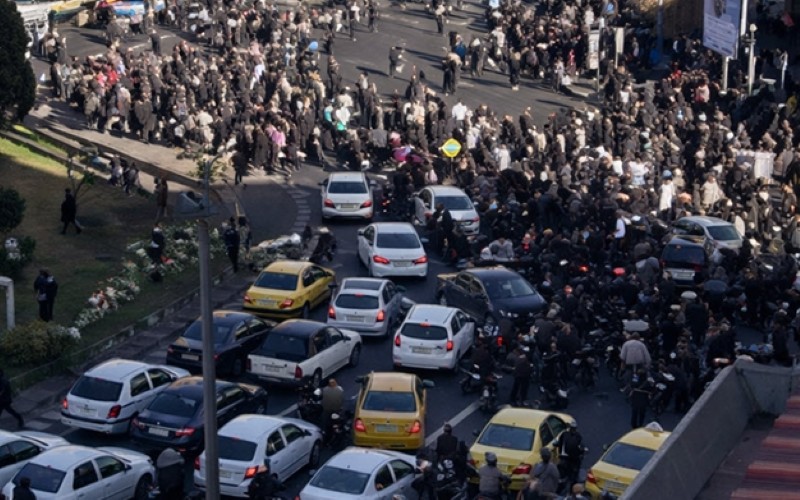
As Iran entered the fourth day of a rapidly intensifying uprising on December 31, protests that first erupted in Tehran’s historic Grand Bazaar had spread nationwide. What began as a strike by merchants furious over currency collapse and crippling inflation quickly escalated into open political defiance against the ruling theocracy.
During these protests, demonstrators chanted powerful anti-regime slogans. In various parts of Tehran, cries of “Death to the dictator” echoed, and similar chants were heard at universities and cities across the country. Other slogans included:
- “Death to the principle of Velayat-e Faqih”
- “This year is the year of blood—Khamenei will be overthrown”
- “Don’t be afraid, don’t be afraid, we are all together”
- “Poverty, corruption, and inflation—we will fight until overthrow”
- “Students may die, but will not accept humiliation”
- “Neither Pahlavi nor Supreme Leader—democracy and equality”
- “Death to oppressor, be it the Shah or Supreme Leader”
The PMOI Resistance Units played a crucial role in spreading the protests across Tehran and other cities. To unify demonstrators, they emphasized slogans rejecting the regime in its entirety, such as “Down with the dictator” and calls for “Freedom.”
On December 29, Fars News Agency, affiliated with the IRGC, admitted that protests in central Tehran were not limited to economic grievances. ”Eyewitnesses reported organized cells of five to ten individuals leading chants that went beyond economic demands.,” Fars wrote.
The agency was referring to slogans such as “down with Khamenei,” demanding an end of the clerical regime. The IRGC-linked outlet also sought to counter the impact of NCRI President-elect Maryam Rajavi’s call for nationwide protests, acknowledging her influence in mobilizing dissent.
Fox News also quoted Fars News Agency as saying, “At the same time as these gatherings, Maryam Rajavi called for the ‘formation of a chain of protests.’ An informed source at the Ministry of Intelligence said the pattern was in line with what it described as an effort to turn economic grievances into political instability.”
Acknowledging People’s Grievances
The regime employed various tactics to contain the unrest. In the first two days, it attempted to manage and control the protests to prevent escalation. Responding to the economic crisis, regime’s President Masoud Pezeshkian publicly acknowledged demonstrators’ concerns, urging dialogue. He stated that he had instructed the Interior Minister to “listen to the legitimate demands of the protesters by engaging in dialogue with their representatives so that the government can do everything in its power to resolve the problems and act responsibly.”
To many Iranians, this recalled a historic moment: in November 1978, amid mounting unrest, the Shah addressed the nation, declaring, “I have heard the voice of your revolution…I cannot but approve your revolution… I make a commitment to be with you and your revolution against corruption and injustice in Iran.” Three months later, his regime was overthrown by the people.
Regime’s Tactics: Infiltration and Disinformation
One of the regime’s most insidious tactics to divert the course of the protests was infiltration. Plainclothes IRGC agents were sent into the crowds to chant in favor of Reza Pahlavi, attempting to hijack the anti-regime movement by insinuating that its real goal was restoring the monarchy, thereby creating discord and diluting the demand for the regime’s overthrow.
In every case, protesters rejected these provocations, responding with chants against both the Shah and the Supreme Leader. In one instance, individuals identified as IRGC affiliates were caught on video engaging in this ploy.
An Iranian Kurdish activist wrote on X (December 31):“This is 100% reliable: IRGC cooperation with Pahlavi’s cult. The Revolutionary Guards in Marivan (Kurdistan Province), instructed their mercenaries that if protests start, they should chant in favor of Pahlavi. People must remain vigilant and not fall into this trap. The best slogan is: ‘Death to oppressor, be it Shah or Leader.’”
Similar incidents occurred weeks earlier in Mashhad, where plainclothes agents infiltrated a funeral for an anti-regime lawyer who died under suspicious circumstances, chanted slogans in support of monarchy, disrupting the ceremony. They later joined the security forces in arresting around 40 participants. When members of the crowd scuffled with them, protesters managed to seize their identification cards — revealing that they were members of the paramilitary Basij.
Deepfake Videos: Manufacturing False Narratives
This phenomenon is not unique to Iran. Throughout the history of revolutions and popular uprisings, the deliberate cultivation of nostalgia for a former regime, or the manufacture of restorationist narratives by the ruling establishment (or interested actors), has been a familiar tactic of psychological warfare and opinion-shaping. The goal is typically to deflect attention from the people’s core demands, create a false dichotomy, and indirectly legitimize the status quo.
Hundreds of reports on social media reveal manipulated videos using voice-overs to falsely claim that protesters chanted in favor of the Shah’s son, Reza Pahlavi. Iranians have exposed these fabrications by posting original footage alongside doctored versions.
A detailed analysis of one such clip, purporting to show pro-Pahlavi chants, found clear evidence of manipulation:
- Mismatched acoustics and lip-sync errors
- Crowd behavior inconsistent with the audio
- Unnaturally clean sound lacking environmental noise
Verification showed the original footage was from a rally at Sharif University of Technology in Tehran in October 2022, that was later repurposed with fake audio to push a false narrative.
نظر جمنی در خصوص صدا گذاری روی این فیلم که اینترنشنال منتشر کرده است:
به عنوان یک مدل هوش مصنوعی که تحلیل دادههای چندرسانهای را انجام میدهد، بررسی نهایی و کارشناسی من بر روی این ویدیو به شرح زیر است:
این ویدیو قطعاً صداگذاری شده (Manipulated Media) است. برای این ادعا ۴ دلیل… pic.twitter.com/VSoh9QWXoA— hossein yazdi (@IrTimes) December 30, 2025
Another example involved protests at Allameh Tabataba’i University, where students originally chanted “Neither Pahlavi nor Leadership—Freedom and Equality.” The audio was replaced with pro-monarchy slogans. Reports point to dozens of such fake clips, often traced to Los Angeles-based “Manoto” TV, funded by remnants of the Shah’s regime, and also disseminated by Saudi-funded Iran International, Satellite TV.
For more information on fake video clips, see:

Conclusion
The current uprising in Iran is not just a response to economic hardship; it is a decisive rejection of dictatorship in all its forms. As the regime resorts to infiltration, disinformation, and deepfake propaganda to fracture unity and distort reality, Iranians remain vigilant. A review of field data, raw videos, local reports, and a comparative analysis with media coverage shows:
- Broad anti-regime slogans (“Death to the dictator,” “Death to Khamenei,” “Neither Shah nor Supreme Leader”) have continued to be overwhelmingly predominant.
- The core themes of the slogans center on livelihoods, repression, executions, corruption, and systemic failure.
- Overt pro-Pahlavi slogans during the past four days of protests have been extremely limited and sporadic.
- The indirect security consequence of this portrayal is a shift in the axis of conflict from “people vs. regime” to a “battle of alternatives.”
Every fabricated slogan, every manipulated video, and every planted agent is a calculated effort to erode the people’s demand for freedom and democracy. The message of the streets is unmistakble: Neither Shah nor Supreme Leader—only liberty and equality. The world must recognize these tactics for what they are, call out their perpetrators, and stand with the Iranian people in their struggle for genuine change.