International outlets report escalating demonstrations, strikes, and clashes across Iran, highlighting deep economic distress, political repression, and a regime struggling to contain nationwide unrest.
As nationwide protests continue to expand across Iran, international media outlets have increasingly focused on the depth, scale, and intensity of the unrest, portraying a country gripped by economic despair, political repression, and a growing challenge to the ruling establishment.
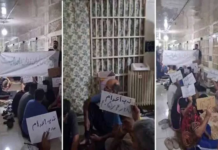
Several major Western media organizations have reported that demonstrations, strikes, and confrontations between protesters and security forces have persisted across multiple provinces. According to these reports, footage circulating from inside Iran shows large crowds chanting slogans openly targeting the regime’s supreme leadership, reflecting a shift from economic grievances toward direct political confrontation.
Coverage from U.S.-based outlets has highlighted scenes from cities such as Shiraz, Isfahan, Kermanshah, and Tehran, where protesters have been seen clashing with security forces. In southern cities like Fasa, demonstrators reportedly attempted to breach government buildings while military helicopters were deployed overhead, an apparent effort to intimidate residents and prevent the spread of unrest. In western Iran, including Kermanshah, market merchants were reported to have confronted security forces directly, underscoring the participation of traditionally risk-averse social groups.
International reporting has also noted audible gunfire, aggressive crowd control tactics, and protesters throwing objects at security personnel, suggesting an escalation in both the scale and intensity of confrontations.
Reuters, citing verified video footage and local reports, described a deteriorating security situation in several Iranian cities. According to these accounts, protesters have targeted police stations and facilities linked to the regime’s Basij paramilitary force, resulting in the first reported injuries among security personnel. In Ahvaz, in Iran’s southwest, demonstrators reportedly set fire to the governor’s residence and municipal buildings—an indication of how far unrest has moved beyond symbolic protest.
Additional reports described clashes in the central city of Arak, where demonstrators allegedly used incendiary devices against security forces, marking a significant escalation in tactics.
British tabloid coverage characterized the current unrest as among the most serious Iran has faced in recent years, pointing to widespread strikes, street battles, and the regime’s difficulty in restoring control despite deploying the Revolutionary Guards, police units, intelligence forces, and large numbers of plainclothes agents. The protests, according to these reports, have spread well beyond Tehran, reaching cities including Mashhad, Ahvaz, Yazd, Karaj, Hamadan, Tabriz, and others.
Statements attributed to Maryam Rajavi, president-elect of the National Council of Resistance of Iran (NCRI), were also reflected in international coverage. She linked the scale of the uprising to widespread public anger fueled by currency collapse, runaway inflation, economic stagnation, and systemic corruption, arguing that protesters are directly targeting what they view as the root cause of Iran’s crises: the ruling system itself.
Agence France-Presse (AFP) reported that the protests initially erupted over economic grievances, beginning in Tehran’s largest mobile phone market, before rapidly spreading to universities nationwide. Student participation has reportedly expanded to at least ten universities in Tehran and other cities, signaling the re-emergence of campuses as focal points of dissent.
AFP also noted attacks on government facilities in Fasa, citing official acknowledgments of damage to administrative buildings. The outlet contextualized the unrest within Iran’s broader economic crisis, exacerbated by years of sanctions and a sharp decline in the value of the national currency. Comparisons were drawn to previous nationwide protests in 2019 and 2022, both of which were violently suppressed.
The New York Times reported that Iranian regime authorities declared shutdowns across 21 provinces, including Tehran, in response to the expanding protests. Verified images published by the newspaper showed demonstrators attacking government complexes in Fasa. The paper emphasized that public anger extends beyond economic hardship to chronic water shortages and broader governance failures, noting that Iran has experienced repeated waves of unrest in recent years that were often met with lethal force and mass arrests.
U.S. conservative outlet Breitbart focused on the regime’s broader repressive context, describing the current unrest as unfolding during what opposition sources have labeled the bloodiest year under Supreme Leader Ali Khamenei, marked by a surge in executions. Reports cited opposition figures who described mass and arbitrary executions as crimes against humanity and evidence of a regime increasingly reliant on fear to maintain control. According to these accounts, death sentences against political prisoners, particularly those accused of links to organized opposition groups, have risen sharply.
British Channel 4 television also broadcast reports from Tehran and other cities, describing four consecutive days of anti-government protests. Footage showed demonstrators in Tehran’s Grand Bazaar chanting messages of unity while clashing with riot police. The channel emphasized the economic roots of public anger, pointing to soaring living costs, currency devaluation, and dramatic increases in food prices.
Residents interviewed in these reports described a collapse in living standards, noting that basic staples such as rice and eggs have become unaffordable for families once considered middle class. According to these accounts, frustration has reached a breaking point, with many protesters openly calling for fundamental political change.
Across all coverage, a consistent picture emerges: protests that began with economic grievances have evolved into a nationwide challenge to the ruling system, drawing in workers, merchants, students, and ordinary citizens from across Iran. The growing international attention underscores not only the scale of the unrest, but also the regime’s increasing difficulty in containing a society that appears, once again, to be approaching a decisive moment.