


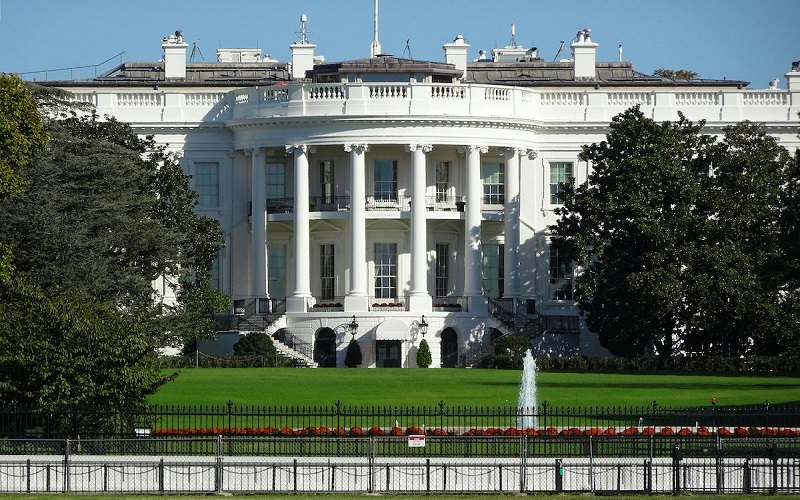

The U.S. White House has once again warned the Iran regime that it faces two choices: military confrontation or a negotiated settlement over its nuclear program. The warning came just hours after Supreme Leader Ali Khamenei rejected a U.S. proposal for direct talks.
White House National Security Council spokesman Brian Hughes reaffirmed the administration’s position on March 9, stating:
“We hope the Iran regime puts its people and best interests ahead of terror.”
He echoed U.S. President Donald Trump’s stance that military action remains an option:
“If we have to go in militarily, it’s going to be a terrible thing.”
Trump: Iran Can Either Make a Deal or Face Military Action
In a March 6 interview with Fox Business, Trump outlined the stark choices for the Iran regime:
“There are two ways Iran can be handled: militarily, or you make a deal” to prevent Tehran from acquiring nuclear weapons.
Trump revealed that he had sent a letter to Iran, urging negotiations:
“I hope you’re going to negotiate because if we have to go in militarily, it’s going to be a terrible thing.”
Emphasizing his preference for diplomacy, he added:
“I would rather negotiate a deal. I’m not sure that everybody agrees with me, but we can make a deal that would be just as good as if you won militarily.”
However, he warned that time is running out:
“Something’s going to happen one way or the other.”
Fox Business aired excerpts of the interview on March 7, with the full broadcast scheduled for March 9. Separately, Trump told reporters:
“We have a situation with Iran that… something’s going to happen very soon. Very, very soon.”
Khamenei Rejects Negotiations
On March 8, Khamenei dismissed the idea of talks with the United States, telling Iranian officials that negotiations were merely a tactic for the West to impose its demands.
“Their talks are not aimed at solving problems,” he said, without mentioning Trump or the U.S. directly.
He further accused Western powers of using negotiations as leverage:
“The insistence of some bullying governments on negotiations is not to resolve issues… Talks for them is a pathway to have new demands. It is not only about Iran’s nuclear issue… Iran will definitely not accept their expectations.”
Iran Denies Receiving Trump’s Letter
On the same day, Iranian regime Foreign Minister Abbas Araghchi claimed Tehran had not received Trump’s letter.
“We have heard of it, but we haven’t received anything,” Araghchi told state TV.
U.S. Pressure on Iran Regime’s Nuclear Ambitions
The United States has long vowed to prevent the Iran regime from acquiring nuclear weapons, as Tehran continues enriching uranium at near weapons-grade levels. While the regime insists its nuclear program is for peaceful purposes, Washington and its allies remain skeptical.
During his first term, Trump withdrew from the 2015 nuclear deal, reimposing sanctions that had been lifted under the accord. He argued that the deal’s terms were insufficient to block Iran regime’s path to nuclear weapons and accused the regime of fueling extremist violence in the region—allegations Tehran denies despite extensive evidence.
Last month, Khamenei reiterated his opposition to direct talks with Trump, claiming he cannot be trusted after abandoning the nuclear deal.
Since returning to office in January, Trump has revived his “maximum pressure” campaign, aiming to slash Iran’s oil exports to “zero.” While experts believe a complete halt is unlikely, they acknowledge the U.S. can significantly restrict the regime’s oil revenues.