


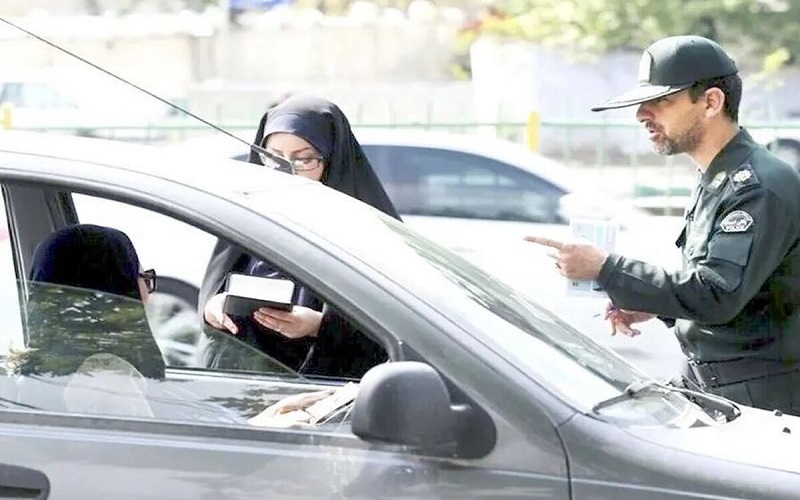

In the wake of Iran regime’s recent presidential election, some people harbored the false hope that the newly selected President Masoud Pezeshkian would halt the controversial Noor Project, a program aimed at enforcing the regime’s strict dress code and compulsory hijab for women and girls. This issue has become a litmus test for Pezeshkian’s commitment to his campaign promises and his true nature.
However, the regime’s four-decade history suggests that significant policy shifts, particularly regarding dress codes and gender issues, are unlikely. The compulsory hijab has been a focal point of domestic and social policies, gaining prominence during the nationwide protests of 2022, where it became intertwined with broader demands for freedom.
In response to these protests, many women began appearing in public without hijabs as an act of defiance. The regime, fearing further unrest, temporarily withdrew its morality police from the streets. However, this respite was short-lived, and a new wave of repression soon followed.
The regime, cognizant of public antipathy, rebranded the old “Chastity and Hijab” bill as the Noor Project. Despite the name change, the project’s core principles remained unchanged. It was approved by the parliament and Supreme Leader Ali Khamenei on April 13, 2024, with Khamenei previously declaring the act of not wearing a veil as both a “Sharia and political prohibition.”
Since its implementation, the regime’s Law Enforcement Command (Faraja) has intensified its crackdown on women in public spaces, with videos of these confrontations going viral on social media. While some optimistically believe that Pezeshkian might modify the project, his track record suggests otherwise. A recently surfaced pre-recorded clip shows Pezeshkian admitting to oppressing and harassing women regarding their clothing immediately after the 1979 revolution, even before any laws were in place.
Faraja’s deputy commander, Qasem Rezaei, has staunchly defended the Noor Project, stating that it is “not suspendible” and that a change in government will not disrupt its implementation. Rezaei argues that the project is rooted in religious duty and calls for stricter legislation to enhance its deterrent effect.
Conversely, the legal deputy of the president contends that the Noor Project violates several constitutional principles. The plan was notably communicated by the Interior Minister, Ahmad Vahidi, to Faraja, despite Vahidi lacking legislative authority. Various organizations, including the Tehran municipality, have sought involvement in the project’s development, even though it lacks formal parliamentary approval.
Despite the clear emphasis from executive and judicial branches on enforcing the Noor Project, many women report that their encounters with authorities have resulted in mental abuse and physical violence. Nevertheless, they remain resolute, refusing to yield to compulsion. These women note that even adhering to pre-2022 protest dress standards may not shield them from harassment by security agents.