


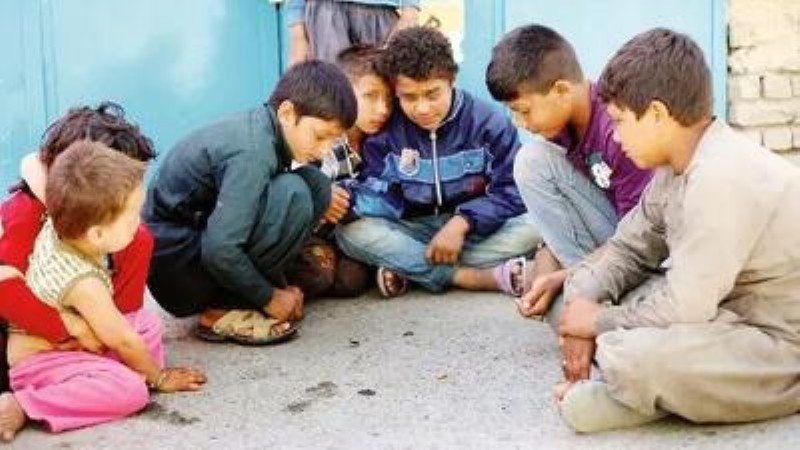

The deepening poverty under the clerical regime has driven Iranian families—especially in Sistan and Baluchestan—to desperate acts once thought unimaginable.
The deepening economic crisis in Iran—rooted in decades of mismanagement, corruption, and repression under the clerical regime—has pushed countless families to the edge of survival. What once seemed unthinkable has now become a grim reality: child selling as a means of staying alive. Across impoverished provinces such as Sistan and Baluchestan and southern Kerman, families trapped in extreme poverty are being forced to sell their children to afford food or shelter.
This tragedy is not the result of a single event but of a long decline driven by the regime’s failed economic policies, suffocating sanctions, and systemic neglect. The so-called “resistance economy,” repeatedly praised by the Supreme Leader, has translated into hunger, unemployment, and despair for millions of ordinary Iranians.
Survival at Any Cost
Sociologists in Iran describe what they call “survival strategies” — coping mechanisms that families use to endure unbearable conditions. According to sociologist Hossein Imani Jajarmi, these strategies now include sending women and children to work, often in exploitative and unsafe conditions. In the absence of state support or effective welfare systems, families sacrifice what remains of their dignity simply to stay alive.
In some of the country’s most deprived regions, these survival strategies have taken a horrifying turn. Reports from Sistan and Baluchestan reveal that impoverished parents are selling their children to escape starvation. The transaction is rarely out of malice—it is a desperate act born of systemic neglect and state failure.
The Faces of a Forgotten Generation
The consequences are most visible among the country’s most vulnerable: children. In rural and border regions like Sistan and Baluchestan, children often lack birth certificates, barring them from education or healthcare. Deprived of the right to an identity, they become invisible to the system—and easy targets for exploitation.
Thousands of Baluchi children, some as young as six, are sent to work in farms harvesting pistachios, dates, or saffron in other provinces. They toil long hours for meager pay, unprotected by labor laws and exposed to dangerous conditions. The recent tragedy on the road near Mashhad, where several young Baluchi child laborers—including Osman and Amirali—died while being transported to agricultural sites, exemplifies the deadly consequences of this system.
These children, who left their homes in search of a livelihood, died in transit on a road that symbolized both the promise and betrayal of a nation that has failed its own people. Their deaths are not isolated accidents but part of a systemic pattern of exploitation, fueled by poverty, discrimination, and the regime’s neglect of border regions.
Structural Injustice and State Neglect
Legal experts such as Farshad Esmaeili highlight three key factors behind this crisis: deprivation of labor rights, severe poverty, and marginalization from urban centers. Together, they form a web of inequality that traps children in cycles of exploitation.
Despite official claims of protecting vulnerable groups, the regime has done little to confront the root causes of this catastrophe. Iran’s labor laws remain vague about child labor, allowing employers and middlemen to exploit minors without consequence. Local contractors frequently recruit children from poor families, paying them a fraction of adult wages and ignoring basic safety standards.
Globally, agriculture is one of the most dangerous sectors for child workers. In Iran, these risks are compounded by regional poverty, unsafe roads, and ethnic discrimination. The result is a system that preys on those least able to defend themselves.
Hunger and Malnutrition
In provinces like Sistan and Baluchestan, food insecurity has reached alarming levels. Many families survive on little more than bread and tea, and up to one-third of children under five suffer from severe malnutrition. The consequences—anemia, impaired growth, and cognitive delays—are devastating and long-lasting.
The elimination of free school meal programs, once a vital support system for poor children, has only worsened the crisis. Teachers in impoverished areas report that many students lack the strength or concentration to attend class. For others, hunger forces them to leave school entirely and seek work to help their families survive.
Failed Policies and Empty Promises
The regime’s approach to this humanitarian crisis has been cosmetic at best. Municipal programs that “collect” child laborers from the streets or distribute temporary food packages offer only short-term relief. They do nothing to address the structural causes of poverty—lack of jobs, inadequate housing, and collapsing education systems.
Experts warn that without deep reforms in employment, education, and welfare, the situation will only deteriorate. But such reforms are impossible under a regime whose priority remains self-preservation rather than social justice.
A Warning to the World
The phenomenon of child selling is more than a tragedy—it is a moral indictment of a regime that has brought one of the world’s richest nations in natural resources to the brink of humanitarian collapse. It exposes the true cost of decades of corruption, repression, and economic incompetence under the rule of the mullahs.
In the twenty-first century, the sale of children to survive hunger is a reminder of the darkness that tyranny breeds. It is a warning not only to Iran but to the international community that the suffering of Iranian families is not an internal issue—it is the direct result of a system that values power over humanity.