


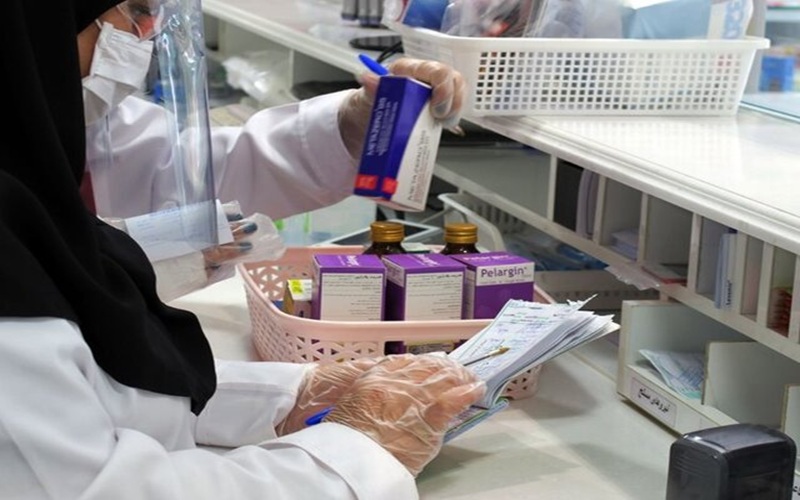

Currency shortages, unpaid insurance debts, weak distribution controls, liquidity problems, and a growing black market are leaving Iranian patients without essential medicines.
Iran’s medicine shortage has evolved far beyond the temporary absence of a few specialized drugs from pharmacy shelves. In 2026, statements by officials, field reports, and warnings from health-sector professionals reveal a multilayered crisis involving disruptions in foreign-currency allocation and raw-material supplies, massive insurance debts, severe liquidity shortages among pharmaceutical producers and pharmacies, weaknesses in distribution and oversight, and the emergence of a parallel market where medicines unavailable through official channels are sold at exorbitant prices.
The crisis increasingly reflects the responsibility of the Iranian regime’s economic and health policies, rather than an unavoidable shortage caused solely by external circumstances.
Conflicting statistics reveal the depth of the problem
Even official figures on the scale of medicine shortages are contradictory.
On August 3, 2026, the head of the Food and Drug Administration said the number of essential medicines classified as being in shortage had fallen from 341 to 65.
His explanation, however, reveals a limitation in the official statistics. Iran’s pharmaceutical system, he said, records shortages according to generic molecules rather than brand names. If the same molecule is available from another manufacturer, the medicine is not officially classified as being in shortage.
Only days later, the secretary-general of the Iranian Red Crescent, based on direct observations, reported shortages affecting approximately 350 to 400 medicines.
The discrepancy is itself significant. A medicine may not be considered officially scarce if another manufacturer’s version of the same molecule exists, while for a patient standing at a pharmacy, the specific medicine prescribed may effectively be unavailable.
The regime’s promises have failed to resolve the shortage
Reports throughout 2026 show that medicine shortages have continued despite repeated government promises.
On June 10, a Food and Drug Administration official reported shortages of approximately 85 essential medicines, while identifying sharply rising production costs as one of the pharmaceutical industry’s major problems.
Six days later, Health Minister Mohammad-Reza Zafarghandi said the government was attempting to minimize shortages and emphasized the need to expand insurance coverage. He also acknowledged delays in the arrival of some pharmaceutical raw materials and the impact of restrictions on maritime transportation on the supply chain.
Medicine reserves have also deteriorated. According to Food and Drug Administration reports, stocks of many medicines have fallen to approximately one month of supply.
Against this background, government directives—including President Masoud Pezeshkian’s order to resolve medicine shortages—have done little to reassure patients who depend on essential drugs to survive.
The persistence of shortages over recent years has contributed to what can be described as silent deaths caused directly or indirectly by the unavailability and rising cost of medicines.
Insurance debts are choking pharmacies
The crisis is not confined to pharmaceutical factories, imports, or borders. One of its most important links is liquidity.
Reports from the pharmaceutical sector show that months-long delays by insurance organizations in paying pharmacies have sharply reduced their purchasing power.
The Iranian Pharmacists Association reported that, as of July 21, 2026, pharmacies were owed more than 64.6 trillion tomans in outstanding insurance payments and the pharmaceutical foreign-currency subsidy share.
The consequences are straightforward.
A pharmacy that has not received payment for medicines it sold months earlier may not have enough cash to purchase its next shipment from a distribution company. The financial disruption therefore moves through the supply chain and eventually appears as an empty pharmacy shelf.
On July 26, pharmaceutical experts warned that continued problems with foreign-currency access, liquidity shortages, and insurance debts would further intensify medicine shortages.
Rasoul Nazari-Fard, a pharmacist and founder of a specialized-patient pharmacy, reported that insurance companies had delayed payments to pharmacies for six to seven months.
This is a systemic financing failure, not simply a temporary shortage of imported medicine.
The black market exposes failures in the official distribution system
Perhaps the most troubling contradiction is that medicines that cannot be found through official channels can sometimes be found in the unofficial market—at dramatically inflated prices.
Reports indicate that a significant proportion of pharmaceutical violations involves medicines leaving the official distribution network.
The formal supply chain is supposed to run from manufacturer to distributor to pharmacy. Purchasing, storing, or selling medicines outside this chain constitutes a violation and, in relevant cases, trafficking.
Yet medicines discovered outside the official network have reportedly included specialized drugs and medicines subject to strict distribution requirements—products that should, in principle, be among the easiest to track.
This raises serious questions about the effectiveness of the regime’s monitoring and traceability systems.
Officials acknowledge that medicines are being diverted
The problem became more explicit in 2026.
Mehdi Sanaei, a prosecutor specializing in medical crimes, said in an interview in June that some domestically produced and imported medicines never reach patients at all.
According to his account, some medicines leave the official distribution network and enter the domestic illicit market, while others are smuggled to neighboring countries, including Afghanistan, Iraq, and Pakistan.
This is an especially damaging admission because it suggests that the problem is not simply insufficient pharmaceutical production. At least part of the available supply is allegedly being diverted before reaching the patients for whom it was intended.
The resulting shortage can therefore coexist with the physical presence of the medicine somewhere within or outside the country.
Medicine prices soar outside the official system
Another manifestation of the disorder is the sale of medicines through online platforms.
Reports indicate that a medicine officially priced at approximately 12 million tomans has been offered online for as much as 55 million tomans.
The problem, however, is not simply price gouging.
When buyers cannot establish which pharmacy supplied the medicine, when there is no official invoice, and when the origin of the product cannot be traced, the transaction takes place outside the transparent distribution mechanism.
This creates additional risks involving counterfeit medicines, inappropriate storage, diversion of subsidized products, and potentially dangerous products of unknown origin.
The “medicine mafia” is a systemic problem, not necessarily a single organization
The term “medicine mafia” is widely used in public discussions, but the available evidence should not automatically be interpreted as proof of one centralized organization.
Instead, reports point to multiple channels through which medicines can leak from the official system:
- multiple prescriptions being used to obtain scarce medicines;
- diversion of medicines from the official distribution network;
- intermediaries operating around distribution centers;
- black-market sales;
- online sales outside transparent channels; and
- smuggling medicines to neighboring countries.
The simultaneous existence of these channels suggests a problem that extends beyond isolated violations by individual sellers.
It points to structural weaknesses in traceability, supervision, enforcement, and distribution that allow intermediary networks to exploit shortages.
Patients are increasingly being forced to abandon treatment
The medicine crisis becomes a humanitarian crisis when patients can no longer afford or obtain the treatment they need.
Over the past year, the term “treatment abandonment” has increasingly entered discussions within Iran’s health sector.
It describes patients who stop treatment not because their medical treatment has ended, but because they can no longer afford medicines and medical services or cannot obtain the necessary drugs.
The phenomenon is driven by several pressures operating simultaneously:
medical inflation, declining household purchasing power, rising medicine and equipment prices, and limited insurance coverage.
Families facing these pressures may postpone treatment for chronic illnesses or abandon it altogether.
For patients with chronic and serious diseases, such delays can have consequences far beyond financial hardship.
A crisis created by a chain of policy failures
Iran’s medicine shortage cannot be explained solely by sanctions, transportation difficulties, or disruptions in the international supply chain.
Those factors can certainly affect pharmaceutical availability, but the evidence presented by the regime’s own officials and health-sector institutions points to a much broader failure.
Foreign-currency problems have disrupted imports and raw-material supplies. Rising production costs have placed additional pressure on manufacturers. Insurance organizations have accumulated enormous debts to pharmacies. Pharmacies have consequently faced liquidity shortages. Weak oversight has allowed medicines to leave official distribution channels, while black-market and online sellers charge several times the official price.
At the same time, the government continues to report contradictory figures on the actual scale of shortages.
The result is a vicious cycle:
currency and production problems → supply shortages → higher prices → diversion and black-market activity → weaker official availability → financial pressure on pharmacies and patients → treatment abandonment.
The regime bears responsibility for this chain because it controls the country’s pharmaceutical policy, currency allocation, insurance system, distribution regulations, and regulatory enforcement.
Its repeated promises to resolve shortages have not addressed the underlying structural failures.
Ultimately, the most serious measure of Iran’s medicine crisis is not the number of missing items in official statistics. It is whether patients can walk into a pharmacy, obtain the medicine prescribed to them, and afford to complete their treatment.
Increasingly, for many Iranians, the answer is no.