


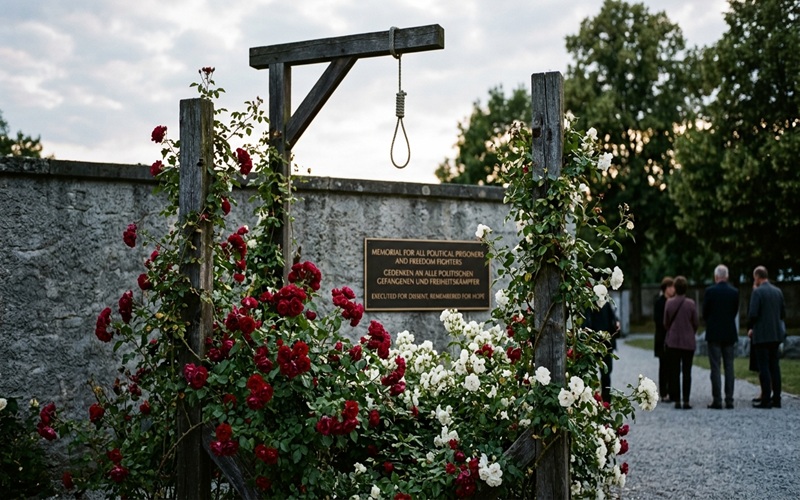

The escalating use of the death penalty against protesters and political prisoners demands urgent, coordinated action from the international community before more lives are lost.
The Iranian regime is accelerating its use of executions as an instrument of political repression, turning the death penalty into one of its principal tools for intimidating society and suppressing dissent. As protests, strikes, and acts of resistance continue across the country, the authorities are increasingly targeting protesters, political prisoners, and dissidents with death sentences designed not merely to punish individuals, but to terrorize an entire population.
The scale and secrecy of this campaign should alarm the international community. According to documented figures for 2025, at least 1,526 executions—more than 93 percent of the recorded total—were not officially announced by the authorities. Some were carried out secretly, without families or lawyers being informed. The true number is believed to be considerably higher.
This systematic secrecy is not simply a matter of incomplete statistics. It is part of a broader machinery of repression in which executions, arbitrary detention, torture, forced confessions, and closed judicial proceedings reinforce one another. The regime seeks to create an atmosphere in which every act of dissent carries the threat of the ultimate punishment.
Protesters Are Being Targeted
The danger has become particularly acute for people arrested during the recent nationwide protests.
In Isfahan, twelve young men were sentenced to death in connection with the Ali Khani Square case arising from the January 2026 protests. Two of them, Erfan Esfandiyari and Gol-Mohammad Mohammadi, were executed on July 19. On July 28, two more—Amirhossein Safari and Abolfazl Sepahi—were executed amid a heavy security presence in the city. Rights groups and UN experts have raised concerns over the fairness of proceedings in these cases, including allegations of coerced confessions and closed hearings.
These executions send an unmistakable message: participation in protests can result in a death sentence.
Yet history has repeatedly demonstrated that executions cannot extinguish the demand for freedom. Instead, they deepen public anger and expose the regime’s dependence on fear.
Women and Political Prisoners Under Threat
Women have also increasingly become targets of capital punishment and political persecution.
Among those currently facing the death penalty is Arghavan Fallahi, a young political prisoner who was sentenced to death in July 2026 on a charge of baghi, or armed rebellion. Reports indicate that she endured prolonged solitary confinement and interrogation before receiving her sentence.
Another case is that of Zahra Shahbaz Tabari, a 67-year-old electrical engineer and political prisoner from Rasht. Her death sentence was imposed again after an earlier conviction had been overturned, with human rights organizations reporting serious concerns about the judicial proceedings.
Such cases demonstrate how broadly the death penalty is being deployed against political opposition. The charges used against dissidents can carry the harshest possible punishment, while defendants may face restricted access to lawyers, opaque proceedings, and allegations of coercion.
International Warnings Must Become Action
International warnings have repeatedly been issued as prisoners approach execution. But warnings alone have not stopped the gallows.
The executions of protesters in Isfahan demonstrate the consequences of international inaction. When authorities proceed with executions despite international appeals, the regime receives a dangerous signal that the political cost of its repression remains manageable.
The international community must therefore move beyond expressions of concern. The United Nations, European governments, and democratic states must demand an immediate halt to executions, particularly those involving protesters and political prisoners. They should press for access to Iranian prisons by independent international investigators, demand transparent judicial proceedings, and impose meaningful consequences on officials responsible for ordering or implementing executions.
Diplomatic engagement cannot be allowed to proceed as though systematic executions were a secondary issue. Human rights must be placed at the center of international policy toward Tehran.
The people of Iran have repeatedly demonstrated that repression cannot extinguish their demand for freedom. Workers, retirees, students, families of victims, and prisoners themselves continue to resist through protests, strikes, campaigns against executions, and acts of defiance.
The accelerating execution campaign is therefore a test not only for Iran, but for the international community. Every execution carried out in silence strengthens the machinery of repression. Every failure to act risks another life.
The time for expressions of concern has passed. The international community must act urgently to stop executions in Iran, protect protesters and political prisoners on death row, and hold those responsible for this systematic campaign of repression accountable.