



At a Berlin conference on Iran’s crisis, the former German MP warned that elevating the son of the former Shah risks reinforcing the Iranian regime’s narrative and undermining the struggle for a democratic alternative.
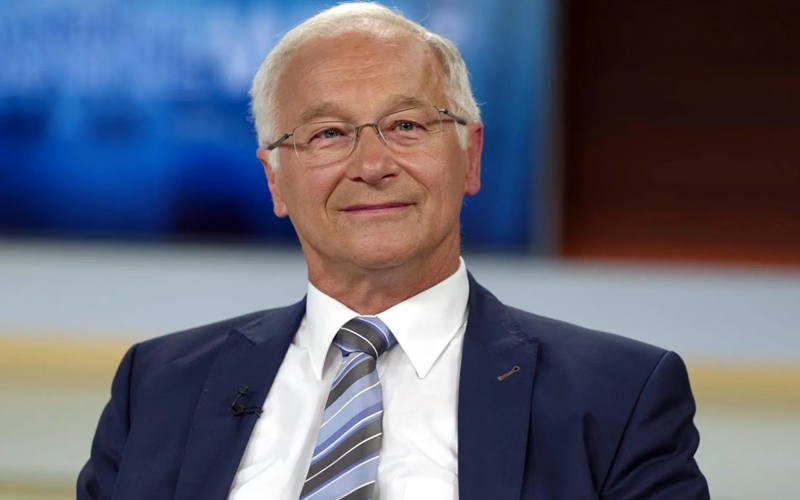
Martin Patzelt, a former member of Germany’s Bundestag and board member of the German Committee in Solidarity for a Free Iran, has criticized the decision to have Reza Pahlavi receive the 2026 Freedom Prize on behalf of the Iranian people, describing it as a serious political mistake that risks undermining the country’s struggle for democracy.
Speaking at a Berlin conference titled “The Crisis in Iran and the Democratic Solution,” Patzelt drew on his eight years of service on the Bundestag’s Human Rights Committee, where he served as a rapporteur on Iran. He argued that recognizing the Iranian people’s demand for freedom must go hand in hand with acknowledging their opposition to both the current theocracy and the former monarchy.
The Friedrich Naumann Foundation, affiliated with Germany’s Free Democratic Party (FDP), intends to award its 2026 Freedom Prize to the Iranian people, with Reza Pahlavi selected to receive it on their behalf. The ceremony is scheduled for November 7 at Frankfurt’s historic St. Paul’s Church, a landmark associated with Germany’s democratic tradition.
Patzelt welcomed the decision to honor the Iranian people but questioned the choice of representative, arguing that Pahlavi had not clearly distanced himself from his father’s record. He said the selection was particularly troubling at a time when Iranians, including young people, had paid a heavy price in their struggle for freedom.
“The appointment of the Shah’s son to receive the Freedom Prize is not merely a ceremonial mistake, but a grave political error,” Patzelt said.
Warning Against Reviving the Monarchy
Patzelt argued that granting political legitimacy to a symbol of Iran’s former dictatorship could ultimately benefit the current regime. He said the Iranian regime has long sought to frame the country’s political future as a choice between restoring the monarchy and maintaining the existing theocracy.
“Anyone who lends credibility and legitimacy to a symbol of the past dictatorship is, in effect, presenting a gift to the current dictatorship,” he said.
According to Patzelt, this false choice obscures the demand for a democratic alternative that rejects both hereditary rule and religious dictatorship. He emphasized that Reza Pahlavi does not represent a unifying figure for the opposition and argued that elevating a divisive figure could weaken the broader struggle against the Iranian regime.
Patzelt also questioned whether international efforts to promote Pahlavi risk diverting attention from the organized opposition and activists who have pursued political change for decades, often at enormous personal cost. He recalled the role played by the People’s Mojahedin Organization of Iran (PMOI/MEK) in the struggle against the Shah’s rule, arguing that this history is frequently overlooked in Germany’s discussion of Iran.
More Than 80 Signatories Challenge the Decision
Patzelt referred to an open letter opposing the selection of Pahlavi, signed by more than 80 former ministers and politicians, prominent artists, and academics. The signatories, he said, came from different political and religious backgrounds and shared concerns about the political implications of the decision.
He placed the controversy in the context of Iran’s continuing repression, including executions of political prisoners and the punishment of people who publicly demand freedom. He also pointed to the severe economic hardship facing ordinary Iranians, arguing that the struggle for freedom must be understood alongside the poverty and insecurity experienced by millions.
Patzelt said the Iranian regime’s repression demonstrated its fear of a society demanding political change. He argued that international recognition should not reinforce divisions among opponents of the regime or elevate a figure whose political role remains contested.
A Democratic Republic as the Alternative
Concluding his remarks, Patzelt rejected both hereditary monarchy and religious dictatorship as models for Iran’s future.
“Iran does not need hereditary monarchy, nor does it need the religious dictatorship that represses its people. Iran needs a democratic order,” he said.
He pointed to the NCRI’s Ten-Point Plan, which outlines a vision for a democratic republic, as a framework for Iran’s political future. Patzelt argued that support for democratic change should focus on an alternative that guarantees freedom and prevents the restoration of authoritarian rule in any form.
His central message was that international support for the Iranian people must recognize their right to determine their own future through a democratic system, rather than elevating a representative whose selection risks deepening divisions within the opposition.