


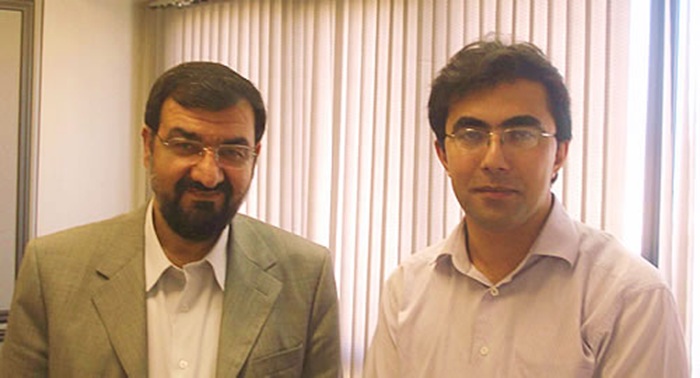

Erfan Ghanei-Fard’s own published accounts reveal repeated meetings with senior IRGC and Quds Force figures, friendly exchanges with an Iranian security official, and striking praise for Qassem Soleimani.
On 15 October 2026, Erfan Ghanei-Fard published an article on The Times of Israel blog platform entitled The MEK’s Dirty War of Lies and Smears, responding to an Iran News Update investigation into his appearance on Voice of America’s Meydan programme that dealt with the trial of Parviz Sabeti, a senior official of the Shah’s notorious secret police, SAVAK.
The original report raised two central issues: Ghanei-Fard’s reported connections with senior officials of the Islamic Republic’s Revolutionary Guards (IRGC), security establishment and former SAVAK officers, and his conduct during the 11 October programme, in which, according to Iran News Update, he repeatedly denounced opposition organizations as terrorists while justifying acts of torture under the Shah or ridiculing allegations that such acts had been carried out at Sabeti’s direction.
Rather than examining the historical evidence behind these questions, Ghanei-Fard devoted much of his response to attacking the People’s Mojahedin Organisation of Iran (PMOI/MEK), Kurdish opposition groups and other political opponents of the monarchy.
These attacks served to divert attention from the central issues and avoid answering the substantive questions raised about his own conduct and connections. Yet such diversionary tactics do nothing to address the substantial body of evidence concerning his meetings, personal relationships and published political assessments — much of which is drawn directly from his own writings.
The central issue is not a single photograph with former IRGC commander and current Secretary for the Supreme National Security Council (SNSC), Mohsen Rezaei. It is Ghanei-Fard’s own account of repeated access to senior figures in the IRGC, the terrorists Quds Force and Iran’s national security apparatus, combined with his remarkably favourable descriptions of some of those individuals.
Ghanei-Fard’s Own Account of His Meetings with Senior Security Officials
One of the most revealing documents is an article written by Ghanei-Fard himself and published on 9 October 2013 in Teribon Mostazafin (Tribune of the Oppressed), a defunct state-run online news outlet.
Entitled Haj Qassem (i.e., Qassem Soleimani, the Quds Force commander who was eliminated on January 3, 2020) and His Strategic Approach to the Kurdish Question: Get to Know This Iranian Major General, the article describes Ghanei-Fard’s encounters with senior political, military and security figures in his own writing.
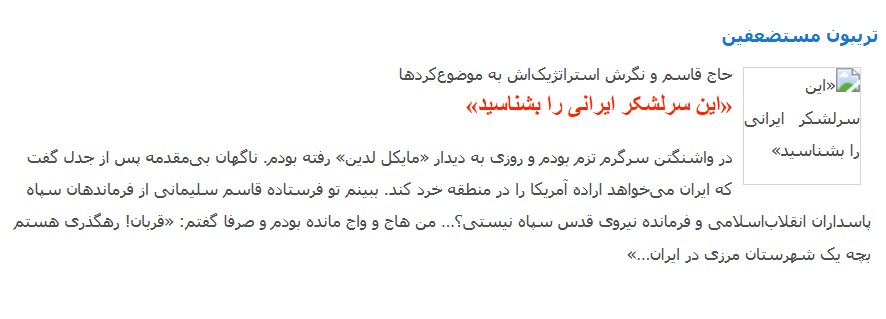
Ghanei-Fard recounts an occasion in autumn 2007 when Jalal Talabani, then President of Iraq, asked whether he had met Mohammad Jafari.
Following Talabani’s suggestion, Ghanei-Fard writes: “Accompanied by my dear, trusted friend Nazim Dabbagh, I went to the Supreme National Security Council to meet Mohammad Jafari.”
The identity of Mohammad Jafari is significant. He is Mohammad Jafari Sahraroudi, a former commander in the IRGC who also served as a deputy in the Secretariat of Iran’s Supreme National Security Council.
Sahraroudi’s name has also appeared in investigations concerning the assassination of Iranian Kurdish leader Abdul Rahman Ghassemlou and two of his companions in Vienna in July 13, 1989. Sahraroudi, who acted as Tehran’s envoy, shot Ghassemlou at point-blank range during the “negotiations” and was himself wounded, only to be taken back to Iran from his hospital bed after the Iranian regime’s most senior officials in Tehran threatened Austria with serious consequences if Sahraroudi was not released. An Austrian prosecutor issued a warrant for Sahraroudi roughly two months after the murders; an international arrest warrant followed about five months later.
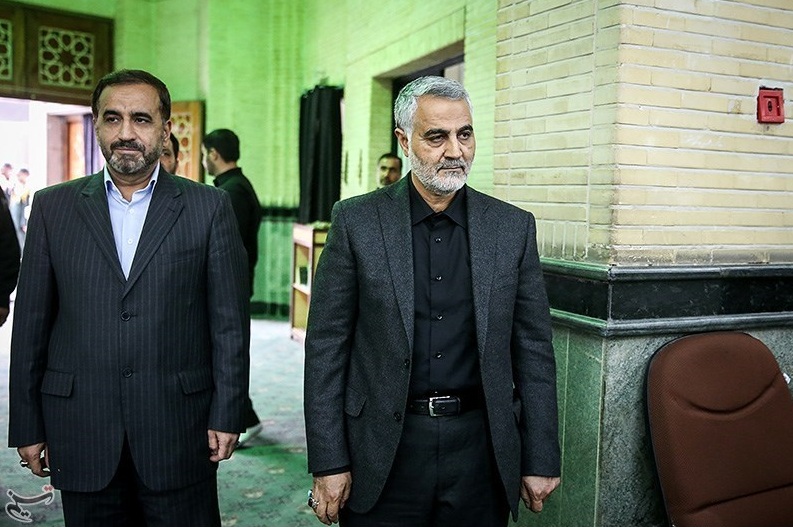
But Ghanei-Fard did not stop at mentioning Jafari.
In the same 2013 article, he identified several other individuals whom he said he had met through representatives of Jalal Talabani: Mohsen Rezaei, Ali Shamkhani, Mohammad Bagher Zolghadr (who preceded Rezaei as Secretary for the SNSC), Reza Amiri-Moghaddam and Mohammad Jafari.
These were not ordinary political interviewees. Mohsen Rezaei commanded the Islamic Revolutionary Guard Corps (IRGC) for 16 years and was placed under US Treasury sanctions in January 2020. Ali Shamkhani, a former commander of the IRGC Navy and Minister of Defence and Secretary for the Supreme National Security before he was killed during the 40-day US- Iran war, was also sanctioned by the United States in January 2020. Mohammad Bagher Zolghadr was placed on the UN sanctions list in March 2007 and added to the US Treasury’s sanctions list in August 2026. Reza Amiri-Moghaddam is the current Ambassador to Pakistan and the former head of the Intelligence Ministry’s operational unit that carried out the plot to bomb the opposition’s Free Iran World Summit in Paris in 2018.. In March 2025, the US Treasury sanctioned him over his involvement, as identified by US authorities, in the abduction, detention and probable death of former FBI agent Robert Levinson. Significantly, the IRGC itself was formally designated a Foreign Terrorist Organization by the United States in April 2019.
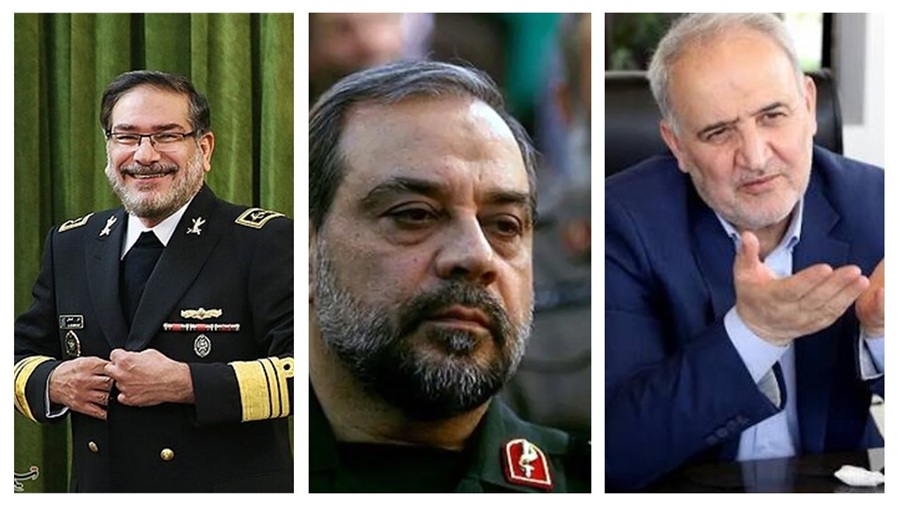
The significance of this list lies not merely in the individuals’ identities but in Ghanei-Fard’s own account of how he gained access to them.
He describes introductions arranged through Talabani’s representatives, including a visit to the Supreme National Security Council accompanied by Nazim Dabbagh, whom he characterises in exceptionally warm and personal terms.
How frequent were these encounters? What did they involve beyond historical interviews? And what documentary records exist of their purpose and content?
His Extraordinary Praise for Qassem Soleimani
Perhaps the most striking aspect of Ghanei-Fard’s 2013 article is the enthusiasm with which he describes the IRGC and Qassem Soleimani.
The United States designated the entire IRGC, including the Quds Force, as a Foreign Terrorist Organisation in April 2019. The Quds Force was designated in October 2007.
Ghanei-Fard’s article predates that broader designation, but the Quds Force’s involvement in regional military and intelligence operations was already widely documented and was designated as a terrorist entity 12 years earlier.
Yet his descriptions of Soleimani read less like detached historical analysis than an openly admiring assessment of the commander’s role.
At one point, Ghanei-Fard describes the IRGC as: The principal architect and builder of the Kurdistan Region of Iraq. He presents Soleimani as someone who consistently viewed Kurdistan positively, sought to eliminate poverty and deprivation, and encouraged Kurdish participation in Iran’s central government.
Ghanei-Fard goes further by declaring that Soleimani’s policy in this regard had been successful. Discussing Syria, he also credits the policies and strategy of Soleimani with having a positive influence on the organisation of Syrian Kurdish groups.
In the same article, Ghanei-Fard portrays Iran’s relationships with regional Kurdish movements as peaceful and constructive, while sharply condemning Kurdish opposition organisations opposed to the Islamic Republic.
His closing remarks are particularly noteworthy. Referring to Soleimani as a soldier of the motherland, he expresses the hope that the Quds Force commander will continue his activities with strength and good health.
Hassan Danaeifar: A Relationship Described as Personal and Friendly
Perhaps an even more revealing example concerns Hassan Danaeifar, a former senior IRGC officer associated with the Quds Force who served as Iran’s ambassador to Iraq from 2010 to 2017.
Danaeifar’s military background was documented by Radio Farda in January 2010. He had served as a deputy commander of the IRGC Navy and was reported to have played a significant role in Quds Force activities and the development of the Badr organisation in Iraq.
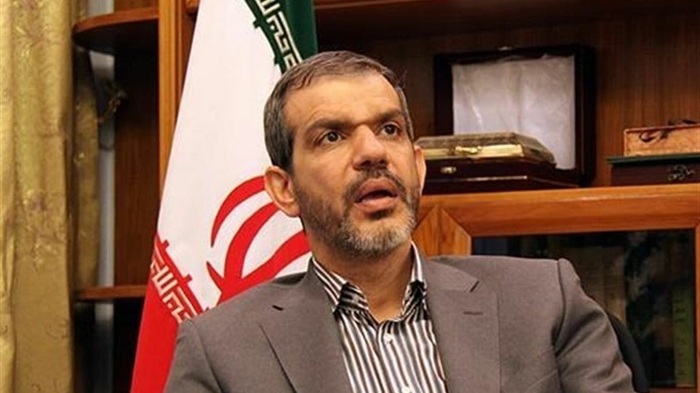
On 23 June 2011, Ghanei-Fard published an extensive interview with Danaeifar in the Iranian newspaper Etemad, subsequently reproduced by Gooya.
The article, entitled Breaking the Illusion of the MEK’s Presence?, addressed the future of the MEK in Iraq, security cooperation between Tehran and Baghdad, and the position of Iranian Kurdish opposition groups. The introduction is particularly revealing.
Ghanei-Fard explained that he had repeatedly engaged in discussions and debates with Danaeifar, both face to face and by telephone, in Tehran and Baghdad.
He praised Danaeifar’s knowledge of Iraqi politics, security, political parties and personalities, describing him as intelligent, well-informed and loyal in friendship.
More significantly, Ghanei-Fard explained that the published conversation had emerged from a friendly encounter rather than a formally arranged journalistic interview.
These are Ghanei-Fard’s own descriptions, not allegations invented by his critics.
There, Ghanei-Fard explicitly acknowledged the influence Danaeifar had exercised over his thinking about the Islamic Republic’s regional policies.
Mohsen Rezaei: The Photograph Is Only One Part of the Record
Even in attempting to explain away his photograph with Mohsen Rezaei, Ghanei-Fard resorts to a claim that contradicts his own published record. He insists he was only 23 when the photograph was taken. Yet his own writings establish that he was born in November 1976 and met Rezaei in 2009, when he was 32 or 33.
If the photograph was taken during that meeting, his claim is plainly false. If it dates from an earlier encounter, he should disclose exactly when it occurred and how many times he had close encounters with Rezaie. Either way, his attempts to dismiss the photograph cannot erase his own documented meetings with the former IRGC commander. The real issue is not the age of a photograph, but the nature and extent of his connections with senior figures in Iran’s security establishment.
Ghanei-Fard claims that the photograph with Rezaei has been misleadingly cropped up. Why not publish an uncropped version, identify the other people, and explain the occasion? Instead, he directs readers to a carefully curated professional photo gallery in which the disputed Rezaei image is curiously not even posted.
From the Quds Force to SAVAK: What Lies Behind Ghanei-Fard’s Political Transformation?
Ghanei-Fard’s own 2013 article names several former senior SAVAK officials he had met, including Ali Akbar Farazian, Manouchehr Hashemi, Issa Pejman, Hassan Alavikia and Parviz Sabeti. These encounters raise questions when considered alongside his extensive contacts with senior IRGC and Quds Force figures.
How did someone who enjoyed such access to the Islamic Republic’s security establishment, described Hassan Danaeifar as a trusted friend and openly praised Soleimani’s regional policies come to emerge as an outspoken supporter of Reza Pahlavi and the monarchist cause, while defending senior figures from the Shah’s notorious intelligence service?
Was this a genuine ideological transformation, or is there a broader political agenda behind it?
The question becomes more pressing when Ghanei-Fard’s repeated attacks on the MEK, Kurdish organisations and other opposition movements are considered alongside his support for the monarchy and his attempts to challenge allegations of torture against SAVAK officials. Is there a consistent political purpose connecting these positions, despite their apparent contradictions? Or is there another explanation for this remarkable political trajectory?
His professional identity also warrants scrutiny. Ghanei-Fard presents himself as a researcher and analyst, yet questions remain about the independent verification of some of his academic claims and the nature of his relationships with security officials.
The publicly available accounts of Erfan Fard’s educational background contain significant contradictions that raise legitimate questions about the reliability of his claims. In his recurring author biographies, Fard describes himself as having graduated in International Security Studies from London Metropolitan University and in International Relations from California State University, Los Angeles. Yet in his own 2025 account, he states that between 2015 and 2017 he pursued graduate studies in Security Studies at the University of London. These are not alternative names for the same institution: London Metropolitan University and the University of London are separate universities. His descriptions of his American education also vary, with some accounts referring to International Relations at Cal State LA and another biography describing a degree in political science and history. A photograph captioned “UCLA 2009” adds further potential confusion, although there appears to be no corresponding claim or evidence that he obtained a degree from UCLA.
These discrepancies are compounded by the absence, in the material examined, of independent public verification of the qualifications attributed to him.
In this context, it is worth recalling the remarks of Ali Fallahian, the Islamic Republic’s former intelligence minister, who acknowledged that Iranian intelligence operatives used professional cover, including journalism and political activities, when operating abroad.
Ghanei-Fard’s own published accounts make it entirely reasonable to ask him to explain his relationships, his changing political allegiances and the striking continuity of his hostility towards rival opposition movements.
Rather than dismissing these questions through mud-slinging and personal attacks, he should address the documented record and explain what lies behind these apparently contradictory positions. The litany of unanswered questions about his true function, role and mandate is simply growing longer with the passage of time and further scrutiny.