


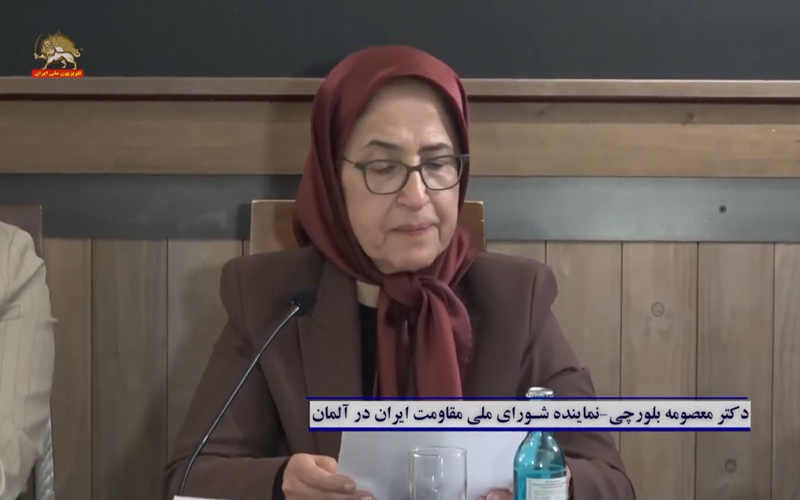

NCRI representative in Germany Masoumeh Bolurchi points to prison protests and the “No to Execution Tuesdays” campaign as evidence of the resistance movement’s resilience.
At a conference in Berlin titled “The Crisis in Iran and the Democratic Solution,” Masoumeh Bolurchi, representative of the National Council of Resistance of Iran (NCRI) in Germany, stressed that organized resistance inside Iran offers a practical path to democratic change.
Bolurchi pointed to the “No to Execution Tuesdays” campaign as a clear example of the resistance’s endurance. On October 13, prisoners in 66 prisons across Iran joined the campaign’s 142nd week by going on hunger strike, despite the threat of execution.
She said the prisoners’ determination to defend human dignity demonstrated that resistance continues to grow even behind bars. Their demands, she emphasized, require the international community to move beyond verbal condemnations and take practical steps to stop executions.
Bolurchi stressed that the path to change lies neither in negotiations with the regime nor in foreign war or intervention, but in the Iranian people’s own struggle against repression.
She also criticized Reza Pahlavi, arguing that his defense of his father’s crimes and promotion of hostility toward political opponents undermine unity and obstruct genuine change.
Referring to Maryam Rajavi’s message, Bolurchi said that ignoring Iran’s organized resistance as a democratic alternative has been one of the West’s fundamental mistakes in its policy toward Iran.
She concluded that more than four decades of resistance to imprisonment, torture, and execution demonstrate the movement’s determination to secure freedom and democratic change in Iran.