


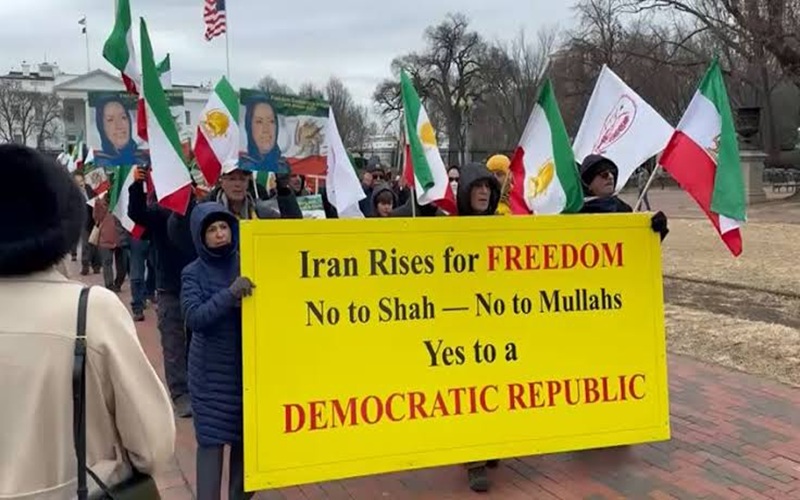

Prisoners held in 22 Iranian prisons, including 11 facing execution, denounce the planned Freedom Prize ceremony in Frankfurt and reject the restoration of the Shah’s dictatorship.
Political Prisoners Inside Iran Reject Award to the Shah’s Son
In a powerful protest from inside Iran’s prisons, 142 political prisoners, including 11 facing execution, have condemned the decision to have Reza Pahlavi accept the Friedrich Naumann Foundation for Freedom’s award on behalf of the Iranian people. The statement, signed by prisoners held in 22 prisons across Iran, denounces the planned November 7 ceremony at Frankfurt’s historic Paulskirche as an affront to the victims of the Shah’s dictatorship and to the struggle for freedom and democracy in Iran.
The prisoners describe the decision to honor the son of the former Shah as an insult to political prisoners, survivors of torture, families of those executed under the monarchy, and Iranians who have fought against both royal and religious dictatorship. They reject any attempt to present Reza Pahlavi as the representative of a nation whose people have never freely elected him to such a role.
Their intervention adds a particularly significant dimension to the growing opposition to the planned ceremony. While Iranian associations and prominent German figures have challenged the award from abroad, the prisoners’ statement comes from people enduring imprisonment, torture, and the threat of execution under Iran’s current ruling regime.
Prisoners Warn Against the Return of Royal Dictatorship
The signatories condemn the award as an endorsement of a political figure whom they accuse of fueling division within Iran’s popular uprising and seeking to revive the Shah-era security apparatus, including SAVAK, the notorious intelligence service associated with torture and political repression.
They describe the proposed recognition as a betrayal of prisoners, torture survivors, freedom advocates, and relatives of those killed under the Shah’s absolute monarchy. The statement also denounces the historical record of the Pahlavi monarchy, arguing that its rule was imposed and sustained through authoritarianism rather than popular sovereignty.
For the prisoners, the controversy is not simply about an award or a ceremonial appearance. It concerns the political future of Iran and the danger of replacing one form of dictatorship with another.
They argue that restoring the monarchy and rebuilding its repressive security apparatus would be incompatible with the principles of human dignity, political freedom, and democracy. The fall of the Shah’s regime after decades of repression, they emphasize, cannot be erased from the historical memory of the Iranian people.
Their position echoes the democratic demand expressed in the slogan “No Shah, No Mullahs”: Iran must break with both hereditary rule and the current religious dictatorship rather than return to an authoritarian past.
The Scars of SAVAK Remain a Living Memory
The statement invokes the lasting physical and human consequences of torture under the Shah, emphasizing that the monarchy’s repression is not an abstract historical question for Iran’s political prisoners.
It refers specifically to the surviving torture scars of political prisoners from that period, including the injuries suffered by Aziz, the 97-year-old mother of the Rezaei siblings, a family that endured persecution under both the Shah’s monarchy and the current religious dictatorship.
According to the statement, Aziz’s children spent years in the Shah’s prisons: one daughter, Fatemeh, was imprisoned for more than four years, while her son Abolqasem spent more than five years behind bars. The family ultimately lost four members under the royal dictatorship and another four under the religious dictatorship.
The reference to this family illustrates the prisoners’ central argument: the victims of authoritarianism cannot be honored by promoting a political project that leaves the legacy of the previous dictatorship unaddressed.
For those who survived the Shah’s prisons, the scars remain a reminder of the consequences of unchecked state power. For the prisoners now facing repression under the current regime, the prospect of another authoritarian system represents a rejection of the sacrifices made by generations of Iranians.
An Appeal from Prisoners Facing Execution
The signatories emphasize the gravity of their intervention by noting that all have endured torture and that some do not know how long they will remain alive because they face death sentences.
The initial statement carries the signatures of 142 political prisoners from facilities including Evin Prison in Tehran, Greater Tehran Prison in Fashafuyeh, Qezel Hesar, Sheiban in Ahvaz, Vakilabad in Mashhad, Adelabad in Shiraz, Lakan in Rasht, and prisons in Karaj, Urmia, Khorramabad, Semnan, Dezful, and numerous other cities.
Among the signatories are 11 prisoners facing execution, underscoring the immediate dangers confronting those who have chosen to speak out despite the possibility of further punishment.
They condemn the award to Pahlavi as a stain on the cause of freedom and Iran’s independence. Their appeal is directed beyond the walls of Iran’s prisons to the international community, including the United Nations, the Office of the UN High Commissioner for Human Rights, and international human rights organizations.
The prisoners state that their names and signatures will be sent to these bodies, calling for international attention to their position and to the principles at stake in the controversy.
A Democratic Republic, Not a Return to Dictatorship
The prisoners conclude by demanding a democratic republic founded on the separation of religion and state, equality between women and men, and national autonomy for Iran’s ethnic communities.
Their demand places the struggle against the current regime within a broader democratic vision that rejects the concentration of power in the hands of a supreme leader, a monarch, or any unelected individual.
The controversy over the Frankfurt award has therefore become a test of what international recognition of Iran’s freedom struggle should mean. The prisoners argue that honoring the Iranian people requires respecting their right to determine their own political future—not elevating the Shah’s son as their presumed representative.
Their statement reinforces a fundamental principle: freedom cannot be secured by restoring the institutions or political traditions of another dictatorship. A democratic future for Iran must be based on popular sovereignty, equality, pluralism, and guarantees against the return of authoritarian rule.
From inside prisons where their lives remain at risk, these 142 political prisoners have made their position unmistakable. They reject both the current religious dictatorship and the restoration of the monarchy, and they call for a democratic republic that places Iran’s future in the hands of its people.