



Experts warn of irreversible groundwater depletion as the regime blames citizens instead of addressing structural failures.
Warnings over Iran’s deepening drought crisis continue to mount. Alireza Daemi, head of the Iranian Association of Water Resources Science and Engineering, revealed that 150 billion cubic meters of strategic groundwater reserves have been extracted — an amount that cannot be replenished.
Daemi described Iran as one of the world’s main centers of freshwater depletion, stressing that most of the withdrawn volume is non-renewable.
Hossein Zafari, spokesperson for the National Crisis Management Organization, warned on Tuesday that even normal rainfall would not compensate for the massive deficit caused by excessive groundwater extraction and declining dam reserves. The eastern provinces — Sistan and Baluchestan, South Khorasan, southern Razavi Khorasan, and northern Hormozgan — have faced the most severe drought and water stress over the past year.
According to Rokna News (November 9), the number of active and inactive water wells in Iran now stands at one million — 2.5 times the total number across all Middle Eastern countries — indicating that the country’s last underground reserves are being rapidly destroyed.
On the same day, Abdoljalal Eiri, spokesperson for the Parliament’s Civil Commission, warned that Iran’s renewable water resources have dropped by 31 percent.
Recent weeks have revealed the growing scale of the crisis, threatening daily life and industrial activity across the country.
The regime’s president Masoud Pezeshkian admitted on November 5 that if rain does not fall in December, Tehran will face water rationing, and if drought persists, the city may need to be partially evacuated.
Mehdi Pirhadi, head of Tehran City Council’s Health Commission, said on November 10 that in the past 60 years, the capital has never experienced two consecutive months without a single drop of rain. Like other regime officials, he deflected blame from the government’s failure and instead urged citizens to reduce water consumption by “ten percent.”
Meanwhile, Energy Minister Abbas Aliabadi announced nightly water shutoffs across parts of the country and advised people to install household storage systems. Judiciary spokesman Asghar Jahangir called the drought “critical” and demanded “collective effort” — while acknowledging that millions of cubic meters of potable water are lost each year due to the regime’s failure to repair the aging urban distribution network.
Despite repeated expert warnings over decades, the regime’s water governance system has favored costly dam construction and unregulated deep well drilling instead of investing in infrastructure and sustainable management. Officials continue to blame reduced rainfall rather than decades of policy mismanagement.
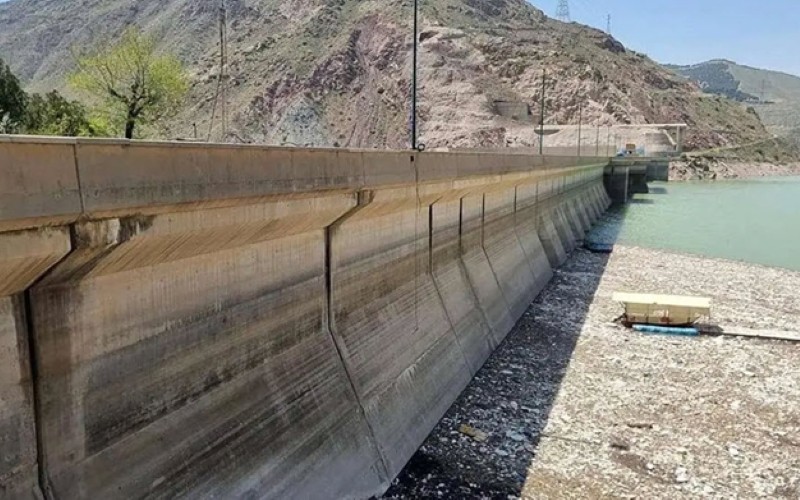
Mohammad Javanbakht, deputy energy minister, said on November 10 that reservoir levels in Tehran, Bandar Abbas, Tabriz, and Arak have reached historic lows. For instance, Boukan’s Kazemi Dam, which typically received over one billion cubic meters annually, recorded only 307 million this year. The Doosti Dam, which supplies Mashhad, is now below five percent of capacity.
Hossein Esmaeilian, CEO of Mashhad’s Water and Sewage Company, confirmed that the city’s reservoir levels have fallen to under three percent.
The drought not only threatens urban life but also the survival of Iran’s ecosystems, including lakes and wetlands now on the verge of collapse.
The National Crisis Management spokesperson said that while water transfer from Taleqan has slightly eased Tehran’s stress, Lake Urmia remains in a dire state. Saeed Issaipour, head of the Urmia Lake Restoration Office, warned that without immediate reform in water management, “Lake Urmia will soon disappear from Iran’s map.” The lake’s volume has dropped below 40 million cubic meters — the lowest ever recorded.
In Khuzestan, Mousa Modhaji, head of the province’s Wetlands Restoration Office, reported that 58 percent of Shadegan Wetland has dried up, with its southern and western regions nearly gone. He added that Khuzestan’s wetlands are now facing their worst conditions in decades.
Iran’s water crisis has reached a catastrophic stage — a direct result of decades of mismanagement, corruption, and neglect by the ruling regime. While officials blame citizens and climate conditions, the real cause lies in the systemic failure of the regime to protect and renew the nation’s vital water resources.