
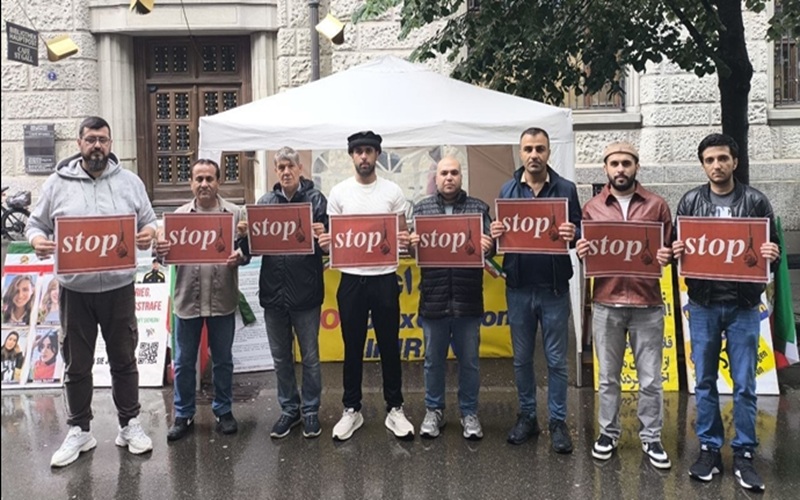

From Evin to Vakilabad, the voices of Iran’s death-row political prisoners reveal why repression continues to fuel resistance rather than secure the regime’s survival.
For more than four decades, Iran’s ruling clerical establishment has relied on repression, imprisonment, torture, and executions as pillars of its survival strategy. Yet contemporary Iranian history repeatedly demonstrates a reality that authoritarian rulers struggle to accept: no regime can permanently suppress a society’s demand for freedom through fear alone.
The gallows have long occupied a central place in the Mullahs’ doctrine of control. Executions are intended to intimidate, discourage dissent, and send a message that resistance carries the ultimate price. However, experience has shown that every new wave of repression often produces the opposite effect. Instead of extinguishing opposition, it creates new symbols of defiance and inspires fresh generations determined to challenge tyranny.
The voices that once echoed through the prison yards of Qezel Hesar and the execution chambers of the 1980s continue to resonate today in the corridors of Vakilabad Prison in Mashhad, the prisons of Yazd, and detention centers across Iran. The messages left behind by political prisoners facing execution are no longer merely personal statements. They have become declarations of political conviction, resilience, and a collective determination to pursue freedom despite the gravest consequences.
Among the most striking examples is the case of political prisoner Mohammad Javad Vafaei Sani, currently held in Vakilabad Prison. After reportedly receiving a third death sentence, he responded not with despair but with a reaffirmation of his beliefs and commitment.
In a message from prison, he wrote:
“We, who have long been deprived of the highest human inheritances of our homeland and subjected to oppression, have no choice but to rise in defense of our people, our future, and our freedom. We will not surrender, and we have proven that we possess the most powerful weapon possible: faith and righteousness.”
These words reflect a mindset that Iran’s rulers have repeatedly failed to understand. The willingness of political prisoners to confront death without abandoning their convictions challenges the very foundation of a system that depends upon fear.
The significance of such statements extends beyond the individual. They represent the continuation of a tradition of resistance that many Iranians trace back to the darkest chapters of the country’s modern history, including the mass executions of political prisoners in 1988. The ideals that survived prison cells, interrogation rooms, and execution chambers continue to inspire new generations of activists and dissidents.
For supporters of democratic change, these prisoners symbolize a broader struggle that has endured despite decades of repression. Their endurance reinforces the belief that the machinery of state violence, however extensive, cannot indefinitely suppress demands for political freedom and fundamental rights.
Vafaei Sani’s message also reflects this broader perspective. Referring to those who continue the struggle for freedom, he described them as symbols of sacrifice, hope, and dignity. He emphasized that remaining committed to principles of justice and resistance is both a moral obligation and a source of strength.
Such declarations help explain why successive waves of arrests, executions, and crackdowns have failed to eliminate opposition movements inside Iran. While the state possesses prisons, courts, and security forces, it has repeatedly struggled to extinguish the underlying grievances that drive public unrest.
The history of modern Iran suggests that every execution carries consequences beyond the prison walls. Families, communities, and younger generations absorb the impact of these actions, often transforming individual tragedies into collective memory and political motivation.
This dynamic creates a paradox for the regime’s authorities. The more heavily the state relies on executions and repression to preserve its rule, the more it reinforces the perception among many Iranians that meaningful change cannot be achieved within the existing political framework.
Forty-five years of protests, uprisings, and resistance movements have demonstrated that fear alone is an unreliable foundation for political legitimacy. The persistence of dissent despite relentless repression suggests that demands for freedom, justice, and democratic governance remain deeply rooted within Iranian society.
The lesson of Iran’s political prisoners is therefore not merely one of suffering, but of endurance. Their messages from behind prison walls serve as reminders that while a government may imprison individuals, it cannot easily imprison ideas. History repeatedly shows that systems built upon coercion may endure for years, even decades, but they ultimately face a challenge that no execution order can eliminate: a population that refuses to abandon its aspiration for freedom.