


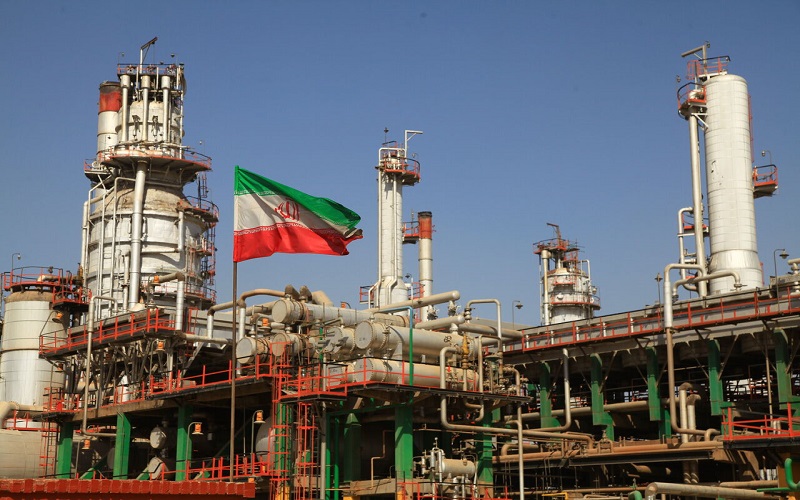

Iran’s energy industry is grappling with numerous challenges. Despite these difficulties, the state-run media is frequently ordered to emphasize the regime’s purported increase in oil exports over recent years, even as international sanctions continue to burden various economic sectors.
Ministerial Claims Amid Economic Struggles
Iran’s Minister of Petroleum, Javad Oji, has highlighted several key issues, including ongoing energy imbalances, the need for optimized energy consumption, and the development of oil and gas fields, especially joint fields. According to Oji, the regime’s demised president Ebrahim Raisi has repeatedly emphasized the importance of increasing production, exports, and job creation to boost national income.
Despite these assertions, a report from the International Energy Agency indicates that Iran spent $100 billion on energy subsidies last year. This expenditure undermines government efforts to reduce the budget deficit, with the financial burden ultimately falling on the people, who already face inflation and diminished purchasing power due to government borrowing.
Export Revenues and Questionable Statistics
In April, Mohammad Rezvanifar, Deputy Minister of Economic Affairs and Finance and Director General of Iranian Customs, announced that foreign exchange income from Iran’s oil exports amounted to $36 billion last year. This included $35.87 billion from oil, $370 million from electricity, and $1.293 billion from technical-engineering services.
However, independent energy experts have cast doubt on these figures. Given the global oil price of $83 per barrel, they argue that Iran’s reported revenue suggests significant discounts on its oil exports. If the claimed cash sales are divided by the average oil price, Iran appears to have received payment for only 1.153 million barrels of oil per day. This discrepancy suggests substantial underreporting or misrepresentation of export volumes.
Impact of Sanctions on Oil Production and Exports
Sanctions not only force Iran to discount its oil exports but also hinder production and degrade oil industry infrastructure. Despite efforts over the past decade, Iran has not resolved its natural gas and gasoline shortages. The gas sector, for instance, faces an average yearly shortfall of 132 million cubic meters, which peaks at 315 million cubic meters per day, causing industrial gas cutoffs and export disruptions, thereby affecting the country’s currency exchange.
The gasoline sector faces imbalances due to factors like vehicle wear and tear. Iran’s domestic cars consume twice the global standard. If international standards were applied, Iran could reduce its daily gasoline consumption to 60 million liters and potentially earn $15 billion annually by exporting 50 million liters of gasoline. Sanctions, however, exacerbate these energy crises.
Diesel Imbalance and Smuggling Issues
Until recently, Iran had a balance between diesel production and consumption. However, an increasing imbalance has emerged. Official statistics reveal that about 20% of the diesel allocated to power plants is smuggled. Last year, Iran imported $830 million worth of diesel to mitigate dissatisfaction in the diesel sector.
During the second meeting of the Economic Council, a plan to increase crude oil production by the National Iranian Oil Company and to reduce petroleum product consumption was approved. This plan aims to boost the country’s oil production from 3.6 million to 4 million barrels per day. However, achieving this goal is challenging, given Iran’s current production capacity and the aging state of its oil wells, 80% of which are in the latter half of their production life.
Long-Term Solutions and Reforms Needed
The complex situation of Iran’s energy industry is exacerbated by international sanctions and weak infrastructure. The reduction in foreign investments and global oil market fluctuations further complicate these issues. Improving the state of the energy industry requires fundamental reforms and long-term planning, not merely superficial changes.
In conclusion, Iran’s energy sector faces significant hurdles that are compounded by political and economic challenges. While the regime projects an image of increasing oil exports and energy stability, the reality is marked by imbalances, infrastructural decay, and economic strain. Addressing these issues will necessitate substantial reforms and a departure from the current superficial approaches, paving the way for a more resilient and efficient energy industry in Iran.