


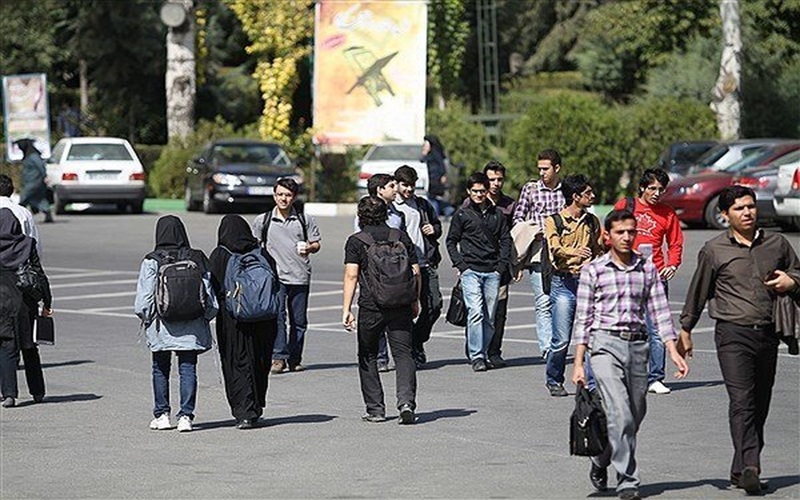

Official unemployment figures tell only part of the story. Behind the declining headline rate lies a shrinking labor force, rising economic inactivity, deep gender inequality, and a structural employment crisis that continues to erode Iran’s future.
Official unemployment statistics often dominate discussions about the Iranian economy. Yet headline figures alone reveal very little about the true condition of the country’s labor market. A decline in the unemployment rate has little meaning if it is accompanied by falling labor force participation and stagnant employment growth. The latest labor data for 1404 (2025–2026) suggest precisely this troubling reality.
Rather than signaling economic recovery, the apparent improvement in unemployment figures reflects a labor market increasingly incapable of absorbing new workers. Hundreds of thousands of Iranians of working age are no longer counted as unemployed simply because they have stopped looking for work or have lost hope of finding meaningful employment. The result is a statistical illusion that obscures the depth of Iran’s employment crisis.
Hidden Unemployment: The Regime’s Statistical Blind Spot
One of the defining characteristics of Iran’s political economy is the expansion of hidden unemployment. Individuals who abandon their search for work disappear from official unemployment calculations despite remaining economically excluded.
This distinction matters because unemployment statistics measure only active job seekers. As more discouraged workers exit the labor force altogether, official unemployment rates may decline even though the economy has created few sustainable jobs.
The labor market data for 1404 illustrate this dynamic clearly. Although Iran’s working-age population increased by more than 800,000 people, employment expanded only marginally. Instead of joining the workforce, a significant share of these individuals became economically inactive.
This trend reflects far more than temporary economic weakness. It demonstrates a structural inability of the Iranian regime’s economy to generate sufficient employment opportunities, particularly in productive sectors capable of sustaining long-term growth.
An Economic Crisis with Profound Social Consequences
Shrinking labor force participation is not merely an economic indicator—it carries serious social implications.
As fewer household members participate in the labor market, families become increasingly dependent on a single income source while inflation continues to erode purchasing power. At the same time, declining employment prospects fuel social frustration, weaken public confidence, and accelerate the migration of skilled professionals seeking opportunities abroad.
These consequences rarely appear in official labor reports, yet they represent some of the most damaging long-term effects of persistent unemployment.
Women Continue to Face Structural Exclusion
No assessment of Iran’s labor market is complete without addressing the severe gender imbalance that characterizes employment opportunities.
While male labor force participation approaches 68 percent, women’s participation remains between only 13 and 15 percent—among the lowest rates in the region.
This disparity cannot be explained by educational attainment. Iran has produced a large population of highly educated women, many of whom possess the qualifications needed to contribute significantly to economic development. Yet social restrictions, discriminatory employment practices, limited institutional support, and an expanding informal economy continue to exclude many women from stable employment.
Female unemployment consistently exceeds that of men, particularly among university graduates and younger workers. As a result, economic hardship increasingly carries a distinctly female dimension, with many women confined to low-paying, insecure, or informal employment.
Youth Unemployment Threatens Iran’s Future
Young Iranians face perhaps the greatest burden of the country’s employment crisis.
Youth unemployment remains several times higher than the national average, while many university graduates experience years-long delays before securing stable employment—or never do.
This prolonged exclusion has lasting consequences. Skills deteriorate, motivation declines, and increasing numbers of educated young people seek opportunities outside Iran. The resulting brain drain represents one of the regime’s most costly economic failures, depriving the country of the very human capital necessary for future development.
The growing share of university graduates among the unemployed also highlights a widening disconnect between Iran’s education system and its stagnant economy. Higher education continues to produce qualified workers, but the economy has failed to generate sufficient productive employment capable of utilizing their expertise.
Regional Inequality Deepens Economic Divisions
Iran’s employment crisis is also highly uneven across the country.
Some central and northern provinces benefit from stronger infrastructure and greater economic diversification, enabling relatively higher employment levels. In contrast, less-developed provinces continue to experience both elevated unemployment and chronically low labor force participation.
These regional disparities intensify internal migration as workers relocate toward a limited number of urban centers in search of employment. The concentration of economic opportunity in only a few regions places additional pressure on major cities while widening social and economic inequalities throughout the country.
Importantly, low unemployment rates in some provinces should not automatically be interpreted as evidence of prosperity. In many cases, discouraged workers simply leave the labor force altogether, artificially lowering official unemployment figures while masking widespread economic inactivity.
A Labor Market Dominated by Low-Quality Jobs
Recent employment trends reveal another structural weakness.
Employment growth has increasingly shifted toward the service sector while industrial employment has declined. Without the expansion of knowledge-based, high-productivity services, this transformation signals weakness rather than modernization.
Manufacturing traditionally provides stable employment, higher productivity, and stronger long-term economic growth. Its declining role reflects years of underinvestment, policy uncertainty, international isolation resulting from the regime’s confrontational policies, and deep structural obstacles to private-sector development.
Meanwhile, many newly created service-sector jobs exist within the informal economy, offering limited job security, unstable incomes, and few employment protections. Consequently, the quality of employment has become as serious a challenge as unemployment itself.
The Structural Failure Behind Iran’s Employment Crisis
Iran’s unemployment problem extends far beyond a single statistical indicator. It reflects a broader structural failure to create sustainable employment, integrate women into the workforce, reduce regional inequality, and strengthen productive sectors capable of generating long-term growth.
These interconnected weaknesses reinforce one another, creating a cycle of stagnation that steadily reduces economic resilience while eroding public confidence.
Breaking this cycle requires far more than cosmetic improvements to official statistics. It demands accountable governance, transparent economic institutions, protection of private enterprise, investment in productive industries, equal opportunities for women and young people, and policies that prioritize human capital over political patronage.
Under the current system, however, such reforms remain unlikely. The Iranian regime’s centralized economic model, extensive political interference, and persistent prioritization of ideological and security objectives over productive investment continue to suppress the conditions necessary for sustainable job creation.
As long as these structural obstacles remain intact, modest improvements in the official unemployment rate will offer little comfort to millions of Iranians who remain excluded from meaningful economic opportunity. The real crisis is not simply unemployment—it is an economy that has lost its capacity to provide hope, dignity, and a future for its own people.