


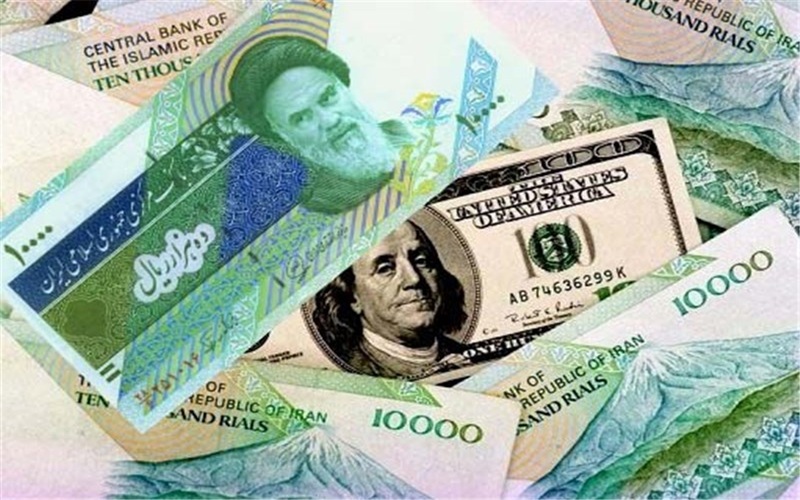

Four decades of authoritarian rule have transformed Iran’s economy into a system designed to preserve power rather than improve the lives of its citizens.
When Freedom Dies, Economic Collapse Follows
For years, Iranian regime officials, state-affiliated economists, and government media have searched for explanations for the country’s economic collapse. They have debated inflation, sanctions, mismanagement, budget deficits, currency devaluation, and declining investment. Yet they consistently avoid confronting the central truth: Iran’s economic crisis is not merely an economic problem. It is the inevitable consequence of a political system built on repression, monopoly, and the denial of freedom.
A sick political system produces a sick economy.
The cancer consuming Iran’s economy today is the direct result of decades of authoritarian rule under the doctrine of absolute clerical authority. When political survival becomes the state’s highest priority, economic prosperity becomes impossible. The death of freedom feeds the lifeblood of dictatorship, while the people are left to bear the costs through poverty, unemployment, and hopelessness.
This reality explains why no government over the past two decades has been able to rescue the economy. Every administration has inherited the same structural crisis and merely added another layer to it. None has addressed the root cause because the root cause lies at the very center of power itself.
Across the world, economics is shaped by politics. In Iran, however, the economy has become the illegitimate offspring of a politicized religion and an authoritarian state. The result is an economic model designed not to serve citizens but to preserve power. Under such conditions, genuine recovery cannot occur without changing the political decision-makers and the system they represent.
That reality was inadvertently acknowledged even by the state-run newspaper Eghtesad, which recently published a headline declaring that Iran’s “sick economy” requires a change of policymaker.
The admission is remarkable because for years the regime’s own media avoided recognizing the political roots of the crisis. Yet even now, they stop short of naming the real source of the problem.
For decades, Iran’s economy has been subjected to endless analysis by both government and independent experts. Their conclusions repeatedly point to the same factor: the ruling establishment prioritizes its own preservation over the welfare of the population. Economic resources are allocated according to political and security calculations rather than national development.
The newspaper itself acknowledged this reality, writing:
“The reality is that for years we have been trapped in the sediment and monopoly of a state-controlled economy. Over the past four decades, the economy has not been the first priority of the governing system. Other objectives have occupied the top of the agenda. Improving people’s welfare and quality of life has not had the necessary weight and importance, while security considerations have taken precedence over economic development.”
This statement is significant not because it reveals something new to the Iranian people, but because it confirms what millions have already learned through experience.
The regime’s priorities have never been hidden. Massive resources have been directed toward maintaining political control, financing repressive institutions, and advancing the interests of powerful entities linked to the Revolutionary Guards and the Supreme Leader’s network. Meanwhile, ordinary Iranians have faced soaring prices, shrinking incomes, and deteriorating living standards.
The social consequences have been profound.
Repeated nationwide uprisings have emerged from this reality. Protesters have risked imprisonment, torture, and death to challenge a system that consistently places its own survival above the people’s basic needs. The widening gap between society and the ruling establishment is not the result of misunderstanding; it is the consequence of decades of economic injustice and political repression.
Even government media now acknowledge this growing divide. Referring to major protest movements, the newspaper described them as “a severe blow to the fragile body of social trust” and admitted that the gap between society and the state has deepened.
Its assessment of the future is equally bleak. According to the paper, macroeconomic risks have reached unprecedented levels, and the outlook for economic actors is “completely dark.” It further acknowledged that policies based on restrictions and coercion cannot provide a sustainable response to the economic and livelihood demands of society.
Yet despite these admissions, official media continue to avoid identifying the true source of the crisis. Instead, they retreat into vague appeals for reform, calling on policymakers to respect citizens’ rights, improve the business environment, and restore public trust.
Such recommendations deliberately ignore the central issue.
Iran’s economic catastrophe is not the result of isolated policy mistakes that can be corrected through minor adjustments. It is the outcome of a political structure that systematically subordinates economic development, civil liberties, and public welfare to the preservation of authoritarian rule.
As long as that structure remains intact, economic decline will continue regardless of which government occupies office.
This is why a growing majority of Iranians no longer view economic reform and political change as separate questions. They understand that lasting prosperity requires freedom, accountability, and democratic governance. Even amid war, international negotiations, and shifting regional dynamics, that fundamental aspiration has not changed.
The future of Iran’s economy cannot be separated from the future of Iran itself.
The country’s economic crisis is ultimately a political crisis. And until the system responsible for producing that crisis is replaced, no amount of technical expertise, financial engineering, or policy adjustment will be able to revive an economy that has been sacrificed for the survival of a dictatorship.