



As Iran approaches a new historic turning point, the brief experience of political freedom after the anti-monarchical revolution offers a warning against every form of authoritarian monopoly.
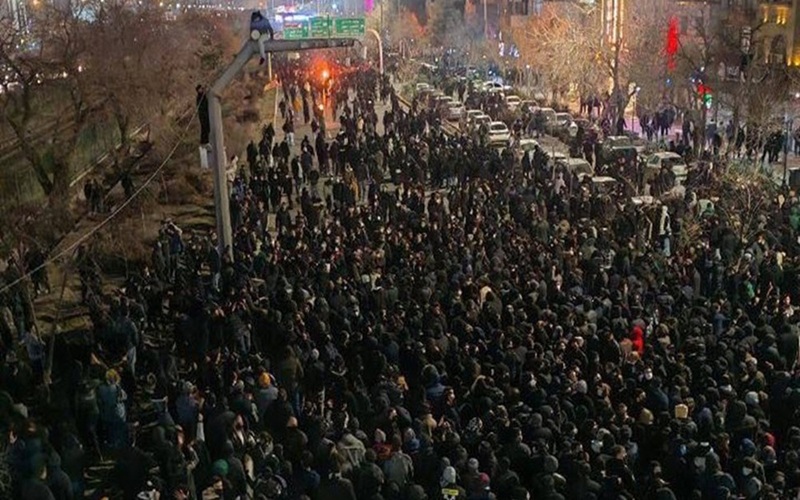
The clerical regime that has ruled the country for nearly five decades faces unprecedented political, social, and economic crises. Public trust has collapsed, nationwide protests have repeatedly challenged the foundations of the system, and an overwhelming majority of Iranians openly reject the doctrine of Velayat-e Faqih. At the same time, debates about Iran’s future have intensified. What kind of political system should replace the current dictatorship? What guarantees can prevent the emergence of another authoritarian order?
To answer these questions, Iranians do not need to look only toward the future. They must also revisit one of the most important and frequently misunderstood lessons of their recent past.
The tragedy of 1979 was not that Iranians lacked a democratic culture. The tragedy was that a rare opening for political pluralism was systematically destroyed by a movement determined to monopolize power.
This distinction is critical because the future of Iran will depend on whether the country embraces pluralism or repeats the cycle of replacing one form of authoritarianism with another.
The Forgotten Experience of Freedom
In the months following the fall of the Shah, Iran witnessed one of the most politically vibrant periods in its modern history.
Political organizations operated openly. Newspapers and publications representing diverse ideological perspectives circulated freely. Universities became centers of debate. Public spaces hosted discussions about democracy, social justice, women’s rights, workers’ rights, religion, secularism, and the future structure of the state.
For a brief moment, Iran demonstrated something that both the ruling clerics and advocates of authoritarian alternatives have long sought to deny: Iranian society possessed both the desire and the capacity for political pluralism.
The experience shattered the false narrative that democracy is somehow incompatible with Iranian culture or that the country requires permanent guardianship by a monarch, a supreme religious leader, or another unelected authority.
Ordinary citizens actively participated in political life. Diverse opinions coexisted. Competing visions for the country’s future were debated in public.
The problem was never the people.
The problem was the determination of one faction to eliminate all others.
How Freedom Was Suffocated
The consolidation of power by Ruhollah Khomeini and his followers did not occur because pluralism failed. It occurred because pluralism threatened the creation of an ideological state.
The emerging clerical establishment viewed political diversity not as a democratic strength but as a danger to its ambitions. Independent political organizations, free media, student movements, women’s organizations, and ethnic minority demands all represented obstacles to the establishment of absolute clerical authority.
The process unfolded step by step.
Political institutions were redesigned to concentrate power in the hands of unelected religious authorities. Independent voices were marginalized. Opposition groups were attacked. Newspapers were shut down. Universities were purged. Dissent was criminalized.
By June 1981, the regime had largely completed the destruction of the political freedoms that had briefly emerged after the revolution.
The result was not stability.
The result was four decades of repression, corruption, economic decline, international isolation, and recurring cycles of social unrest.
The Real Lesson for Today’s Iran
As Iran moves closer to another period of historic change, the lesson of that experience must not be misunderstood.
The lesson is not that revolutions fail.
The lesson is not that Iranians need a stronger ruler.
The lesson is not that democracy is unsuitable for Iran.
The lesson is that freedom dies whenever political monopoly replaces political competition.
This lesson applies not only to the current regime but to every political force seeking to shape Iran’s future.
Today, various factions present competing visions for the country. Some advocate preserving the existing system in modified form. Others seek the restoration of hereditary monarchy. Still others argue for democratic republicanism based on popular sovereignty and political pluralism.
These debates are legitimate and necessary.
What should concern Iranians is any movement that claims exclusive ownership of the nation’s future.
History demonstrates that authoritarianism does not become acceptable simply because it arrives under a different flag, ideology, or slogan.
A dictatorship wearing a crown is still a dictatorship.
A dictatorship wrapped in religion is still a dictatorship.
A dictatorship justified by nationalism, security, or revolutionary rhetoric remains a dictatorship.
The central political question facing Iran is therefore not who should rule. It is whether any individual, institution, dynasty, or ideological faction should possess unchecked power over the nation.
Why Pluralism Matters
The future stability of Iran will depend on institutions rather than personalities.
A democratic republic is not defined merely by elections. It requires safeguards that prevent the concentration of power and guarantee the peaceful competition of ideas.
Such a system must include freedom of expression, freedom of association, independent media, an independent judiciary, free and fair elections, equal rights for women, protections for ethnic and religious minorities, and a clear separation between religion and state.
Most importantly, it must ensure that no political faction can monopolize power by silencing its opponents.
The experience of the past half-century demonstrates that monopoly is not a solution to Iran’s problems. It is their primary cause.
Iran’s Future Must Not Repeat Its Past
The Iranian people have paid an enormous price for authoritarian rule.
Generations have grown up under censorship, political repression, economic hardship, and the denial of basic freedoms. Yet despite these obstacles, demands for democracy, accountability, and popular sovereignty have never disappeared.
The repeated uprisings of recent years reveal a society that continues to reject both dictatorship and political exclusion.
This is why the struggle unfolding in Iran today is larger than a contest between rival political factions.
It is a struggle between monopoly and pluralism.
Between authoritarian rule and democratic participation.
Between a system that concentrates power and a system that distributes it among the people.
The unfinished revolution of Iran will not be completed by replacing one ruling elite with another. It will be completed only when the Iranian people secure a political order in which no individual, ideology, dynasty, or religious authority can ever again claim exclusive ownership of the nation’s destiny.
That is the enduring lesson of 1979.
And it remains the essential challenge of Iran’s future.